

ABS is one of the most widely used plastics today, particularly in the automotive assembly industry. While its advantages are well-established, the growing demand for advanced materials now requires adhesive technologies that not only deliver strong bonding performance but also meet the stringent technical standards of modern automotive manufacturers.

What is ABS plastic?
ABS stands for Acrylonitrile Butadiene Styrene — one of the most widely used thermoplastics today. It is composed of three monomers, each contributing distinct properties that make ABS a popular material:
- Acrylonitrile provides chemical and heat resistance.
- Butadiene enhances toughness and impact resistance.
- Styrene adds rigidity and dimensional stability.
Key properties of ABS:
- Surface energy: 42 mJ/m².
- Maximum operating temperature: 89°C.
- Softening temperature: 100°C.
- Normally opaque but also available in translucent versions.
- Keo dán nhựa composite | Cách chọn keo phù hợp
- Adhesives for bonding Polypropylene (PP) | Selecting the Right Adhesive Type
Thanks to this combination of properties, ABS is frequently used in the transportation and construction industries for structural applications. In some cases, the ratio of its monomers can be adjusted to enhance a specific property.
For example, if greater rigidity is required, the styrene content is increased. Conversely, to improve impact resistance, more rubber (Butadiene — the “B” in ABS) is added.
ABS typically has a tensile strength of around 6–9 MPa. If the adhesive used is significantly stronger than this, any mechanical stress — such as vibration, shock, or impact — will transfer directly to the ABS material. This can potentially lead to premature failure of the plastic component, a phenomenon known as substrate failure.
Challenges in Bonding ABS Plastic
When attempting to bond ABS plastic, several challenges may arise due to the material’s unique properties. One of the primary obstacles is its low surface energy, which makes it difficult for adhesives to wet and spread evenly, resulting in poor adhesion. Additionally, ABS’s high chemical resistance renders many conventional adhesives ineffective, as the material resists the chemical interactions needed to form a strong bond.
Another significant challenge is achieving a durable bond that can withstand mechanical stress and environmental factors, such as temperature fluctuations and humidity. ABS tends to expand and contract with changes in temperature, which can weaken the bond over time if the adhesive lacks sufficient flexibility or thermal resistance.
To address these issues, proper surface preparation is critical. The ABS surface must be thoroughly cleaned to remove dust, grease, and contaminants, followed by light sanding to increase surface roughness and improve adhesive grip. Equally important is selecting the right adhesive specifically formulated for ABS. Ensuring appropriate curing conditions also plays a vital role in maximizing bond strength and longevity.
Is ABS Plastic Really Difficult to Bond?
No, ABS is not considered a difficult material to bond.
While some plastics can be challenging to glue, ABS generally isn’t one of them. As mentioned earlier, surface energy is a key factor in determining an adhesive’s ability to bond effectively.
Not all ABS plastics are hard to bond—except for those with a higher styrene content. This is because styrene contributes to a glossy surface finish, and the glossier the surface, the lower its surface energy becomes, making adhesion slightly more difficult.
That said, even high-styrene ABS can be bonded successfully—
As long as the right adhesive is chosen and proper surface preparation is done, bonding ABS is rarely a problem.
Types of Adhesives for Bonding ABS Plastic
The next question is: Which adhesive is best suited for your needs?
We recommend using a structural adhesive. But among the various structural adhesives available, which one is the optimal choice?
Since this is a subjective question, there’s no one-size-fits-all answer. However, the following section will give you a clearer picture of which adhesive might best address your specific bonding challenge.
To determine the best adhesive for bonding ABS, it’s important to clearly define your application—so that Hitta can provide guidance tailored to your business’s production process.
Top Four Structural Adhesives for Bonding ABS:
- Epoxy adhesives.
- Methyl methacrylate (MMA) adhesives – also known as acrylic adhesives.
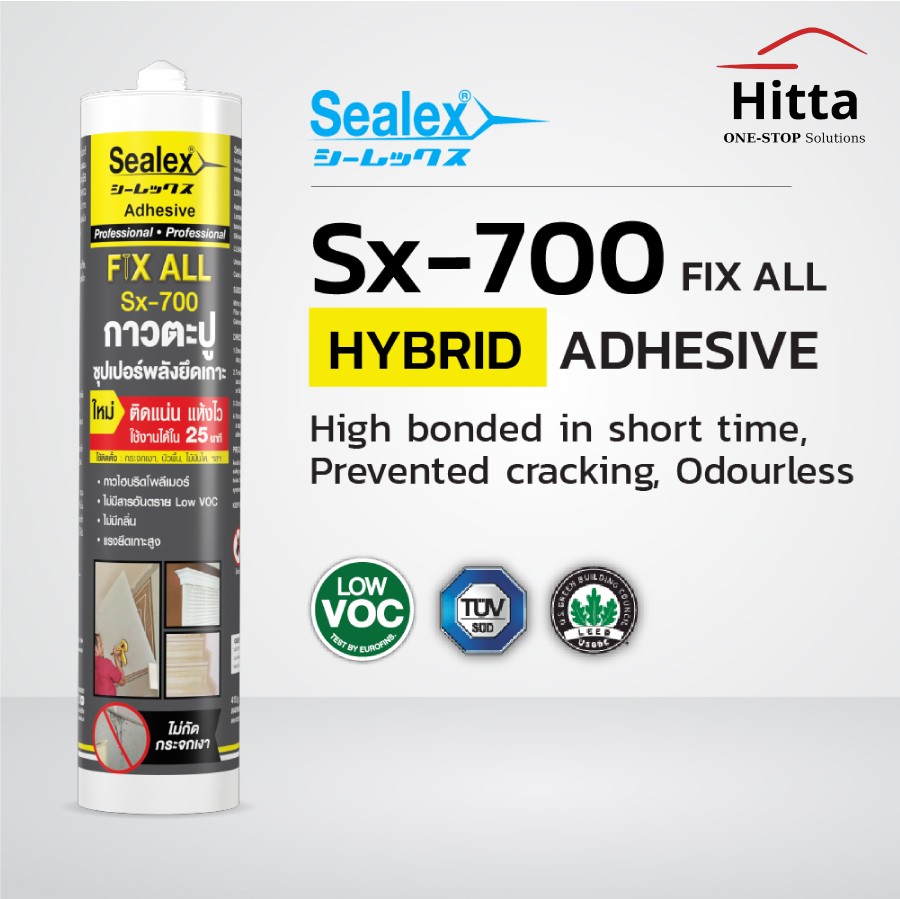
- Hybrid adhesives based on MS polymer.
- Polyurethane adhesives.
Before diving deeper, let’s review the key performance factors when selecting the right adhesive for ABS bonding:
Choosing the Right Adhesive for ABS: A Performance-Based Guide
Below is a reference table outlining how to select the appropriate adhesive for bonding ABS:
| Application | Recommended Adhesive |
|---|---|
| General purpose bonding | Epoxy adhesive |
| Quick bonding | Cyanoacrylate adhesive (super glue) |
| High strength requirements | Structural acrylic adhesive |
| High temperature resistance needed | Polyurethane adhesive |
| Flexible joints | Modified epoxy adhesive |
| Solvent resistance | ||
| Polarization | Nonpolar | |
| Corrosive environment | Very good | Very good |
| Cyanocrylate | Poor | Excellent |
| One-part epoxy | Very good | Very good |
| Two-part epoxy | Very good | Very good |
| Modified epoxy | good | Normal |
| MS Polymer | good | good |
| Polyurethane | good | good |
| One-part acrylic structural adhesive | good | Very good |
| Two-part acrylic structural adhesive | good | Very good |
| Two-part MMA acrylic structural adhesive | good | Very good |
| UV curing | good | Very good |
| Thermal resistance | ||
| Standard | High temperature | |
| Corrosive environment | 150 °C | 230 °C |
| Cyanocrylate | 85 °C | 250 °C |
| One-part epoxy | 180 °C | 300 °C |
| Two-part epoxy | 80 °C | 300 °C |
| Modified epoxy | 80 °C | |
| MS Polymer | 80 °C | |
| Polyurethane | 120 °C | |
| One-part acrylic structural adhesive | 150 °C | 390 °C |
| Two-part acrylic structural adhesive | 120 °C | |
| Two-part MMA acrylic structural adhesive | 120 °C | |
| UV curing | 120 °C | 150 °C |
Note: The product may withstand higher temperatures for short periods under the condition that the joint is not overly stressed.
Let’s now explore each structural adhesive for bonding ABS in more detail:
Epoxy-Based Adhesives
Epoxy adhesives can be found in both one-part and two-part formats.
Two-part epoxies consist of a resin and a hardener, which must be mixed together. Once combined, a chemical reaction takes place, forming a strong and durable bond as the adhesive cures.
One-part epoxies, on the other hand, come pre-mixed with the hardener but require elevated temperatures to initiate the curing process.
Benefits of Using Epoxy Adhesives
Epoxies are widely known for their exceptional strength. In fact, they are among the strongest adhesives available for bonding ABS plastics. Some epoxy variants can achieve tensile strengths exceeding 30 MPa.
They also offer excellent resistance to chemicals and moisture, making them ideal for applications where ABS may be exposed to harsh conditions or high humidity.
Considerations When Using Epoxies
One major drawback of epoxy adhesives is their brittleness. If the bonded ABS is part of a structure that undergoes frequent movement or vibration, epoxy may crack over time due to its lack of flexibility.
A common example is bonding ABS panels to the side of a vehicle. When the vehicle moves over rough terrain or speed bumps, an adhesive with greater flexibility is preferable—something epoxy typically lacks.
Epoxies also require elevated temperatures to cure properly. Ambient conditions significantly influence cure time—lower temperatures result in slower curing.
Finally, epoxy adhesives may pose certain health risks due to the presence of bisphenol compounds. However, these risks can be managed effectively and are clearly outlined in the product’s safety data sheet (SDS) and labeling.
Methyl Methacrylate (MMA) Adhesives
MMA adhesives—also known as acrylic adhesives—are always two-part systems. These parts can be mixed in different ratios, with the most common being 10:1 and 1:1. The 10:1 ratio is typically used for applications requiring greater flexibility.
Benefits of MMA Adhesives
MMA adhesives are renowned for their unique snap cure characteristic—unlike most adhesives that cure gradually, MMAs can harden suddenly after application.
Another advantage is their temperature consistency: their cure time is stable and predictable, unaffected by ambient temperature changes, making them easier to work with in different environments.
MMAs also offer high bond strength—although not as high as epoxy, they can still reach up to 20 MPa, which is sufficient for many structural applications.
Considerations When Using MMA Adhesives
The most notable drawback of MMA is its exothermic reaction during curing. When bonding ABS, this heat release can cause visual defects on the surface, known as “witnessing.”
This becomes a concern particularly when large amounts of adhesive are applied. For smaller applications, the heat is usually manageable.
Even though some MMA formulations are more flexible (e.g. 10:1 ratios), brittleness can still be an issue—similar to epoxy—making them less suitable for high-vibration or impact-prone environments.
On the positive side, MMA adhesives are isocyanate-free, reducing potential health hazards compared to some other structural adhesives, despite their strong odor.
Hybrid (MS Polymer) Adhesives
There are several hybrid adhesive chemistries on the market, but this section focuses on MS polymer-based adhesives, which are the most common and well-studied.
MS stands for Modified Silicone Polymer. These adhesives are usually one-part systems but may also come in two-part versions for specific applications.
Advantages of MS Polymer Adhesives
MS polymer adhesives offer exceptional flexibility while still maintaining good overall strength. While their tensile strength is lower (~5 MPa) compared to other structural adhesives, their superior flexibility makes them ideal for bonding ABS in applications subject to vibration or movement.
They also provide excellent impact resistance and can function as both sealant and adhesive.
Additional benefits include:
- Low health risks (unless ingested!)
- No heat generation during curing
- Availability in color-matched formulations for aesthetic or functional purposes
Limitations of MS Polymer Adhesives
Curing is moisture-dependent, which means performance may be affected in low-humidity or airtight environments.
Some users consider the lower strength a disadvantage; however, for most ABS bonding applications, MS polymers are more than sufficient.
Polyurethane-Based Adhesives
Polyurethane refers to a group of compounds that share similar chemical structures. Polyurethane-based adhesives are almost always one-part systems, though manufacturers can modify the formulation to suit specific application needs.
One limitation of single-component polyurethane adhesives is the presence of solvents, which may damage the surface of ABS. Additionally, polyurethane adhesives lack UV stability, meaning they are not suitable for outdoor sealingapplications.
A noteworthy point: when using PU and MS polymer adhesives together, curing inhibition can occur, as the chemical components of each system may interfere with one another.
If your application requires specific properties (such as enhanced flexibility), the adhesive manufacturer can adjust the polyurethane formulation to meet those demands.
Advantages of Polyurethane-Based Adhesives
Much like MS polymers, polyurethane adhesives are flexible, but they offer much higher strength—with bond strength reaching up to 15 MPa.
Other key benefits include:
- Excellent gap-filling and sealing capabilities
- High abrasion resistance
Limitations of Polyurethane-Based Adhesives
Polyurethane adhesives are similar to epoxies in one key respect: both contain isocyanates in their chemical structure. Isocyanates can pose potential health risks, but these risks can be effectively managed through proper handling and adherence to safety guidelines.
Polyurethane cures gradually, similar to epoxies. As a result, the curing speed is sensitive to ambient temperature and may not always be consistent or predictable.
Additionally, surface preparation is critical when working with polyurethane adhesives. To achieve optimal bonding performance, the substrate should be properly cleaned and pre-treated before application.
Recycling & Environmental Considerations for Logo Bonding
When it comes to bonding logos to plastic surfaces, there are a few sustainability and recycling-related factors worth keeping in mind.

Most of us instantly recognize the recycling symbol — three arrows forming a triangle. It appears all around us in daily life. But have you ever looked closely and noticed a number or a code inside the triangle or printed below it?
That number indicates the type of plastic the item is made from. While its primary purpose is to help ensure proper recycling, it can also help you determine which adhesive to use when bonding plastic materials.
There are eight main recycling codes for plastics:
- 9 = ABS (Acrylonitrile Butadiene Styrene)
- 1 = PET (Polyethylene Terephthalate)
- 2 = HDPE (High-Density Polyethylene)
- 3 = PVC (Polyvinyl Chloride)
- 4 = LDPE (Low-Density Polyethylene)
- 5 = PP (Polypropylene)
- 6 = PS (Polystyrene)
- 7 = Other plastics (including polycarbonate, acrylic, etc.)
In this guide, we focus specifically on code 9 (ABS). While solvent-based adhesives formulated for ABS are available, they can sometimes distort the surface of the plastic. For best results, epoxy adhesives are recommended. Cyanoacrylate glues (super glue) may also work well in many ABS bonding situations.
In some cases, the plastic item you’re working with may not be marked with a recycling symbol or identification code. In such situations, you’ll need to make an educated guess or do some basic testing. Here are a few clues to help you identify the material:
- If the plastic is rigid — like a bucket or a milk crate — it is likely polyethylene (PE) or polypropylene (PP). These plastics are extremely difficult to bond unless you use adhesives specifically designed for PE or PP.
- If the plastic is clear and brittle, like imitation glass or CD cases, it is most likely polystyrene (PS). In that case, poly cement is the most effective adhesive.
- LEGO bricks are made from ABS. If the unknown plastic feels similar to a LEGO piece, it’s a good indication you’re working with ABS — and epoxy would be your best bet.
Note: Solvent-based adhesives can sometimes warp or alter the plastic’s surface appearance, so if aesthetic quality is important, consider alternatives like epoxies or cyanoacrylates to maintain visual integrity.
Products
Our recommended products:
-
 3M DP8407NS Two-Part Acrylic Structural Adhesive for Metal Bonding
-
 3M DP190 Two-Part Epoxy Structural Adhesive
-
 3M DP100 Plus Two-Part Epoxy Structural Adhesive
-
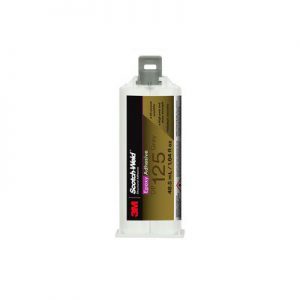 3M DP125 Two-Part Epoxy Structural Adhesive
-
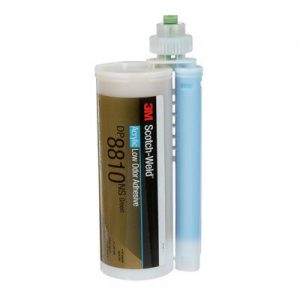 3M DP8810NS Two-Part Acrylic Structural Adhesive
-
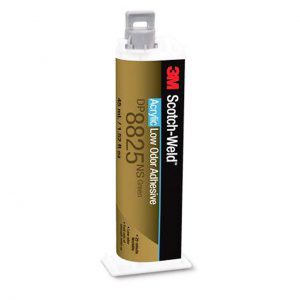 3M DP8825NS Two-Part Acrylic Structural Adhesive
-
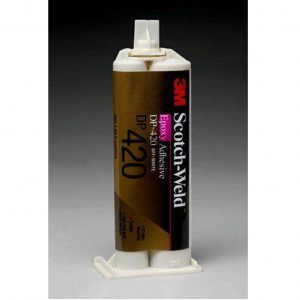 3M Scotch-Weld DP420 Two-Part Epoxy Structural Adhesive
Tips for Effective ABS Plastic Bonding
Choosing the right adhesive for bonding ABS plastic is essential — but it’s not the only factor that determines success. To achieve optimal results, several key practices should also be followed.
1. Surface Preparation Is Critical
While some adhesives require minimal surface prep, it’s always best to follow the manufacturer’s specific instructions. Each bonding application has its own unique conditions, so testing the adhesive in a real-use environment is highly recommended before applying it across your entire product line. Verifying adhesion under actual conditions ensures the adhesive performs reliably in its intended application.
2. Proper Storage Matters
Many adhesives need to be stored in a cool, dry, and sealed environment. Improper storage can degrade performance and reduce bond strength. Keep in mind that every adhesive has a different shelf life — so always adhere to the manufacturer’s storage guidelines and use the product before its expiration date.
3. Safety Must Not Be Overlooked
Beyond performance, safety during use is a top priority. When working with adhesives and dispensing equipment, always follow the manufacturer’s safety instructions. In most cases, this includes wearing appropriate protective clothing and gear. Details are typically provided in the product’s safety documentation.
In addition, remember to:
- Turn off equipment when not in use
- Store dispensing tools properly
- Seal containers tightly after use
These common-sense safety measures will help protect your team and maintain a clean, hazard-free workspace.
Contact Information
Hitta specializes in providing various types of specialized adhesives and tapes for both industrial and commercial sectors. Please feel free to contact us for the most effective solution at the lowest cost:
☎️ Hotline: 090.8611.011 (Mr. Dương).
✉️ Email: hittajsc@hitta.vn





