Solution Overview
HITTA offers a comprehensive range of tesa powder coating masking tape solutions to meet diverse requirements for temperature resistance, surface geometry, and production processes. From standard applications to the most demanding coating environments, we provide the right solution to ensure precise masking, clean paint lines, and residue-free removal after curing.
Recommended Powder Coating Masking Tape Products:

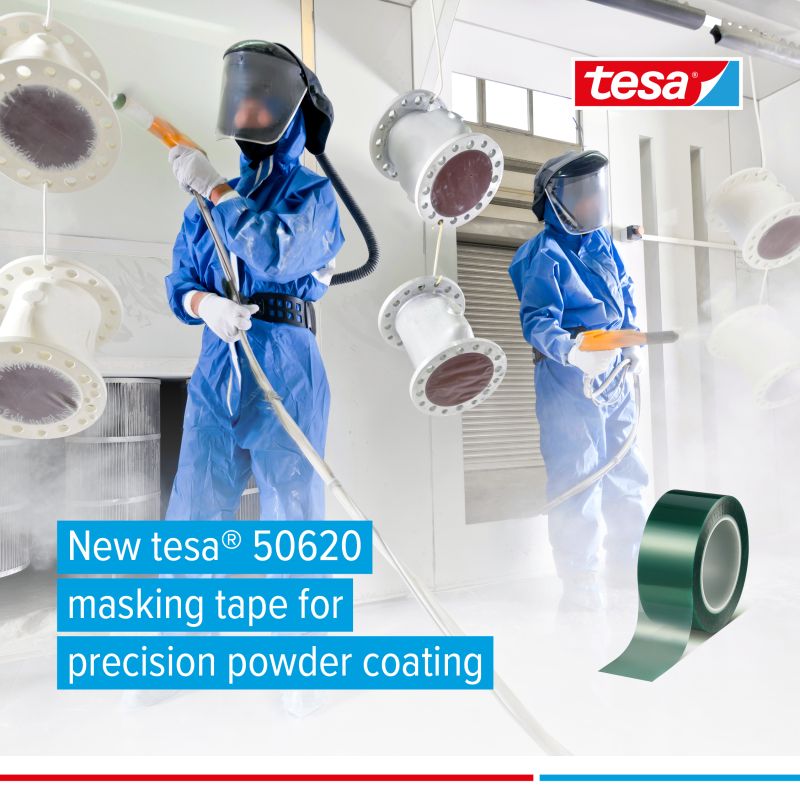
tesa® 50600 and tesa® 50620 are two high-performance masking tape solutions specifically designed for powder coating applications. Both feature a PET backing combined with a premium silicone adhesive system that delivers outstanding heat resistance. tesa® 50600 withstands temperatures up to 220°C with an 80 µm thickness, while tesa® 50620 is rated for temperatures up to 200°C with a 70 µm thickness. Both tapes provide sharp paint lines, excellent coating adhesion performance, and clean removal without adhesive residue after curing, helping maximize production efficiency while ensuring a high-quality finish.
| Technical Specifications | tesa® 50600 (Standard) | tesa® 50620 |
|---|---|---|
| Backing Material | PET (Polyester) | PET (Polyester) |
| Adhesive Type | Silicone | Silicone |
| Color | Green | Matte Green |
| Total Thickness | 80 µm | 70 µm |
| Temperature Resistance (30 min) | 220°C | 200°C |
| Adhesion to Steel | 4.0 N/cm | 3.6 N/cm |
| Tensile Strength | 75 N/cm | 75 N/cm |
| Elongation at Break | 110% | 110% |
| Dielectric Breakdown Voltage | 4,000 V | 4,000 V |
| Residue-Free Removal | Yes | Yes |
| Sharp Paint Edges | Yes | Yes |
| Hand Tearability | Low | No |
Depending on your specific application and manufacturing process, HITTA’s technical specialists can recommend customized powder coating masking tape solutions tailored to your unique production requirements.
Contact Information
HITTA is a trusted supplier of industrial adhesive and assembly tape solutions from the world’s leading brands. We are an authorized distributor of the complete range of genuine tesa® adhesive tapes in Vietnam.
Backed by an experienced technical team with extensive hands-on expertise across a wide range of industrial applications, we deliver more than products—we provide practical solutions that help optimize manufacturing processes while addressing each customer’s unique requirements and production challenges.
If you’re looking for an efficient, reliable, and long-lasting bonding or masking solution, HITTA is ready to support you from technical consultation through implementation.
Contact HITTA today to find the solution that best fits your application.
Hotline: +84 565 336 879
Email: hittajsc@hitta.vn
Powder Coating and the Requirements for Masking Tapes
Powder coating is a high-precision surface finishing process that places demanding requirements on masking materials. Masking tapes used in this process must withstand high curing temperatures while maintaining sufficient tear resistance for easy removal after curing, without damaging the finished coating.

The powder coating process produces a uniform, high-quality finish on metal surfaces, providing both superior corrosion protection and enhanced product appearance.
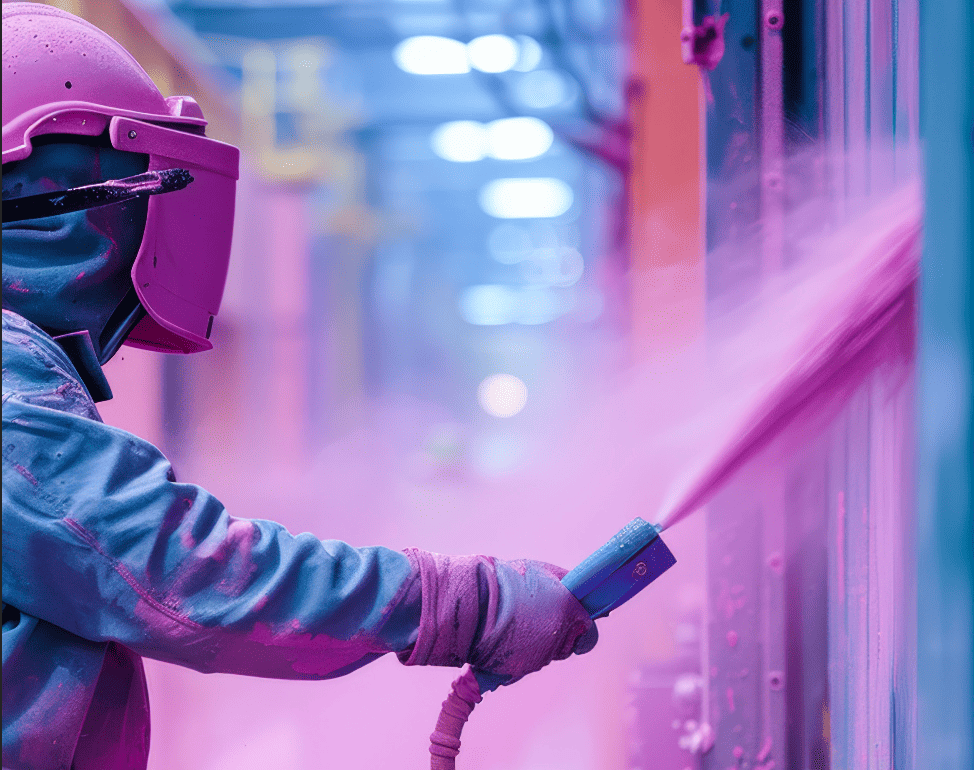
In the first stage, electrically charged powder is sprayed onto a metal substrate using an electrostatic application process. The electrostatic attraction enables the powder particles to adhere evenly to the surface and reach even complex geometries and narrow recesses.
The coated component is then transferred to a curing oven, typically operating at approximately 200°C (392°F). During curing, the powder particles—typically based on thermoplastic or thermosetting resins—melt, flow, and chemically bond to form a hard, durable coating that offers significantly greater performance than conventional liquid paint.
Thanks to its outstanding resistance to abrasion, impact, and long-term wear, powder coating has become the preferred finishing solution across a wide range of industries, including household appliances, industrial manufacturing, automotive, transportation, and aerospace.
Another key advantage of powder coating is its minimal emission of Volatile Organic Compounds (VOCs), making it a more environmentally responsible process that helps manufacturers comply with increasingly stringent environmental and production standards.
Which Backing Material Should You Choose?
The backing material is the primary structural component of a masking tape, determining its tensile strength, heat resistance, and ability to produce clean, sharp paint lines. Each backing material offers unique performance characteristics suited to different curing conditions and manufacturing requirements.
Polyester (PET) Film
Polyester (PET) is the most widely used backing material for powder coating applications, offering an excellent balance of performance and cost. It is typically rated for curing temperatures up to 204°C (400°F).
Its excellent tensile strength, tear resistance, and chemical inertness allow it to withstand exposure to acidic or alkaline pretreatment chemicals without degrading.
Performance Characteristics
- Heat Resistance: Typically withstands 204°C (400°F) for 30–60 minutes.
- Mechanical Strength: High tear resistance, excellent tensile strength, and outstanding chemical resistance.
Common PET Variants
- Green PET: The industry standard for general-purpose masking. Typically features a 2.0 mil backing with a total tape thickness of approximately 3.2–3.5 mils, making it ideal for masking flat surfaces.
- Blue PET: Manufactured with a thinner 1.0 mil backing, providing greater flexibility and conformability for curved, irregular, or complex geometries.
- Rusty Red PET: Engineered for slightly higher temperature resistance, up to 218°C (425°F), while minimizing film shrinkage during high-temperature curing cycles.
- Yellow PET: Features a thicker 5.0–6.5 mil backing, creating a robust physical barrier for heavy powder coating builds without producing the serrated paint edge often associated with fiberglass cloth tapes.
Polyimide (Kapton®) Film
Polyimide film—commonly recognized under the trade name Kapton®—is the premium choice for extremely demanding thermal processes or applications requiring exceptional dimensional stability.
Performance Characteristics
- Heat Resistance: Continuous operating temperature up to 260°C (500°F), with short-term exposure up to 371°C (700°F).
- Dimensional Stability: Its unique molecular structure virtually eliminates shrinkage, warping, and deformation, even under intense infrared curing. This ensures exceptionally straight masking lines and prevents coating bleed.
Typical Applications
Polyimide tapes are ideal for electronics manufacturing (such as solder masking), aerospace components, and large metal parts requiring extended curing cycles to achieve the required Peak Metal Temperature (PMT).
Glass Cloth Backing
When maximum mechanical protection is required, fiberglass cloth backing is the preferred solution.
Performance Characteristics
- Mechanical Strength: Thick construction (7.0–11.0 mils) provides exceptional resistance to cutting, tearing, and abrasion.
- Heat Resistance: Continuous operating temperature up to 260°C (500°F).
Typical Applications
Glass cloth tapes are commonly used for masking bus bars, abrasive blasting operations, and High-Velocity Oxygen Fuel (HVOF) thermal spray processes, where conventional polymer films would fail almost immediately.
Note: Due to its woven construction, fiberglass cloth produces a thicker masking edge and does not achieve the same sharp paint line as PET or Polyimide films.
Quick Guide to Selecting a Backing Material
| Backing Material | Continuous Temperature Rating | Backing Thickness | Key Advantages |
|---|---|---|---|
| Polyester (Thin) | 204°C (400°F) | 1.0 mil | Excellent flexibility for curved surfaces |
| Polyester (Standard) | 204°C (400°F) | 2.0 mils | Most versatile and cost-effective |
| Rusty Red PET | 218°C (425°F) | 2.0 mils | Improved shrink resistance at elevated temperatures |
| Polyimide | 260°C (500°F) | 1.0–2.0 mils | Outstanding dimensional stability and ultra-sharp paint lines |
| Glass Cloth | 260°C (500°F) | 7.0 mils | Superior abrasion and mechanical resistance for heavy-duty applications |
| Crepe Paper | 163°C (325°F) | 5.0–7.0 mils | Economical and easy to tear by hand |
Important Recommendation
As a best practice, select a masking tape with a temperature rating at least 20% higher than your actual curing temperature. This safety margin helps compensate for unexpected oven stoppages, temperature fluctuations, or localized hot spots.
For optimal adhesion, always ensure that the substrate is thoroughly cleaned and free of oil, grease, dust, and other contaminants before applying the masking tape. This allows the adhesive system to achieve maximum bonding performance and ensures reliable masking throughout the curing process.
Which Adhesive System Should You Choose?
Selecting the right adhesive system is critical to achieving reliable adhesion throughout the curing cycle while ensuring clean, residue-free removal after processing. In powder coating applications, the three primary adhesive technologies—Silicone, Heat-Resistant Rubber, and Acrylic—are selected based on curing temperature, substrate characteristics, and downstream manufacturing requirements.
Silicone Adhesive System
Silicone adhesive is widely regarded as the industry standard for professional powder coating masking applications. Thanks to its highly stable silicon-oxygen (Si–O) backbone, it maintains excellent viscoelastic properties and superior shear resistance across an exceptionally wide temperature range of −73°C to 260°C (−100°F to 500°F).
One of its key characteristics is its relatively low initial tack compared with rubber adhesives. Rather than being a disadvantage, this is an intentional design feature that enables the tape to be removed cleanly in one piece from stainless steel, aluminum, and other metal substrates after high-temperature curing, without tearing or leaving adhesive residue.
In addition to outstanding heat resistance, silicone adhesives offer excellent resistance to chemicals, moisture, and UV exposure, making them highly suitable for demanding pretreatment processes such as anodizing.
Heat-Resistant Rubber Adhesive System
Although silicone adhesives deliver outstanding performance, certain industries—including automotive and aerospace manufacturing—strictly prohibit silicone contamination. Even trace amounts of silicone residue may cause coating defects or interfere with the adhesion of subsequent liquid paints or structural adhesives.
In these environments, silicone-free heat-resistant rubber adhesives are the preferred solution.
These specially formulated rubber adhesives can typically withstand short curing cycles up to 204°C (400°F) while providing high initial tack and excellent adhesion, even on lightly textured or slightly contaminated surfaces.
However, prolonged exposure to elevated temperatures may cause rubber adhesives to degrade, making tape removal more difficult if the recommended temperature or dwell time is exceeded.
Acrylic Adhesive System
Acrylic adhesives are well known for their extremely high initial tack and excellent UV resistance under ambient conditions. However, they are generally unsuitable for conventional powder coating processes.
Most standard acrylic adhesives begin to degrade when exposed to temperatures above 149°C (300°F).
At elevated temperatures, excessive cross-linking of the polymer chains causes the adhesive to harden permanently and bond aggressively to the metal surface. Removing this “baked-on” adhesive residue is labor-intensive and often requires aggressive chemical cleaning or mechanical scraping, increasing both production costs and the risk of substrate damage.
For this reason, acrylic adhesive systems are generally recommended only for low- to medium-temperature masking applications.
Quick Guide to Selecting an Adhesive System
When selecting an adhesive, a good engineering practice is to choose a tape with a temperature rating at least 20% higherthan the actual oven temperature. This provides a safety margin against unexpected temperature spikes, oven interruptions, or uneven heat distribution.
Adhesion performance also depends heavily on the surface energy of the substrate. High-surface-energy materials such as aluminum, copper, and stainless steel allow the adhesive to wet the surface effectively and achieve maximum bond strength. Conversely, low-surface-energy materials such as PTFE (Teflon®) are significantly more difficult to bond.
For optimum performance, always remove oil, grease, dust, and other contaminants before applying the tape. Firm pressure should then be applied using a squeegee or pressure roller to activate the adhesive, allowing it to flow into microscopic surface irregularities and create a tight seal that prevents molten powder from penetrating beneath the masking edge.
Comparison of Adhesive Systems for Powder Coating Masking
| Technical Characteristic | Silicone Adhesive | Rubber Adhesive | Acrylic Adhesive |
|---|---|---|---|
| Continuous Temperature Rating | Up to 260°C (500°F) | Up to 204°C (400°F) | Typically below 149°C (300°F) |
| Initial Tack | Low to Medium | High | Very High |
| Clean Removal | Excellent; residue-free even after high-temperature curing | Good for short curing cycles; easier to remove at room temperature | Poor at elevated temperatures; prone to baked-on residue |
| Chemical & UV Resistance | Excellent | Limited | Good |
| Primary Advantage | Exceptional heat resistance and clean one-piece removal | Silicone-free; eliminates silicone contamination | Low cost with extremely aggressive initial adhesion |
| Typical Applications | Powder coating, anodizing, electronics solder masking | Silicone-sensitive automotive and aerospace manufacturing | Packaging, labeling, and low-temperature masking |
Engineering Considerations for Optimum Performance
Selecting an adhesive should be based not only on purchase price, but on total cost of ownership and manufacturing risk.
Why Silicone Is the Industry Standard
Although silicone adhesives typically carry the highest material cost, their exceptionally stable silicon-oxygen molecular structure provides unmatched thermal stability and clean removability. Their intentionally moderate adhesion minimizes residue on high-value substrates such as stainless steel and aluminum after curing. For curing temperatures above 200°Cor extended bake cycles, silicone adhesive is generally the preferred—and often essential—solution.
When Heat-Resistant Rubber Adhesives Are Required
In automotive and aerospace production, even microscopic silicone contamination can cause paint defects such as fisheyes or reduce the bond strength of subsequent adhesive assemblies. In these silicone-sensitive environments, high-temperature rubber adhesive tapes provide a reliable silicone-free alternative while maintaining excellent masking performance.
Why Acrylic Adhesives Should Be Avoided for High-Temperature Powder Coating
At elevated temperatures, acrylic adhesives undergo excessive polymer cross-linking, transforming into a rigid adhesive layer that bonds permanently to the substrate. Removing this baked-on residue is often far more expensive than the cost difference between premium masking tapes and lower-cost acrylic alternatives. For this reason, acrylic adhesives are generally not recommended for high-temperature powder coating processes.
Typical Applications
Powder coating masking tapes serve as both a physical and electrostatic barrier, precisely defining coating boundaries while protecting critical functional surfaces from dry powder during electrostatic spraying and from molten coating material during the curing process. Their applications span a wide range of industrial manufacturing environments.
Protecting functional and precision surfaces is one of the most common uses of powder coating masking tapes. In precision manufacturing, many areas must remain free of coating to ensure proper assembly, electrical conductivity, or dimensional accuracy.
- Threaded holes and blind holes: Prevent powder from entering threaded areas, eliminating the need for thread chasing after curing while preserving dimensional accuracy and reducing labor.
- Electrical contact surfaces: Protect grounding points, electrical terminals, starter motors, generators, and other conductive interfaces to maintain reliable electrical performance after coating.
- Precision shafts and flange surfaces: Bearing journals, sealing flanges, and mating surfaces are masked to prevent coating build-up that could alter critical tolerances or interfere with assembly.
Powder coating masking solutions are also widely used across industries with demanding thermal and chemical processing requirements.
- Automotive: High-temperature masking tapes protect engine-adjacent components, exhaust system parts, brake calipers, suspension assemblies, and other areas exposed to elevated curing temperatures.
- Electronics: High-performance tapes—particularly polyimide tapes—are used to protect PCB gold fingers, insulate transformer windings, capacitors, and shield lithium battery cells during manufacturing.
- Aerospace and Defense: Specialized masking materials are employed in chemical etching, electroplating, and High-Velocity Oxygen Fuel (HVOF) thermal spray processes, where exceptional heat resistance and abrasion resistance are essential.
- General Metal Fabrication: Used for household appliances, metal furniture, electrical enclosures, and fabricated metal components to preserve clean assembly areas for hinges, fasteners, and accessories.
Beyond protection, masking tapes are also an important tool for creating high-quality decorative finishes.
- Sharp paint separation lines: Thin-caliper masking tapes produce crisp, well-defined color transitions with professional-quality edge definition.
- Two-tone powder coating: Previously coated areas are masked before applying a second color. Silicone-free masking tapes are often preferred to eliminate any risk of contamination that could affect the adhesion of subsequent coatings.
- Logo and decorative masking: Protect engraved markings, brand logos, and decorative patterns while creating intricate visual designs on metal surfaces.
For complex components, customized masking solutions help improve production efficiency while reducing labor costs.
- Die-cut masking shapes: Pre-cut dots, squares, donuts, and other custom geometries enable rapid, repeatable masking of high-volume production parts while eliminating manual trimming.
- Large-area masking: Heat-resistant kraft paper or aluminum foil can be combined with high-temperature masking tape to protect extensive surface areas efficiently.
- Masking tubes and bags: Polyester masking bags are used to cover long shafts, while precision-cut silicone tubing protects bolts, studs, and threaded components, minimizing trapped air and preventing masking plugs from being displaced during curing.
- Flanged masking plugs: Umbrella-style flanged plugs take advantage of the Faraday cage effect to create controlled feathered coating transitions while minimizing paint bridging and serrated coating edges around holes and openings.
Surface Preparation
Proper surface preparation is essential to ensure maximum adhesive performance and reliable masking throughout the powder coating process. The following best practices are recommended before applying powder coating masking tapes.
1. Remove Physical and Chemical Contaminants
The substrate must be thoroughly cleaned to eliminate any contaminants that may interfere with adhesive wet-out and bonding performance.
- Organic contaminants: Remove machining oils, grease, rust preventive oils, cutting fluids, and other hydrocarbon residues.
- Inorganic contaminants: Eliminate dust, mill scale, metal chips, and debris generated during fabrication.
- Existing coatings: For reworked parts, completely remove old paint, rust, or plating using appropriate abrasive methods before applying masking tape.
2. Select the Appropriate Cleaning Method
The cleaning process should be chosen according to the substrate material and production environment.
- Solvent cleaning: Wipe the masking area with fast-evaporating solvents such as acetone or isopropyl alcohol (IPA). This is one of the most common methods for ensuring clean tape edges and optimal adhesion.
- Industrial cleaning systems: Multi-stage aqueous washing systems, steam cleaning, or specialized metal cleaning solutions may be used for high-volume production.
Important: The substrate must be completely dry and free from moisture before the masking tape is applied.
3. Prevent Fingerprint and Environmental Contamination
Maintaining surface cleanliness after cleaning is just as important as the cleaning process itself.
- Wear clean nitrile gloves: Operators should handle cleaned parts only while wearing clean nitrile gloves. Finger oils are a common cause of localized adhesion failure for both masking tapes and powder coatings, potentially resulting in fisheye defects on the finished surface.
- Avoid silicone contamination: Silicone-containing spray lubricants and maintenance products should be strictly prohibited within the work area. Airborne silicone contamination can significantly reduce the surface energy of metal substrates and compromise both tape adhesion and coating quality.
4. Apply Additional Surface Treatments When Required
Certain materials or applications may require supplementary surface preparation.
- Chemical pretreatment: Conversion coatings such as iron phosphate improve corrosion resistance while enhancing adhesive bonding.
- Sandblasting: Produces a controlled surface profile that increases the effective bonding area for pressure-sensitive adhesives (PSAs).
- Pre-baking: Cast materials such as cast aluminum or cast iron should be pre-baked before masking to release trapped moisture and gases from their porous structure. This minimizes outgassing, which can cause masking tapes or plugs to lift during the curing cycle.
5. Verify Surface Cleanliness
Before beginning production, technicians can perform a simple water droplet test to evaluate surface cleanliness.
- If the water spreads uniformly across the surface, the substrate has sufficient surface energy and is free from oil or grease.
- If the water beads up into droplets, the surface is still contaminated with oil, grease, or silicone and should be cleaned again before masking.
Troubleshooting Common Powder Coating Masking Issues
Preventing Adhesive Bake-On and Residue
One of the most common masking failures occurs when the tape cannot withstand the curing temperature. Excessive heat causes the adhesive to oxidize and become excessively cross-linked, forming a hardened polymer layer that bonds permanently to the metal surface. Removing this baked-on residue often requires aggressive solvents or mechanical scraping, increasing labor costs and risking damage to the finished part.
The most effective preventive measure is to select a masking tape with a temperature rating at least 20% higher than the actual curing temperature. For standard curing cycles around 204°C (400°F), upgraded high-temperature polyester films—such as rusty red or orange PET—or polyimide films are recommended. Silicone adhesive remains the preferred choice because its stable silicon-oxygen molecular structure maintains excellent thermal stability and enables clean, one-piece removal even after prolonged exposure to elevated temperatures.
Eliminating Fish Eyes, Paint Bridging, Powder Bleed, and Outgassing
Fish-eye defects appear as circular craters in the finished coating and are typically caused by low-surface-energy contaminants such as silicone oil, grease, or fingerprints. During curing, the molten coating naturally pulls away from these contaminants, leaving visible surface defects.
To minimize this risk, use post-cured silicone masking products that have been processed to remove volatile compounds capable of causing surface contamination. For the most demanding applications, platinum-cured silicone masking components offer even greater cleanliness because the curing process produces virtually no unwanted by-products. Thorough cleaning with isopropyl alcohol (IPA) or acetone, combined with the mandatory use of clean nitrile gloves, helps eliminate contamination before masking begins.
Another common issue is paint bridging. Because powder coatings are relatively thick—typically 2.0 to 6.0 mils—powder tends to accumulate along the vertical edge of the masking tape. During curing, the molten coating forms a continuous polymer bridge between the tape and the coated surface. If the tape is removed after the part has completely cooled, this brittle bridge fractures unevenly, producing chipped or jagged paint edges.
The best practice is to remove the masking tape while the part is still warm, typically between 40°C and 60°C (104°F–140°F). At this stage, the coating has solidified sufficiently while still retaining enough flexibility to separate cleanly. The tape should be peeled back slowly at an angle between 45° and 90°. For holes and openings, flanged masking plugs can also reduce paint bridging by taking advantage of the Faraday cage effect, producing smoother feathered coating transitions around the masking edge.
Powder bleed occurs when powder particles or molten coating penetrate beneath the masking edge, resulting in irregular or wavy paint lines. The most common causes are insufficient application pressure or excessive stretching of the tape during installation. As the backing material relaxes during heating, elastic recovery may cause the tape edge to retract, allowing coating material to migrate underneath.
To prevent powder bleed, proper pressure activation is essential. Since high-temperature masking tapes use pressure-sensitive adhesives (PSAs), finger pressure alone is often insufficient. A plastic squeegee or pressure roller should be used to firmly press the adhesive along the entire masking edge, allowing it to flow into microscopic surface irregularities and create a continuous seal. During application, avoid stretching the tape—particularly around curved or complex geometries. Choosing highly conformable, thin-film masking tapes further improves edge sealing without excessive application force.
Porous cast materials such as cast aluminum, cast iron, and galvanized steel are susceptible to outgassing. Moisture, trapped air, and residual processing oils within the substrate expand during curing and escape through the coating, creating pinholes, blisters, or coating defects. Gas escaping from unsealed threaded holes may also generate enough pressure to dislodge masking plugs.
The most effective solution is pre-baking the workpiece at a temperature approximately 10–20°C higher than the planned curing temperature before masking and powder application. This process removes trapped volatile compounds before coating begins. For blind holes, vented plugs or hollow masking plugs allow expanding gases to escape in a controlled manner, preventing pressure buildup and reducing the risk of plug blowout during curing.