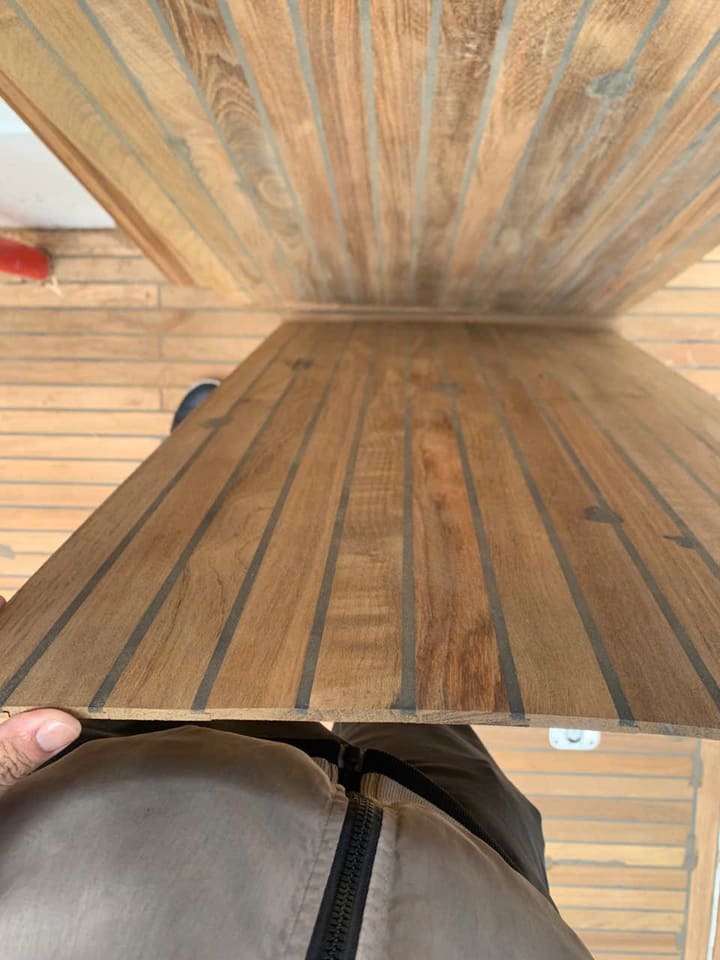
Bostik Simson ISR 70-08 AP is far more than just an adhesive—it is a critical structural component in modern boatbuilding and yacht construction. Combining a high modulus, outstanding green strength, and the exceptional weather resistance of SMP technology, it provides an optimal solution for load-bearing deck bonds and structural decking applications.
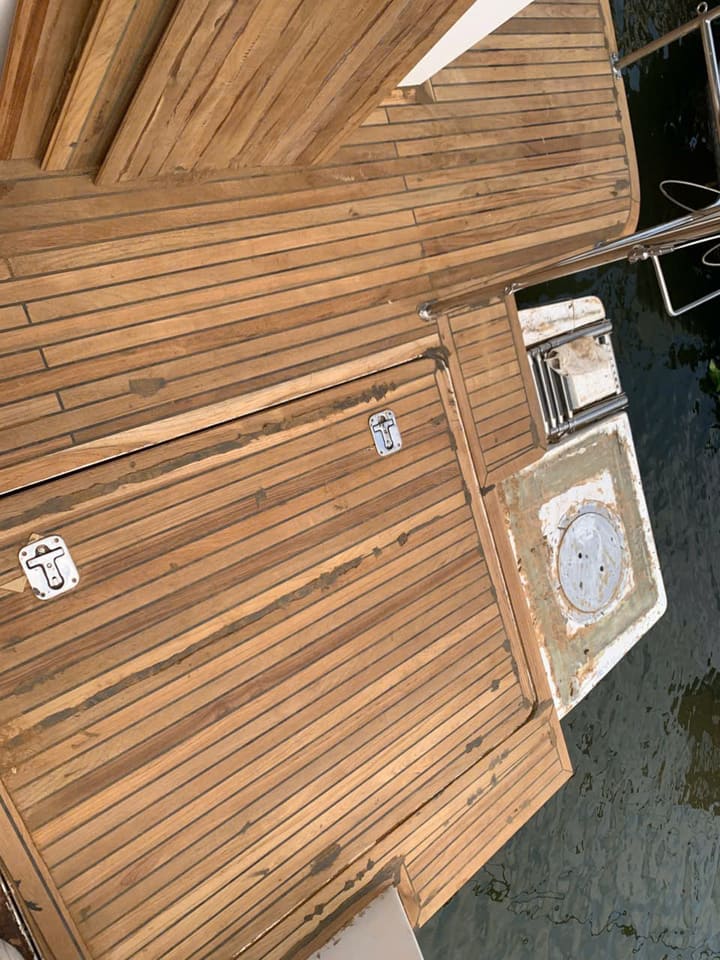
Typical Application Position of Bostik 7008
Teak decking (finished surface layer)
↓
Adhesive layer (e.g., Bostik Simson ISR 70-08 AP)
↓
Marine plywood (load-bearing substrate)
↓
Fiberglass / composite deck structure
Why Choose Bostik 7008 for Boat & Yacht Decking?

Choosing Bostik Simson ISR 70-08 AP for boat and yacht decking applications offers significant technical advantages thanks to its advanced Silyl Modified Polymer (SMP) technology.
Advanced SMP Technology and Physical Stability
Unlike conventional polyurethane (PU) adhesives, which may release CO₂ during curing and create bubbles or blistering, ISR 70-08 AP cures through a moisture-driven reaction that produces no gas formation, ensuring a void-free bond line.
- Extremely low shrinkage (<3% volume change during curing), helping prevent deck deformation and internal stress.
- Solvent-free, isocyanate-free, and silicone-free, providing a safer working environment and reducing environmental impact.
Exceptional Green Strength
One of the most valuable characteristics of Bostik 7008 is its outstanding green strength.
Immediately after application, the adhesive demonstrates excellent sag resistance and holding power, allowing materials to remain securely positioned before full cure.
Benefits include:
- Reduced reliance on complex mechanical clamping systems.
- Easier installation of heavy decking panels and vertical components.
- Faster production cycles and improved assembly efficiency.
High Modulus Performance for Structural Decking
ISR 70-08 AP is classified as a high-modulus structural adhesive, providing a strong and dimensionally stable bond.
- Excellent dynamic load resistance, with a tensile strength of approximately 2.9 MPa and an elastic modulus of up to 5.5 MPa.
- Capable of absorbing wave impacts, vibration, and wind loads while maintaining deck alignment.
- Long-lasting elasticity with elongation at break of approximately 250%, allowing the bond line to accommodate hull flexing without cracking.
Protection Against Galvanic Corrosion
Modern yacht construction frequently combines aluminum, stainless steel, composites, and other materials.
With a very high volume resistivity (>10¹¹ Ω·cm), ISR 70-08 AP acts as an effective dielectric barrier between dissimilar metals.
This insulation layer helps:
- Interrupt electrical pathways between metal components.
- Minimize galvanic corrosion.
- Extend the service life of aluminum decks and metallic fittings.
Outstanding Durability in Marine Environments
Boat decks are constantly exposed to sunlight, saltwater, temperature fluctuations, and harsh weather conditions.
Superior UV and Weather Resistance: The adhesive’s siloxane (Si–O–Si) backbone offers superior resistance to UV degradation and weathering compared to traditional PU chemistry. As a result, ISR 70-08 AP remains stable over time without becoming brittle, chalky, or degraded.
Wide Temperature Resistance: The product maintains reliable performance from -40°C to +110°C, with short-term resistance up to 180°C for 30 minutes. This makes it particularly suitable for yacht decks exposed to intense tropical sunlight and elevated surface temperatures.
Excellent Compatibility and Aesthetics
ISR 70-08 AP adheres effectively to a wide range of marine substrates, including:
- GRP (fiberglass reinforced plastic)
- Aluminum
- Steel
- Painted wood
- Composite materials
In many applications, excellent adhesion can be achieved without extensive priming.
Once cured, the adhesive can be:
- Sanded for a smooth finish
- Painted with most industrial coating systems
- Integrated seamlessly into high-end yacht finishing processes
ISR 70-08 AP has been tested and certified according to IMO low flame-spread requirements, meeting the demanding safety standards required for commercial vessels and luxury yacht construction.
Bostik Simson ISR 70-08 AP is more than a decking adhesive. Its combination of high green strength, high-modulus structural performance, galvanic corrosion protection, and exceptional marine durability makes it an ideal solution for demanding boat and yacht decking applications where long-term reliability is critical.
Types of Decking Compatible with Bostik 70-08
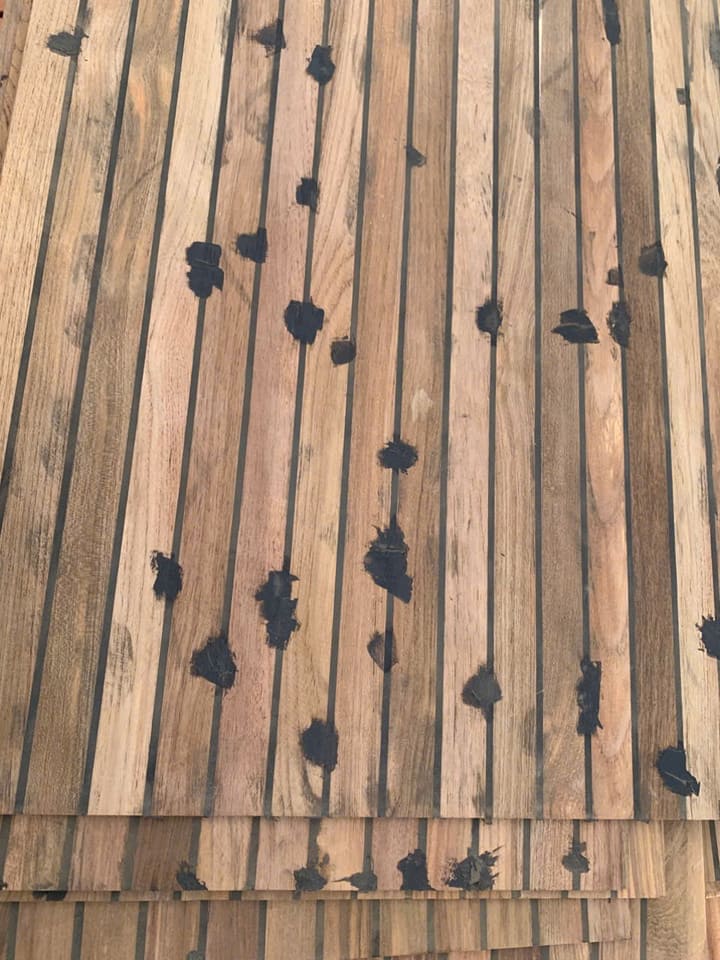
Bostik 70-08 AP is generally not used as a bedding compound for large deck areas. Instead, it is primarily intended for structural bonding applications and modern decking systems such as:
Synthetic Decking
Examples include systems such as Flexiteek 3 and Esthec. The adhesive is particularly effective for bonding margin planks and deck edges that require high tear resistance to prevent delamination under mechanical stress.
Structural Deck Panels
Thanks to its exceptionally high green strength, the adhesive is ideal for securing heavy deck panels or vertical deck components without the need for complex clamping systems.
Decking on Metal and Composite Substrates
The adhesive provides excellent adhesion to a variety of substrates, including:
- Aluminum
- Stainless steel
- Galvanized steel
- GRP (Glass Reinforced Plastic)
Bostik 70-08 is also suitable for specialized marine decking timbers such as Teak and Marine Plywood. The following technical considerations should be taken into account:
The Principle of “Modulus Matching” and Structural Integrity
The key challenge when bonding natural wood in marine applications is not simply achieving adhesion, but managing stresses throughout the entire bonding system.
Movement of Teak Wood
Teak is a living material that expands when absorbing moisture and contracts as it dries (hygroscopic expansion and contraction). At the same time, the vessel’s hull structure (whether GRP or metal) expands and contracts at a completely different rate due to temperature changes.
Risks of Using a High-Modulus Adhesive (ISR 70-08 AP)
With a Shore A hardness of approximately 60 and an elastic modulus of approximately 5.5 MPa, ISR 70-08 AP creates an extremely rigid bond.
When used beneath large timber sections, shear forces generated by wood movement are transferred directly into the adhesive layer. Because the adhesive cannot deform sufficiently to absorb these stresses, the resulting load may cause:
- Cracking of the timber
- Adhesion failure at the bonding interface
The “Viscoelastic Spring” Solution (MSR Bedding Compound)
MSR Bedding Compound is specifically designed with a low modulus (approximately Shore A 32 and 300% elongation at break) to function as a shock-absorbing layer.
This allows the timber planks to move slightly without transmitting stress into the subdeck structure, thereby helping to preserve the long-term integrity of the deck system.
The Role of Bostik 7008 in Timber Decking Systems
Although it is not intended for bedding large deck surfaces, Bostik 7008 serves as a critical structural anchoring adhesive.
Bonding Margin Planks and Frames
Margin planks surrounding deck perimeters or deck equipment require precise positional stability.
The high green strength of ISR 70-08 AP allows these components to be accurately fixed in place without extensive clamping requirements.
Structural Stabilization
In high-load areas or vertical decorative elements, the rigidity of ISR 70-08 AP helps prevent movement caused by wind loads, vessel motion, and wave impact.
Technical Considerations for Marine Plywood
When installing marine plywood subdecks onto vessel structures:
Adhesive Selection
Bostik MSR Bedding Compound is recommended for bonding plywood panels onto timber, steel, aluminum, or polyester subdeck structures.
Moisture Protection
This system creates a continuous watertight seal that prevents moisture accumulation between the plywood layer and the hull structure, effectively eliminating the risk of hidden internal rot.
Technical Specifications
| Technical Property | Test Method / Standard | Value / Specification |
|---|---|---|
| Basic Chemical Composition | N/A | Silyl Modified Polymer (SMP) |
| Curing Mechanism | N/A | Moisture-curing reaction |
| Density (Specific Gravity) | CQP / DIN | Approx. 1.5 g/ml |
| Skin Forming Time | 23°C / 50% R.H. | Approx. 10–15 minutes |
| Open Time | 23°C / 50% R.H. | < 15 minutes |
| Cure Rate (after 24 hours) | 23°C / 50% R.H. | Approx. 3 mm |
| Shore A Hardness | DIN 53505 / ISO 48-4 | Approx. 60 |
| Volume Shrinkage | DIN 52451 | < 3% |
| Tensile Stress at Break | DIN 53504 / ISO 37 | Approx. 2.9 MPa |
| Elongation at Break | DIN 53504 / ISO 37 | Approx. 200% – 250% |
| E-Modulus at 10% Elongation | DIN 53504 / ISO 37 | Approx. 5.5 MPa |
| Shear Strength | DIN 53283 / ASTM D1002 | Approx. 2.3 – 2.4 MPa |
| Tear Propagation Strength | DIN 5315 / ISO 34 | Approx. 13 – 16 N/mm |
| Volume Resistivity | DIN 53428 | > 10¹¹ Ω·cm |
| Continuous Service Temperature | N/A | -40°C to +110°C (or +120°C) |
| Peak Temperature Resistance (30 min) | N/A | +180°C |
| Application Temperature | N/A | +5°C to +35°C |
| Solvent & Isocyanate Content | Gas Chromatography (GC) | 0% |
Installation Procedure
The long-term performance of a decking system depends 80% on proper surface preparation and installation procedures.
Step 1: Surface Preparation
For Non-Porous Surfaces (Metal, GRP, PVC)
Use Bostik Cleaner I or Bostik Prep M.
Prep M is a convenient one-step solution that both cleans and enhances adhesion. It dries within approximately 5 minutes, and adhesive application should take place within 6 hours after treatment.
For Porous Surfaces (Teak and Other Woods)
The surface must be treated with Bostik Prep P.
Prep P penetrates the wood grain and creates a durable bonding layer. Allow at least 1 hour of drying time (maximum 6 hours) before adhesive application.
Important Note: Do not use compressed air to clean joints or gaps. Compressed air systems often contain traces of compressor oil, which can negatively affect adhesive performance.
Step 2: Adhesive Application
Apply the adhesive using either a manual or pneumatic dispensing gun.
The nozzle should be cut into a V-shaped (triangular) bead with a minimum dimension of 9 × 9 mm to ensure sufficient adhesive thickness after compression.
The open time of Bostik 7008 is less than 15 minutes (at 20°C / 50% RH). Therefore, deck materials should be positioned immediately after adhesive application.
Step 3: Positioning and Compression
Press the decking material into place until the adhesive layer reaches a minimum thickness of 2 mm.
This thickness is structurally required to accommodate differential thermal expansion and absorb dynamic movement.
Thanks to its excellent green strength, Bostik 7008 significantly reduces the need for heavy ballast weights or vacuum bagging systems during installation.
Step 4: Finishing
Uncured excess adhesive can be removed using Bostik Liquid 1 or Bostik Cleaner E.
Once fully cured, Bostik 7008 can be sanded to achieve a smooth and level surface finish.
Key Requirements for Marine and Yacht Decking Applications
Bostik 7008 meets the demanding requirements of modern marine construction.
Temperature Resistance
The adhesive withstands continuous service temperatures from -40°C to +110°C, with short-term exposure up to 180°C for 30 minutes.
This performance is particularly important for vessels operating in tropical environments exposed to intense direct sunlight.
Fire Certification
The product has been tested and certified in accordance with International Maritime Organization (IMO) fire testing procedures for low flame spread performance (Resolution A.653(16)).
Fast Curing Performance
With a curing rate of approximately 3 mm per 24 hours (at 20°C / 50% RH), the adhesive supports efficient production schedules and faster vessel assembly.
Contact for Technical Consultation
HITTA is an official distributor of Bostik adhesive solutions in Vietnam.
For technical support and product consultation, please contact:
☎️ Hotline: 0565.336.879
✉️ Email: hittajsc@hitta.vn