Challenges
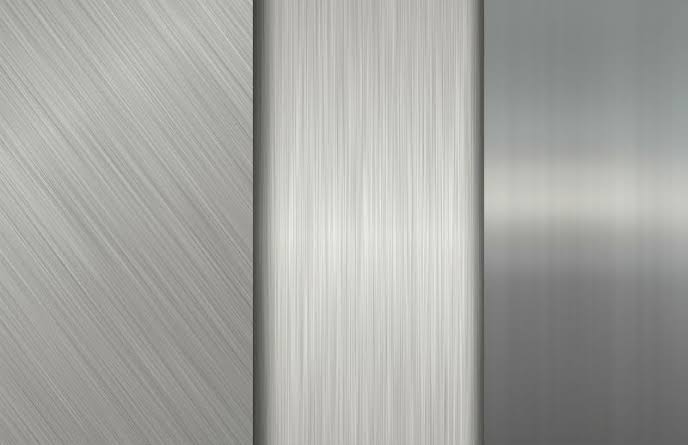
To understand why stainless steel requires specialized adhesive solutions, it is important to first understand the characteristics of its surface.
Stainless steel is an iron-based alloy containing at least 10.5% chromium. When exposed to air, the chromium reacts with oxygen to form an extremely thin layer of chromium oxide (Cr₂O₃) across the surface. This protective film, known as the passive layer, is self-healing when scratched and is the primary reason stainless steel offers excellent corrosion resistance.
However, this same protective layer also makes adhesive bonding more challenging. Stainless steel surfaces can absorb moisture and airborne organic contaminants, creating an invisible layer that lowers the surface energy. If the surface is not properly cleaned or prepared, the adhesive may not wet the substrate effectively, resulting in a weaker bond.
Surface finish is another important factor. Polished or mirror-finished stainless steel has very low surface roughness, which reduces the effective contact area between the adhesive and the substrate. As a result, the adhesive has fewer opportunities to form mechanical interlocking, leading to lower bond strength compared to rougher surfaces.
In addition, certain high-chromium stainless steel grades can influence the formation of chemical bonds between the adhesive and the substrate. In these cases, using an adhesion promoter or primer is often recommended to ensure long-term bond strength and durability.
Advantages of Adhesive Bonding Over Traditional Mechanical Fastening
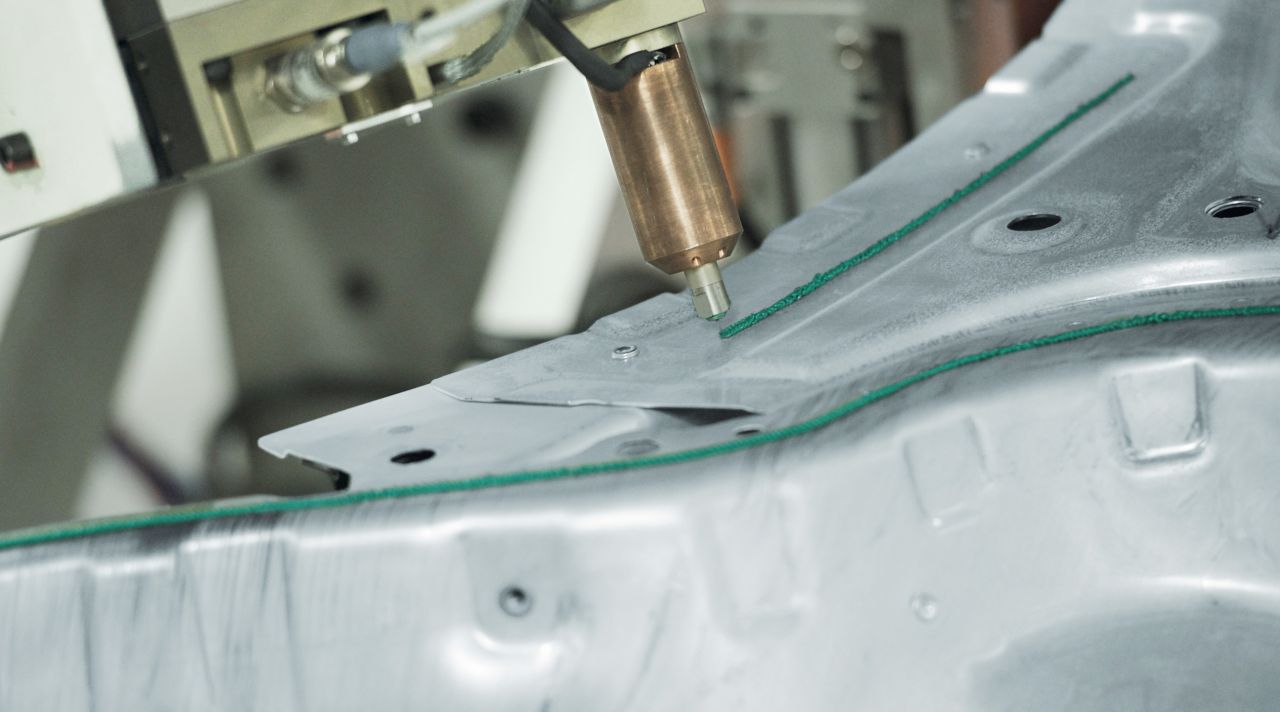
In many industrial applications, the choice of joining method affects not only product strength but also manufacturing costs, service life, and design flexibility. Compared with welding, bolts, or rivets, structural adhesives offer several significant advantages.
Even Load Distribution for Stronger Joints
Unlike spot welding or mechanical fasteners, which concentrate stress at specific points, structural adhesives distribute loads evenly across the entire bonded area. This reduces stress concentrations, minimizes the risk of crack formation, and significantly improves fatigue resistance. In many applications, bonded assemblies can achieve up to 60% greater fatigue performance than those joined using traditional fastening methods.
Reduced Weight and Greater Design Freedom
Because loads are distributed over the entire bonding surface rather than a few fastening points, engineers can often use thinner materials without compromising structural rigidity or strength. This helps reduce assembly weight, optimize material usage, and lower manufacturing costs. In some cases, overall weight can be reduced by as much as 15% compared with bolted or riveted assemblies.
Protection Against Galvanic Corrosion
When stainless steel is mechanically joined to aluminum or other dissimilar metals, direct metal-to-metal contact in the presence of moisture can lead to galvanic corrosion, one of the most common causes of joint degradation over time.
Structural adhesives help prevent this by creating an insulating layer between the two metal surfaces. This barrier minimizes electrical contact while also reducing moisture ingress, helping extend the service life of the assembly.
Improved Appearance and Design Flexibility
Unlike welding or mechanical fastening, adhesive bonding leaves no weld marks, drilled holes, or exposed fasteners on the finished surface. This allows designers to create clean, nearly invisible joints with a smooth, modern appearance—an important advantage for applications where aesthetics matter, such as household appliances, furniture, architectural components, and transportation equipment.
Bonding, Sealing, and Vibration Damping in One Solution
One of the key advantages of structural adhesives is their ability to perform multiple functions simultaneously. In addition to creating a strong bond, they also seal joints against dust, water, chemicals, and air infiltration.
Many structural adhesives also provide excellent vibration damping and noise reduction thanks to their inherent elasticity. By absorbing dynamic loads, they reduce stress on the joint, minimize damage caused by continuous vibration, and help extend the service life of the equipment.
No single adhesive is suitable for every application. The ideal solution depends on factors such as joint loading, operating conditions, production requirements, and the materials being bonded. Below are the three most commonly used categories of structural adhesives for stainless steel.
Epoxy Adhesives
High-Strength Structural Bonding Solution
Epoxy is one of the most widely used structural adhesive systems for bonding metals, especially stainless steel. Thanks to its high mechanical strength, excellent heat resistance, and outstanding chemical resistance, epoxy is extensively used in industries such as automotive, electronics, industrial manufacturing, marine, and heavy equipment.
How Epoxy Adhesives Cure
Epoxy is a thermosetting polymer (thermoset). Once fully cured, it forms a highly cross-linked polymer network that cannot be remelted when exposed to heat, unlike thermoplastic materials.
Most epoxy systems consist of two components: an epoxy resin and a hardener. When mixed together, a cross-linking reaction takes place, creating a rigid adhesive with low shrinkage and excellent load transfer across the entire bonded area.
This cross-linked structure gives epoxy its exceptional shear strength and long-term dimensional stability.
Depending on production requirements, epoxy adhesives are generally classified into two main types.
One-Part Epoxy Adhesives (1K)
One-part epoxy adhesives are pre-mixed by the manufacturer, with the curing agent remaining inactive until exposed to a specific temperature.
These adhesives typically require curing at 120–180°C to achieve full strength.
Their main advantage is that no mixing is required before application, eliminating mixing errors and ensuring consistent performance throughout production. This makes one-part epoxies a popular choice for automated manufacturing processes where high bond strength and repeatability are essential.
Two-Part Epoxy Adhesives (2K)
In two-part epoxy systems, the resin and hardener are stored separately and begin reacting only after they are mixed together. Mixing is typically carried out using a static mixer to ensure the correct mixing ratio.
Unlike one-part systems, two-part epoxies cure at room temperature, making them ideal for assembly, repair work, or applications where components cannot be placed in an oven. Cure speed varies depending on ambient temperature and the specific adhesive formulation.
Toughened Epoxy Technology
A common limitation of conventional epoxy adhesives is their relatively high stiffness and brittleness, particularly under impact loading or cyclic stress.
To overcome this, many modern epoxy formulations incorporate microscopic rubber particles or elastomeric modifiers—a technology commonly known as toughened epoxy.
These elastic phases absorb part of the applied energy and help slow crack propagation when the bonded joint is subjected to stress. As a result, toughened epoxies offer significantly improved impact resistance, peel strength, and fatigue performance while maintaining the high structural strength associated with epoxy adhesives.
Performance in Harsh Environments
One of the main reasons epoxy is widely used in industrial applications is its ability to perform reliably under demanding operating conditions.
Chemical resistance: Once cured, epoxy provides excellent resistance to oils, fuels, solvents, and many acids and alkalis, making it suitable for tanks, piping systems, and industrial equipment.
Heat resistance: Depending on the formulation, epoxy adhesives can perform across a wide temperature range. Some specialty grades retain their mechanical properties at temperatures exceeding 200°C.
Moisture resistance: Cured epoxy forms a durable barrier that helps minimize moisture penetration, protecting metal joints and reducing the risk of corrosion at the bond interface.
Best Practices for Using Epoxy Adhesives
To achieve optimum bonding performance, proper application procedures are essential.
Controlling the mixed adhesive volume
The curing reaction of epoxy generates heat. Mixing a large volume of adhesive in a deep container can cause excessive heat buildup, accelerating the curing reaction and potentially reducing bond quality.
For best results, only mix the amount needed for immediate use and apply the adhesive promptly after mixing.
Proper surface preparation
Although epoxy provides excellent adhesion, it performs best on clean, properly prepared surfaces.
For stainless steel, all oil, grease, dust, and surface contaminants should be removed before bonding. In high-load structural applications, lightly abrading the surface can increase the effective bonding area and improve long-term joint performance.
Thanks to its exceptional bond strength, heat resistance, chemical resistance, and long-term durability, epoxy remains one of the preferred solutions for demanding structural bonding applications. However, achieving maximum performance depends not only on selecting the right epoxy system but also on proper surface preparation and correct application procedures.
Structural Acrylic Adhesives (MMA)
Fast-Curing Adhesives with Excellent Impact Resistance
Structural acrylic adhesives, particularly Methyl Methacrylate (MMA) adhesives, are widely used for bonding metals, plastics, and composite materials. Compared with epoxy, MMA offers faster curing, superior impact resistance, and greater processing flexibility, helping manufacturers shorten production cycles while maintaining strong, durable bonds.
Curing Mechanism
MMA adhesives cure through free-radical polymerization. When the resin comes into contact with the initiator, a rapid chemical reaction occurs, forming a high-strength polymer network.
Today, MMA adhesives are available in several application systems:
Two-Part (2K) Systems: The resin and hardener are automatically mixed through a static mixer, making them ideal for high-volume manufacturing.
Surface-Activated Systems: An activator is applied to one substrate while the adhesive is applied to the other. The curing reaction begins as soon as the two surfaces are brought together.
Bead-on-Bead Systems: The two components are dispensed side by side without a static mixer, allowing curing to begin when the joint is assembled. This method is commonly used in specialized automated production lines.
Mechanical Properties
One of MMA’s greatest strengths is its balance between strength and toughness.
Many products achieve lap shear strengths of 20–30 MPa on steel after full cure. Compared with conventional epoxy adhesives, the polymer structure of MMA is generally tougher, allowing it to absorb vibration, impact, and cyclic loading more effectively.
Another key advantage is its rapid curing speed. Depending on the formulation, MMA adhesives can develop handling strength within 5–25 minutes, significantly reducing waiting time during production.
Adhesion to a Wide Range of Materials
Compared with many epoxy systems, MMA adhesives are generally more tolerant of less-than-perfect surface conditions.
In many cases, they can still achieve reliable adhesion on surfaces with light residual machining oil or minor contamination. However, proper surface cleaning is always recommended to maximize bond strength and ensure long-term durability.
In addition to stainless steel, MMA bonds well to aluminum, composites, fiberglass, and many engineering plastics. Certain specialized MMA formulations are also designed to bond low-surface-energy plastics such as PP and PE, often in combination with a primer or proprietary adhesion-promoting technology.
Application Considerations
Despite their many advantages, MMA adhesives require several important considerations during use.
Strong odor: MMA monomers have a distinctive, strong odor. Adequate ventilation and appropriate personal protective equipment (PPE) should always be used during application.
Flammability: Uncured MMA adhesives are flammable and should be stored and handled in accordance with applicable chemical safety regulations.
Cure shrinkage: Some MMA systems exhibit greater curing shrinkage than epoxy. When bonding very thin metal panels or components with high cosmetic requirements, selecting the appropriate adhesive formulation is important to minimize surface distortion.
Temperature resistance: Most MMA adhesives perform reliably within a temperature range of -40°C to 120°C, although certain specialty formulations can withstand higher temperatures.
Key Advantages
Thanks to their fast curing speed and straightforward application process, MMA adhesives help manufacturers reduce production time, shorten assembly cycles, and improve overall manufacturing efficiency.
Their ability to bond a wide variety of materials also gives designers greater flexibility when combining stainless steel with aluminum, plastics, or composite materials, enabling lighter and more cost-effective product designs.
For applications that demand rapid assembly, excellent vibration resistance, and superior impact performance, structural acrylic adhesives (MMA) remain one of the most effective and widely adopted bonding solutions in modern manufacturing.
Polyurethane (PU) Adhesives
Polyurethane (PU) adhesives are highly elastic structural adhesives designed for joints that are regularly exposed to vibration, impact, or movement caused by thermal expansion and contraction.
Common Types of PU Adhesives
One-Part PU (1K) adhesives cure by reacting with moisture in the air. The curing process progresses from the outside inward, so the curing rate depends on the adhesive thickness as well as the ambient temperature and humidity.
With elongation at break often exceeding 300%, one-part PU adhesives are widely used for bonding large panels, vehicle body components, containers, architectural facades, and other large structural assemblies.
Two-Part PU (2K) adhesives consist of a polyol resin and an isocyanate hardener. Once mixed, they cure through a chemical reaction, making them less dependent on ambient humidity. This makes them well suited for applications requiring controlled curing times or thick adhesive bond lines.
Advantages of PU Adhesives
Polyurethane provides excellent adhesion to a wide variety of substrates, including stainless steel, aluminum, wood, plastics, and certain types of rubber. Its high elasticity enables bonded joints to absorb vibration, relieve stress, and accommodate movement caused by temperature fluctuations without cracking.
These characteristics make PU adhesives a popular choice in the automotive industry, commercial vehicle manufacturing, and many outdoor applications.
Application Considerations
Most conventional PU adhesive systems contain isocyanates. Therefore, operators should wear appropriate personal protective equipment (PPE) and follow the manufacturer’s safety recommendations during handling and application.
In addition, for certain substrates or demanding service environments, the use of a primer is recommended to achieve optimum long-term bond durability.
Hybrid Polymer (MS Polymer / SMP)
Hybrid Polymer, also known as MS Polymer or SMP (Silane Modified Polymer), is a new generation of elastic structural adhesives based on silane-modified polymer technology.
These adhesives cure by reacting with moisture in the air, forming a highly elastic bond with excellent weather resistance.
Key Advantages
Compared with conventional polyurethane adhesives, Hybrid Polymers are isocyanate-free and typically contain lower levels of volatile organic compounds (VOCs), making them a more environmentally friendly choice for many manufacturing environments.
Many formulations provide excellent adhesion to metals, glass, stone, concrete, and composite materials without requiring a primer in many standard applications. However, for heavily loaded structural joints or demanding service environments, proper surface preparation in accordance with the manufacturer’s recommendations remains essential.
Another key advantage of Hybrid Polymer adhesives is their outstanding resistance to UV exposure and outdoor weathering. Once cured, most products can also be painted, making them well suited for applications where appearance is important.
Reducing Stress Caused by Thermal Expansion
One of the greatest advantages of both PU and Hybrid Polymer adhesives is their ability to accommodate movement.
When stainless steel is bonded to materials such as aluminum, plastics, or composites, each material expands and contracts at a different rate as temperatures change. If a rigid adhesive is used, stress can accumulate within the bonded joint, potentially reducing its long-term durability.
Thanks to their high elasticity, PU and Hybrid Polymer adhesives can flex with the movement of the bonded materials, distributing stress more evenly and helping maintain joint integrity over time.
Typical Applications
Elastic adhesive systems are widely used across a broad range of industries.
In the transportation industry, they are commonly used to bond vehicle body panels, doors, roofs, and interior components, helping reduce vibration and noise during operation.
In construction, PU and Hybrid Polymer adhesives are frequently used for both bonding and sealing joints, helping prevent the ingress of water, dust, and other environmental contaminants.
For outdoor equipment or structures exposed to continuous vibration, the elastic properties of these adhesive systems help reduce stress on bonded joints, extending product service life while minimizing maintenance requirements.
Proper Joint Design for Structural Adhesive Bonding
To maximize the performance of structural adhesives, proper joint design is just as important as selecting the right adhesive.
When designing bonded assemblies, engineers generally favor joint configurations such as lap joints, double-lap joints, and tongue-and-groove joints over butt joints. These designs distribute loads more evenly across the bonded area, resulting in higher load-bearing capacity and improved long-term joint durability.
In many applications, tapering or chamfering the edges of the bonded components can also help reduce stress concentrations at the ends of the bond line, further improving fatigue performance and long-term reliability.
Consider Thermal Expansion
Another important design consideration is the difference in the coefficient of thermal expansion (CTE) between bonded materials.
When stainless steel is bonded to aluminum, plastics, or composite materials, each substrate expands and contracts at a different rate as temperatures change. This mismatch generates internal stresses within the adhesive layer. In large assemblies, these stresses can accumulate over time and reduce joint durability if they are not considered during the design stage.
To address this challenge, engineers typically adopt one of two approaches: increasing the bond line thickness to better distribute stress, or selecting a more flexible adhesive system—such as Polyurethane (PU) or MS Polymer—that can accommodate movement caused by thermal expansion.
Comparison of Structural Adhesive Systems for Stainless Steel
| Technical Property | Epoxy (1K & 2K) | Acrylic (MMA) | Polyurethane (PU) | Hybrid (MS Polymer) |
|---|---|---|---|---|
| Lap Shear Strength | Very High (35–41 N/mm²) | High (20–30 N/mm²) | Moderate (2.5–20 N/mm²) | Low to Moderate (~3.6 N/mm²) |
| Toughness & Flexibility | Low (Brittle unless toughened) | Moderate to High (Excellent impact resistance) | Very High (Elongation >300%) | Extremely High (Permanent elasticity) |
| Cure Speed | Slow (Several hours to several days) | Fast (Handling strength in 5–25 minutes) | Moderate (Several hours to 7 days) | Slow (Moisture-dependent) |
| Surface Preparation | Demanding (Requires degreasing and abrasion) | Minimal (Can tolerate light oil contamination) | Moderate (Primer often recommended) | Simple (Primer often unnecessary) |
| Environmental Resistance | Excellent (Chemicals and high temperatures) | Good (Moisture and thermal cycling) | Good (Outdoor and moisture resistance) | Excellent (UV and weather resistance) |
| Gap-Filling Capability | Good (Up to 5 mm) | Excellent (Up to 9 mm) | Excellent (Up to 10 mm) | Good (Also functions as a sealant) |
Selecting the Right Adhesive for Your Application
Choosing the right adhesive depends on the performance requirements of your application. The following recommendations can serve as a practical guide:
Maximum structural strength and chemical resistance:
Epoxy is the preferred choice for applications requiring high stiffness, excellent static load capacity, or resistance to fuels, solvents, and aggressive chemicals, such as industrial tanks, process equipment, and medical devices.
Fast production and high impact resistance:
Structural Acrylic (MMA) is ideal for high-volume manufacturing thanks to its rapid curing speed and short handling time. It is well suited for stainless steel assemblies exposed to vibration or mechanical impact, including automotive and heavy machinery applications.
Thermal movement and vibration damping:
Polyurethane (PU) is the preferred solution for large stainless steel structures or assemblies that combine materials with different coefficients of thermal expansion. Its high flexibility allows it to absorb internal stresses that rigid adhesives cannot accommodate.
Outdoor durability and aesthetic finishes:
Hybrid (MS Polymer) combines the strong adhesion of polyurethane with the outstanding weather resistance of silicone. It is an excellent choice for exterior stainless steel applications, architectural facades, and assemblies where the cured adhesive must be paintable.
Thread locking and thread sealing:
Anaerobic adhesives are specifically designed to lock stainless steel bolts and threaded fasteners, preventing loosening caused by vibration while also sealing threaded pipe connections against leakage.
Strategic Consideration:
Replacing welding with structural adhesive bonding can reduce assembly weight by up to 15% while improving fatigue life by as much as 60% through more uniform stress distribution. However, achieving these performance benefits depends on proper surface preparation and a well-controlled bonding process.
Applications of Structural Adhesives Across Industries
Thanks to their ability to create strong, durable bonds while reducing corrosion and overall assembly weight, structural adhesives are increasingly used across a wide range of industrial applications.
Medical Devices and Food Processing Equipment
In the medical and food processing industries, adhesive bonding creates smooth, seamless joints that eliminate gaps where bacteria, moisture, or contaminants can accumulate. This makes equipment easier to clean and helps meet stringent hygiene requirements.
Certain adhesive systems also comply with FDA 21 CFR 175.105 for indirect food contact and can withstand repeated autoclave sterilization cycles while maintaining long-term bond integrity.
Transportation and Rail
Structural adhesives are widely used in automobiles, buses, railway vehicles, and other transportation equipment to bond stainless steel or aluminum panels to structural frames, replacing welding or mechanical fasteners in many applications.
This approach helps reduce overall vehicle weight, improve structural stiffness, and minimize vibration and noise during operation, contributing to longer service life and enhanced passenger comfort.
Heavy Industry and Hazardous Environments
In areas where fire or explosion hazards are present, welding is often restricted because it generates heat and sparks. In these environments, structural adhesives provide a safer assembly method by eliminating the need for hot work.
Their excellent chemical and corrosion resistance also makes them well suited for manufacturing storage tanks, equipment enclosures, piping systems, and other industrial equipment operating in demanding environments.
Surface Preparation Before Bonding Stainless Steel
The performance of a bonded joint depends not only on the adhesive itself but also on how well the stainless steel surface is prepared before bonding. Even the highest-performance structural adhesive cannot achieve its full strength if the substrate is not properly prepared.
A standard surface preparation process typically consists of the following three steps.
1. Cleaning and Degreasing
The first step is to completely remove machining oils, grease, dust, fingerprints, and other surface contaminants. These substances can prevent the adhesive from making direct contact with the stainless steel surface, resulting in reduced bond strength.
In most applications, the surface is cleaned using fast-evaporating solvents such as isopropyl alcohol (IPA) or acetone. For manufacturing processes that require exceptionally clean surfaces, many facilities use vapor degreasing with specialized industrial solvents. This method helps prevent dissolved contaminants from being redeposited onto the substrate.
By contrast, household cleaners or oil-based solvents should be avoided, as they can leave behind a thin residue that is often invisible to the naked eye but can significantly reduce adhesive performance.
2. Mechanical Surface Preparation
After cleaning, the surface is typically roughened to remove weak surface oxides and increase the effective bonding area. This step can significantly improve bond strength.
The most common method is abrasive blasting using iron-free media, such as aluminum oxide or silicon carbide.
Steel shot or other iron-containing abrasives should never be used on stainless steel. Residual iron particles embedded in the surface can become initiation sites for localized corrosion, compromising one of stainless steel’s primary advantages—its corrosion resistance.
For thin or easily distorted stainless steel components, vapor honing (wet blasting) is often a better option. The combination of water and fine abrasive media gently cleans and textures the surface while minimizing distortion or damage to the workpiece.
3. Chemical Surface Treatment and Primers
For applications requiring maximum bond durability or exposure to harsh service environments, stainless steel may undergo chemical surface treatment before bonding. This process removes residual contaminants, refreshes the passive oxide layer, and creates a more suitable surface for durable adhesive bonding.
Many adhesive systems also benefit from the use of a primer or silane coupling agent to improve adhesion. Silane molecules act as a molecular bridge between the metal surface and the adhesive: one end chemically bonds to the stainless steel’s oxide layer, while the other bonds to the adhesive’s polymer network.
This mechanism not only increases bond strength but also improves moisture resistance, helping prevent delamination during long-term exposure to humidity or repeated temperature fluctuations.
Business Benefits of Structural Adhesives
Beyond their technical advantages, structural adhesives also deliver measurable benefits in terms of manufacturing efficiency, production costs, and overall operational performance. These advantages are a key reason why adhesive bonding is increasingly being adopted across a wide range of manufacturing and assembly industries.
Increased Production Efficiency
Although structural adhesives require time to fully cure, the dispensing process itself can be highly automated and integrated into high-speed production lines. Many adhesive systems—particularly structural acrylic (MMA) adhesives—develop sufficient handling strength within minutes, allowing downstream assembly operations to continue with minimal delay. This helps shorten production cycles and improve overall manufacturing throughput.
Reduced Dependence on Highly Skilled Labor
Welding stainless steel often requires experienced, certified operators to ensure consistent weld quality. By comparison, once an adhesive bonding process has been properly standardized and controlled, it can be carried out with shorter training periods while still delivering consistent results. This reduces reliance on specialized labor and improves production consistency across different manufacturing batches.
Lower Equipment Investment
For many applications, structural adhesives reduce or eliminate the need for welding equipment, shielding gas systems, heat-treatment equipment, and safety infrastructure associated with sparks and high-temperature processes. This can significantly lower both initial capital investment and ongoing equipment maintenance costs.
Improved Product Durability and Value
When properly designed and applied, bonded joints offer excellent resistance to corrosion, vibration, and fatigue. As a result, products can maintain reliable performance throughout their service life while requiring less maintenance and fewer repairs.
Over the long term, improved product durability not only reduces warranty and after-sales service costs but also enhances customer satisfaction and strengthens a company’s reputation for quality and reliability.