In the modern furniture manufacturing industry, combining glass with materials such as wood, metal, and stone is not merely an aesthetic trend but also a complex engineering challenge. The greatest challenge lies in the physical properties of glass: it is an extremely brittle material, completely non-porous, and has an exceptionally smooth surface. As a result, glass lacks the natural mechanical “anchors” that conventional adhesives rely on to achieve effective bonding.
The shift from mechanical fastening methods to chemical bonding solutions has enabled designers to create products with an “invisible” effect, where joints are no longer visual barriers but instead become part of the architectural elegance. This article will provide a detailed analysis of structural adhesive solutions, the physical mechanisms of bonded joints, and quality control processes in industrial environments.
Contact for Consultation
Hitta currently provides a wide range of adhesive and assembly tape solutions from leading global brands. With a technical team that possesses extensive hands-on experience across multiple application fields, we not only supply products but also advise on process optimization solutions tailored to each customer’s specific requirements and challenges.
For anti-counterfeit label adhesive applications, we offer two solutions from two of today’s leading adhesive material manufacturers: EverWide and BowTape.
Contact Hitta today for support in finding the most suitable solution.
☎️ Hotline: 0565.336.879
✉️ Email: hittajsc@hitta.vn
Geometric design of joints in manufacturing
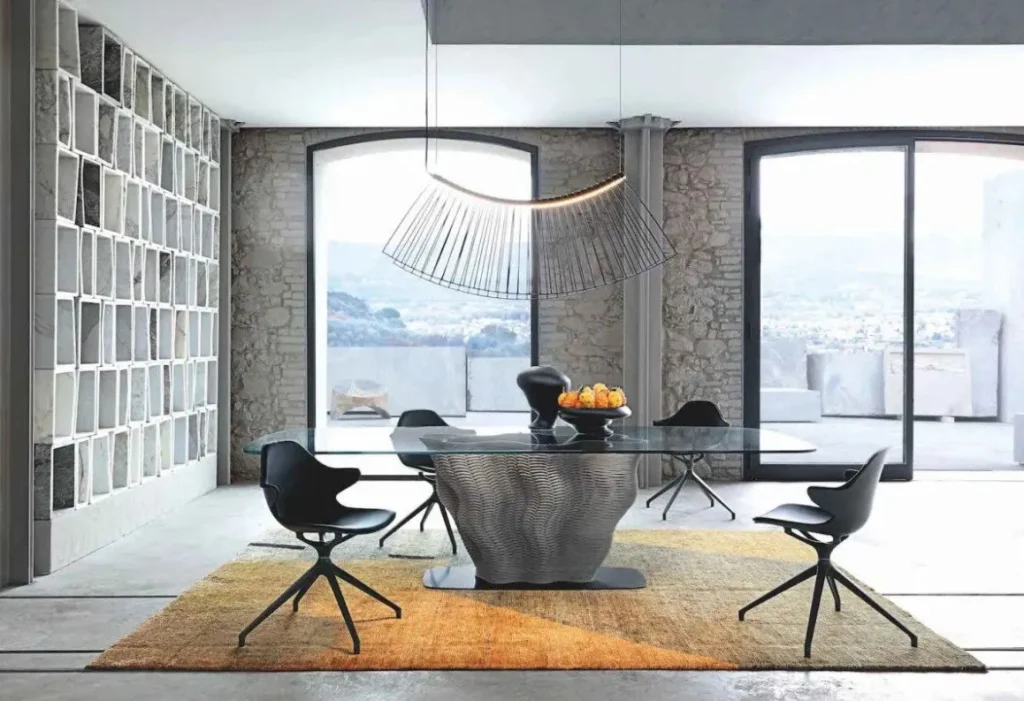
The geometric design of a joint is a key factor that determines both the structural strength and aesthetic quality of glass furniture products. The transition from mechanical fastening methods to chemical bonding allows loads to be distributed evenly across surfaces, minimizing the risk of cracking caused by stress concentration.
Glass-to-Glass Joints
In the fabrication of display cabinets and glass shelving, there are two most common geometric configurations:
90° Butt Joint: This is the most common method for basic structures. However, its drawback is that it exposes the glass edge (which often has a green tint in standard float glass), potentially affecting the consistency of the overall aesthetic appearance.
45° Mitered Joint: Preferred in luxury furniture lines. This technique completely conceals the glass edge, creating the visual effect of a seamless, monolithic block of glass.
Adhesive application: For these joints, the glass panels are typically dry-assembled first, then a low-viscosity (capillary-action) adhesive is applied, allowing it to wick into the gap naturally and create a bubble-free, completely transparent bond line.
Glass-to-Metal Joints
Attaching table legs, brackets, or metal hinges to glass creates extremely high stress concentration points.
Torque management: When a load is applied to the edge of a glass tabletop at a distance from the support center, it generates significant torque on the central joint. For example, a force of approximately 36 kg (80 pounds) applied 60 cm (2 feet) from the table center can create pressure of up to 119 psi on a contact area of only 7.6 cm (3 inches).
Load distribution: The geometry must ensure a sufficiently large contact surface to avoid “point loading.” If the contact area is too small, the difference in stiffness between metal and glass will lead to premature failure due to material fatigue.
Fillet bead: For right-angle joints, a fillet bead of adhesive at least 10 mm (3/8 inch) in size should be maintained and balanced evenly on both sides of the bonded corner. Excessive tooling (over-tooling) that thins the adhesive layer can significantly weaken the joint.
Glass-to-Wood Joints
The greatest challenge here is that wood expands and contracts with humidity, while glass remains dimensionally stable.
Mechanical isolation design: Instead of rigid bonding, designers often use a rabbet joint—placing the glass panel within a grooved wooden frame.
Engineering clearance: The geometry of the wooden groove must provide sufficient space for the wood to expand freely without exerting direct pressure on the glass edge. In such cases, vinyl spacers or rubber bumpers are commonly placed at contact points to provide stability without requiring a rigid chemical bond.
General Geometric Principles in Manufacturing
Avoid stress concentration: Glass performs well under compression but poorly under tension and shear. Therefore, joint geometry should be designed to distribute shear stress evenly across the entire area rather than concentrating it at the edges.
Control adhesive thickness: Maintaining a uniform adhesive layer helps eliminate localized bending moments. When bonding materials with significantly different coefficients of thermal expansion (CTE), such as aluminum and glass, a thicker and more elastic adhesive layer can better absorb thermal deformation.
Determine the center of symmetry: For single-pedestal bases, accurately identifying the geometric center for adhesive placement is critically important to ensure load balance and structural stability.
Optimizing joint geometry not only increases load-bearing capacity severalfold but also enables the “invisible” design aesthetic characteristic of modern furniture.
Adhesive Systems
UV Adhesive
UV adhesive (also known as light-curing adhesive or photopolymer adhesive) is a leading solution in the glass and furniture industries thanks to its ability to create aesthetically flawless joints with high structural strength.
UV adhesive is a single-component, solvent-free adhesive composed of monomers, oligomers, and photoinitiators.
Operating mechanism: The adhesive remains in a liquid state until exposed to ultraviolet light or visible light at specific wavelengths (typically 320 nm to 400 nm). When illuminated, the photoinitiators release free radicals, triggering polymerization and cross-linking of the polymer network within seconds.
Greatest advantage: Its “cure-on-demand” capability allows technicians unlimited time to precisely align components and clean excess adhesive before initiating the curing process.
UV adhesive not only provides physical adhesion but also forms durable covalent bonds.
Silane coupling agents: High-quality industrial UV adhesives often contain silane molecules. One end of the molecule bonds with the adhesive’s polymer network, while the other forms siloxane (Si-O-Si) bonds directly with silicon dioxide (SiO₂) molecules on the glass surface.
Strength: These joints are often so strong that under severe impact, the glass itself may break before the adhesive bond separates.
Important technical characteristics:
Viscosity:
- Low-viscosity (capillary) types: Capable of flowing into narrow gaps through capillary action, ideal for pre-positioned glass-to-glass joints.
- Medium/high-viscosity types: Suitable for vertical surfaces or filling small gaps between surfaces that are not perfectly flat.
Refractive Index: Specialized UV adhesive formulations are designed with a refractive index matching standard glass (~1.51) to eliminate optical boundaries, making the joint appear completely “invisible.”
Environmental durability: Many modern formulations resist yellowing from prolonged sunlight exposure and can withstand vibration and high humidity.
To achieve optimal results, the process is typically divided into two stages:
Stage 1 (Tack-cure): Expose the adhesive to UV light for a short period (a few seconds to 1 minute) so it reaches approximately 70% of its final strength. At this stage, the adhesive is fixed in place but still allows excess adhesive to be easily removed using a blade or alcohol.
Stage 2 (Final cure): Expose the adhesive to high-intensity UV light for a longer period to complete polymerization. The product should then be allowed to stabilize for 24 hours to relieve internal stresses before being put into service.
Solutions for specific challenges:
Shadow areas: For joints where UV light cannot fully penetrate (such as bonding thick metal to tinted glass), “dual-cure” UV adhesives are used. These combine light curing with heat or chemical activators to ensure complete curing in shaded areas.
Extremely humid environments: In bathrooms or refrigerated food display cases, UV adhesive is often combined with the Pyrosil process (surface treatment using a flame containing silicon precursors) to create a protective layer that prevents moisture penetration into the joint.
Safety Notes and Troubleshooting
Safety: High-intensity UV light can damage skin and eyes, so specialized protective eyewear and nitrile gloves are mandatory.
Oxygen inhibition: Some UV adhesives may leave a slightly tacky surface after curing because oxygen in the air interferes with curing at the outermost layer. Solutions include using a higher-intensity lamp or specialized “surface-dry” adhesive formulations.
Air bubbles: Usually caused by applying the adhesive too quickly or moving the materials after application but before UV exposure. Lower the glass slowly to allow the adhesive to spread evenly and avoid vibration during illumination.
Two-Component Epoxy System
A two-component epoxy system is an extremely strong structural bonding solution used in furniture manufacturing and industry, especially when joining dissimilar materials such as glass to metal or stone.
Composition: This system consists of two separate parts: a resin, typically synthesized from epichlorohydrin and bisphenol-A, and a hardener, typically composed of amine compounds.
Chemical reaction: When these two components are mixed in the correct ratio, they undergo an exothermic chemical reaction, forming an extremely durable and rigid cross-linked polymer network.
Light-independent curing: Unlike UV adhesives, epoxy cures through an internal chemical reaction, allowing it to fully harden even in areas shielded from light or within thick, opaque joints.
Advantages:
Extremely high structural strength: Epoxy is known for its ability to withstand heavy loads, making it the preferred choice for load-bearing joints such as attaching glass tabletops to metal bases or stone pedestals.
Gap-filling capability: Due to its extremely low shrinkage during curing, epoxy is highly effective at filling gaps between uneven surfaces, something that other thin-film adhesives cannot achieve.
Environmental resistance: Many epoxy formulations are water-resistant, chemically resistant, and perform well in high-humidity environments.
Post-processing capability: Once fully cured, epoxy becomes very hard, allowing manufacturers to sand, drill, polish, or even paint over the bonded area to achieve the desired aesthetic result.
Limitations:
Yellowing: This is the biggest drawback of standard epoxy. Over time and under ultraviolet exposure, epoxy joints often become cloudy or yellow, reducing the aesthetic appeal of transparent glass designs.
Complex process: Mixing must be done with absolute accuracy in the specified ratio. If the ratio is incorrect, the adhesive may fail to cure properly or may not achieve its maximum strength.
Air bubble management: Due to its medium-to-high viscosity, epoxy can easily trap air bubbles during manual mixing, creating structural weak points and cosmetic defects.
Long curing time: Compared to UV adhesives that cure within seconds, epoxy typically requires several minutes to several hours to set and up to 24 hours to reach maximum strength.
Managing the Coefficient of Thermal Expansion (CTE)
When bonding glass to materials with different expansion rates (such as aluminum), the rigid nature (high modulus) of epoxy can become a weakness. To address this, manufacturers apply two strategies:
Adding inorganic fillers: Nano-silica or ceramic particles are mixed into the resin to reduce the adhesive’s CTE, helping it expand and contract more closely in line with glass and steel, thereby reducing internal stresses that can cause glass breakage.
Using a primer: Combined with silane primers (such as silane coupling agents) to create stronger covalent bonds with the silicon dioxide (SiO₂) surface of glass.
Standard Application Procedure
Surface preparation: Clean thoroughly using 99% Isopropyl Alcohol (IPA). Metal surfaces should be lightly sanded to create a mechanical “key” that improves adhesion.
Mixing the adhesive: Dispense the two components onto a clean surface and mix thoroughly for at least one minute until the mixture is uniform.
Application: Apply a small amount to both surfaces and press them together. Lower the materials slowly to avoid trapping air bubbles.
Fixing and finishing: Keep the joint stable during the initial setting period (typically 5–10 minutes depending on the product). After one hour, the assembly can usually be moved gently, but the joint only reaches its maximum mechanical strength after 24 hours.
Structural Acrylic and Methacrylate
Structural acrylic adhesive systems (commonly referred to as Methyl Methacrylate – MMA) are specialized load-bearing bonding solutions used in the furniture and construction industries, particularly effective when joining glass to materials with surfaces that are traditionally difficult to bond.
Main composition: This type of adhesive is formulated from methacrylate compounds and enhanced (toughened) with elastic additives (elastomers).
Curing mechanism: The adhesive typically consists of two components (resin and activator) that react together at room temperature to form durable polymer bonds. Some “no-mix” systems allow the activator to be applied to one surface and the adhesive to the other, with the reaction occurring when the two surfaces are pressed together.
Technical advantages:
Multidirectional load-bearing capability: Structural acrylic adhesives are distinguished by extremely high peel strength and impact resistance. This enables them to withstand significant external forces without causing brittle failure of the bond.
Thermal stress absorption: Thanks to elastic additives, the adhesive layer can flex and absorb differences in the coefficient of thermal expansion (CTE) between glass and other materials such as aluminum or plastics, reducing the risk of glass cracking due to thermal shock.
Environmental durability: These adhesives offer excellent resistance to environmental factors, chemicals, and aging, maintaining structural integrity over long periods.
Applications in furniture manufacturing and structural assemblies
Structural acrylic adhesives are often preferred for connections requiring high safety and heavy load-bearing performance, where conventional adhesives cannot meet the requirements:
Metal hardware installation: Used to bond hinges, handles, and metal components to thick glass panels or tempered glass.
Balustrade and partition systems: Used in the assembly of glass railings, turnstiles, and large glass structures that require strong and stable support.
Replacement for mechanical fastening: In many cases, this solution completely replaces drilling, screws, rivets, or welding, preserving the glass surface and enhancing the product’s aesthetics.
Aesthetic and installation considerations
Transparency: Many modern structural acrylic adhesives are designed to be colorless and highly transparent, making them ideal for “invisible” joints in interior design. However, some ultra-high-strength grades may not achieve perfect transparency, so selection should be based on whether aesthetics or load-bearing performance is the primary priority.
Surface preparation: Compared with epoxy, this adhesive family is more forgiving and may sometimes require only minimal surface preparation while still achieving strong adhesion on unabraded metal surfaces or glass that has not undergone extensive treatment.
Usage considerations: To achieve the best results, concentrated stress should be avoided by designing joints so that forces are distributed evenly across the bonded area. In addition, cleaning surfaces with Isopropyl Alcohol (IPA) before installation remains an important step to remove oils, grease, and fingerprints.
MS Polymer and Silicone
Modified polymer systems (MS Polymer) and Silicone are elastomeric bonding solutions that play an important role in furniture manufacturing, particularly when dealing with vibration issues and differences in thermal expansion between materials.
Curing mechanism: Both MS Polymer and Silicone are one-component adhesives that cure through a reaction with atmospheric moisture at room temperature.
High elasticity: They are classified as low-modulus adhesives, offering excellent flexibility with very high elongation at break (typically from 100% to 300%). This characteristic allows the adhesive layer to act as a shock absorber, absorbing shear stresses and distributing forces evenly throughout the joint.
MS Polymer:
MS Polymer is often referred to as a “hybrid” adhesive because it combines the best characteristics of silicone and polyurethane.
Aesthetics: Specialized glass-grade products are designed to cure clear and resist yellowing over time, creating discreet and visually appealing joints.
Broad adhesion capability: They adhere well to a wide range of challenging substrates such as glass, metal, wood, and composite materials, often without requiring a primer.
Resistance properties: They provide excellent weather and UV resistance, making them ideal for outdoor furniture applications or expansion joints.
Silicone:
Gap-filling capability: Silicone is highly effective at filling gaps between surfaces that are not perfectly flat.
Superior water resistance: It is the preferred choice for areas frequently exposed to water, such as bathroom mirrors or kitchen glass sealing, due to its moisture resistance and mold prevention properties.
Damping and vibration control: Silicone offers outstanding vibration-damping performance for glass components in dynamic structures.
Application scenarios:
This solution is commonly preferred in the following situations:
Glass-to-Wood Bonding: Because wood expands and contracts with humidity while glass remains dimensionally stable, rigid adhesives (such as UV adhesives or epoxy) can cause glass breakage or wood fiber tearing when environmental conditions change. A flexible MS Polymer adhesive layer absorbs these movements and keeps the joint secure.
Glass-to-Aluminum Joints: Aluminum has a much higher coefficient of thermal expansion (CTE) than glass. When bonding long aluminum profiles to large glass panels, a thick MS Polymer or Silicone adhesive layer acts as a flexible cushion, preventing glass cracking caused by thermal stress.
Outdoor Furniture: Thanks to their excellent durability against harsh environmental conditions such as rain, sunlight, and sudden temperature changes.
Some limitations:
Not suitable for heavy structural bonding: They lack the strong structural bite provided by Acrylic or Epoxy adhesives and are therefore not suitable for joints subjected to extremely high point loads.
Joint thickness: The adhesive layer generally has a noticeable thickness and may remain visible, which may not suit designs requiring completely “invisible” joints like those achieved with UV adhesives.
Failure mode: When overloaded, these adhesives typically fail by peeling rather than by brittle fracture.
The choice between MS Polymer and Silicone generally depends on transparency requirements (MS Polymer is often clearer) and the need for primer-free adhesion on specific substrates.
Managing the Coefficient of Thermal Expansion
One of the primary causes of failure in glass bonding is incompatibility in the Coefficient of Thermal Expansion (CTE) between materials.
When ambient temperature changes, glass, aluminum, and steel expand at different rates. For example, aluminum expands several times more than standard glass. If an adhesive that is too rigid is used to connect these two materials, the resulting tensile and shear stresses may exceed the adhesive’s strength or cause the glass to crack.
| Material | Typical CTE (10−6/°C) | Degree of Difference Compared to Glass |
|---|---|---|
| Standard Glass (Soda-Lime) | 8.0 – 9.0 | Reference |
| Carbon Steel | 11.0 – 13.0 | Low |
| Aluminum | 23.0 – 24.0 | Very High |
| Acrylic/Polycarbonate Plastic | 70.0 – 80.0 | Extreme |
To address this mismatch, furniture manufacturers apply four key engineering strategies:
- Low Young’s modulus cushioning layer: Use adhesives with high elongation at break (100%–300%) so that the adhesive layer acts as a shock absorber, accommodating differential movement.
- Adhesive bond-line thickness control: Maintaining a uniform thickness helps distribute shear stress evenly across the joint surface, preventing stress concentration at the edges.
- Use of inorganic fillers: In some cases, adhesives can be blended with nano-silica particles to adjust the CTE of the adhesive layer itself, bringing it closer to that of the substrate materials.
- Intermediate structural adhesive tapes: Use ultra-strong double-sided acrylic tapes to mount mirrors or decorative panels, allowing immediate absorption of thermal deformation.
Recommended Industrial Installation Process
A defect-free glass bonding process requires strict discipline at every step.
Step 1: Cleaning and Chemical Preparation
All bonding surfaces must be completely free of dust, grease, and fingerprints. Use 99% Isopropyl Alcohol (IPA) or specialized residue-free cleaners. Common household cleaners often contain anti-streak additives that act as release agents, weakening the bond.
Step 2: Heating to Remove Microscopic Moisture
The rapid evaporation of cleaning solvents cools the glass surface, leading to microscopic moisture condensation that is invisible to the naked eye. Before applying the adhesive, the surface should be heated to approximately 20–30°C above room temperature to ensure it is completely dry. The adhesive must be applied within 5 minutes after heating.
Step 3: Adhesive Application and Fixation
Capillary adhesive (low viscosity): The glass panels are dry-assembled and firmly held in place using vacuum suction fixtures. The adhesive is then dispensed into the joint gap, relying on capillary action to draw it throughout the entire joint without trapping air bubbles.
Medium/high-viscosity adhesive: The adhesive is applied to one surface, and the other surface is then lowered slowly onto it, allowing the adhesive to spread evenly under the weight of the glass and preventing air entrapment.
Step 4: Two-Stage Curing
Tack-cure stage: Brief exposure to a UV light source allows the adhesive to reach approximately 70% of its final strength. At this point, the fixtures are removed, and technicians can easily scrape away excess adhesive using a specialized blade.
Final cure stage: Full exposure to high-intensity light completes the polymerization process. The light source must cover the entire length of the joint to prevent uneven thermal stress that could cause the glass to crack.
Step 5: Resting and Stabilization Period
After curing, the finished furniture product should remain completely undisturbed for at least 24 hours. This period allows the polymer network to relax and stabilize the internal stresses generated during polymerization.
Proposed Solutions for Common Defects
During production, the following defects frequently occur and require effective corrective measures:
Air bubbles in bonded joints: Usually caused by assembly being performed too quickly or by moving components after adhesive application but before curing. The solution is to use precise positioning fixtures and degassed adhesives.
Sticky adhesive surface (oxygen inhibition): Occurs when oxygen in the atmosphere prevents curing at the outermost surface. This can be remedied by using a higher-intensity light source or by covering the joint with a transparent film during exposure.
Yellowing: Associated with the use of low-quality epoxy or cyanoacrylate resins. The solution is to switch to UV-stabilized resin systems.
Delamination: Often caused by inadequate cleaning or moisture ingress. The key solutions are a pre-treatment heating process and the use of flame SiO₂ coating technology.