
Instead of using traditional screws, rivets, or mechanical clips, many modern construction projects have adopted advanced adhesive systems to bond fiber cement panels—delivering a seamless and more aesthetic appearance by eliminating visible fixings.
When the right adhesive type and proper installation method are used, adhesive systems can provide strong and reliable bonds for both interior and exterior applications.
This article offers a comprehensive overview of adhesive solutions for fiber cement panels, including:
- Common applications: walls, façades, ceilings, and floors
- Substrate compatibility: wood, concrete, metal, etc.
- Types of adhesives: polyurethane, epoxy, silicone, hybrid polymers, etc.
- Key performance criteria: weather resistance, thermal movement, fire rating, flexibility, curing speed, and VOC emissions
Interior Applications
Interior Wall Cladding
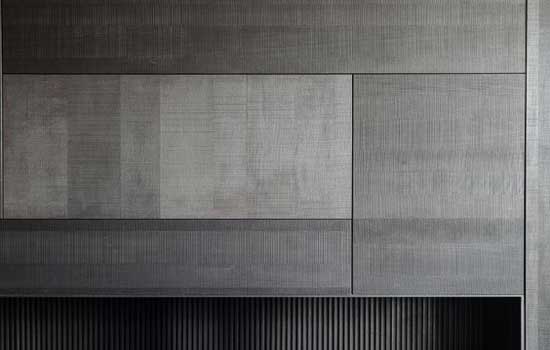
Adhesives are commonly used to install fiber cement panels as decorative interior wall cladding or wainscoting. In dry indoor environments, panels can be directly bonded to substrates such as plywood, drywall, or timber battens.
Certain adhesives originally designed for fiber-reinforced plastic (FRP) panels may also be suitable for fiber cement panels under compatible conditions, thanks to their strong adhesion to porous surfaces like wood or gypsum. Adhesives for these interior applications typically offer high initial tack, low VOC content, and are compliant with indoor air quality and environmental standards.
Note:
When bonding fiber cement panels directly to wood or metal framing, manufacturers often recommend using structural adhesive in combination with mechanical fasteners (such as screws or nails) to ensure a stable and secure installation. The adhesive helps reduce movement and fills gaps, but it cannot fully replace the function of mechanical attachment. For heavier panels, combining adhesive with screws remains the safer and more reliable option.
Interior Ceilings
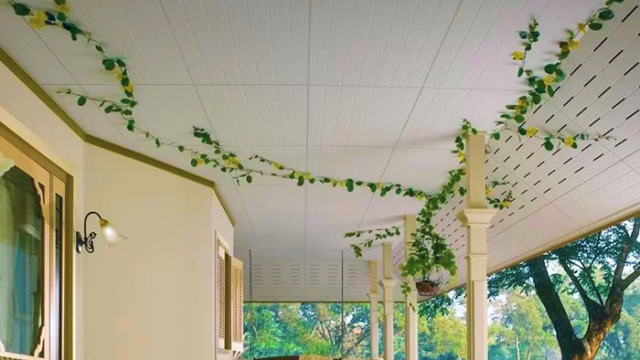
Fiber cement panels are sometimes used for interior ceilings or soffits, due to their fire resistance and ability to provide a clean, finished appearance. However, because of the effects of gravity, adhesives alone are generally not relied uponto secure ceiling panels.
Hybrid installation methods are commonly used—for example, applying adhesive to ceiling joists or framing members, and then mechanically fastening the panel with screws or nails until the adhesive has fully cured. The adhesive helps reduce vibration and hold the panel flush, but the primary structural support still comes from mechanical fixings.
When adhesives are used for ceiling installations, fast-curing adhesives or two-component systems are recommended to minimize the need for prolonged bracing. It is critical to follow the adhesive manufacturer’s load-bearing recommendations for overhead applications—some adhesives may not be suitable unless a temporary support systemis used during curing.
Flooring and Underlayment
Fiber cement boards are commonly used as tile underlayment (backer boards), and they are not typically bonded using adhesive alone. Instead, they are set into a thinset mortar bed and secured with mechanical fasteners such as screws.
Manufacturers also strongly advise against using construction adhesive in bead form as a substitute for mortar, since this can leave voids beneath the panel, leading to flexing and potential tile cracking.
However, when installing fiber cement boards over wood or metal joist systems, a bead of structural adhesive can be applied along the framing to reduce floor squeaks and improve overall stiffness. It is essential that the board be pressed firmly into place immediately after application to avoid any “panel crown” or unevenness in the finished floor.
In summary, for flooring applications, adhesive plays a supplemental role only. Full-coverage bonding methods, such as troweled thinset mortar or spread epoxy adhesives, remain the primary means of achieving reliable, large-area adhesion.
Exterior Applications

Exterior Wall Cladding and Ventilated Façade Systems
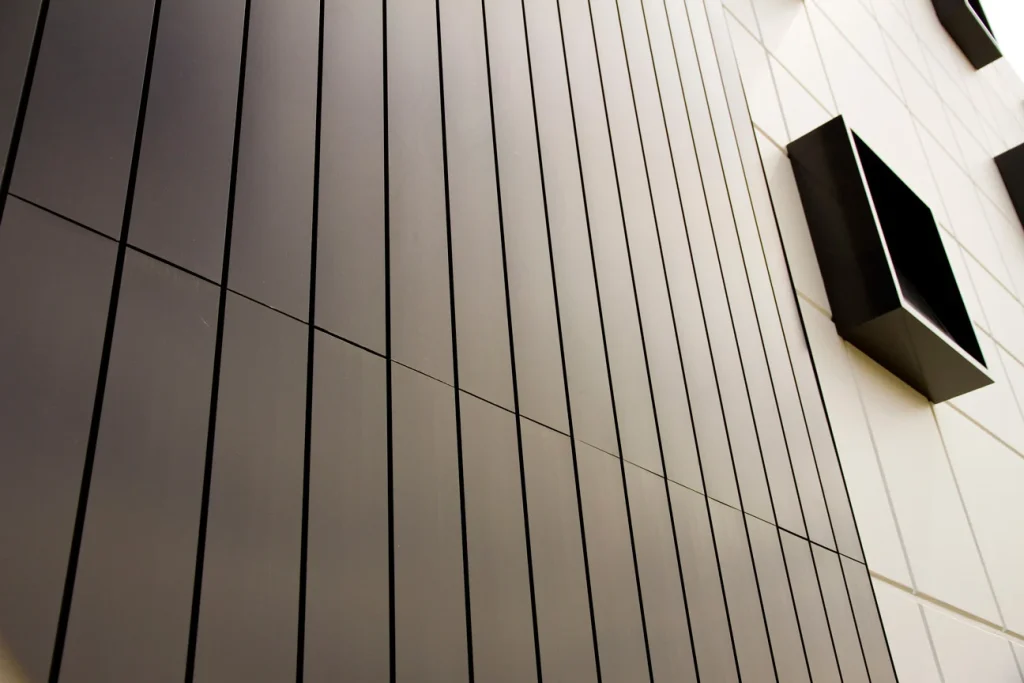
In modern façade systems, especially ventilated façades, high-performance adhesives are increasingly used to bond fiber cement panels to sub-framing made of metal or wood.
In these systems, the panels are typically bonded to vertical aluminum profiles or timber battens using specialized adhesive beads, creating a concealed fixing (with no visible fasteners on the panel face) and maintaining an air gap behind the panels—a design known as a rainscreen façade, which allows for moisture drainage and rear ventilation.
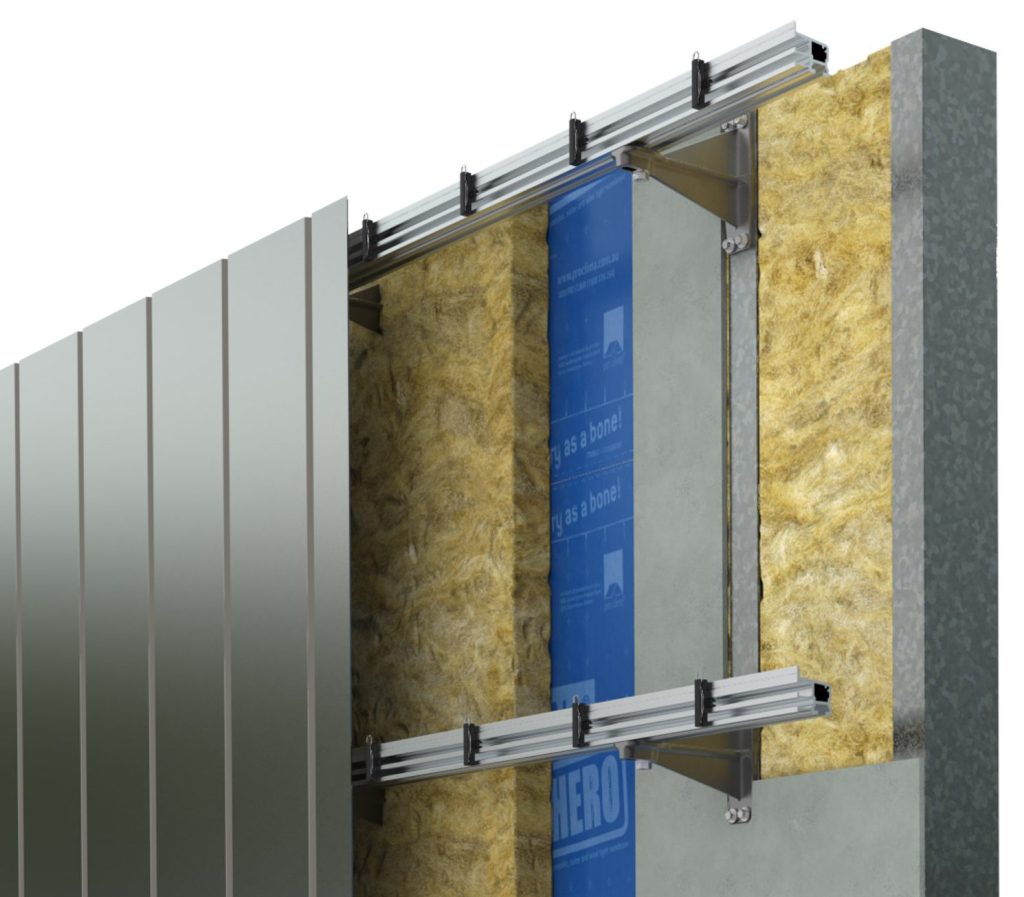
Structure of Rainscreen façade
Adhesive solutions for exterior façades have been validated across many markets—particularly in Europe—through rigorous testing and certified performance. Today, several adhesive systems offer significant cost savings compared to hidden mechanical fixings, while still maintaining a high level of aesthetic quality.
These systems are capable of withstanding dynamic loads such as wind pressure, vibration, and thermal expansion, provided the installation is engineered correctly. Adhesives used in exterior applications must ensure:
- Weather and UV resistance
- Long-term elasticity and flexibility
- Strong adhesion to a variety of substrates
Polyurethane- and silicone-based adhesives are often preferred due to their durability in harsh outdoor environments. Even large-format panels (e.g., 1250×3050 mm) can be securely bonded, as long as the following guidelines are strictly followed:
- Proper bead size and positioning
- Adequate spacing between vertical support profiles
- Placement of adhesive beads 40–150 mm from the panel edges
Important note: Panels must be bonded within a ventilated façade system (open-joint rainscreen design), not directly onto a closed wall surface. This ensures moisture does not get trapped and allows for air circulation behind the panels—critical to preventing warping caused by heat and humidity.
Exterior Soffits and Ceilings
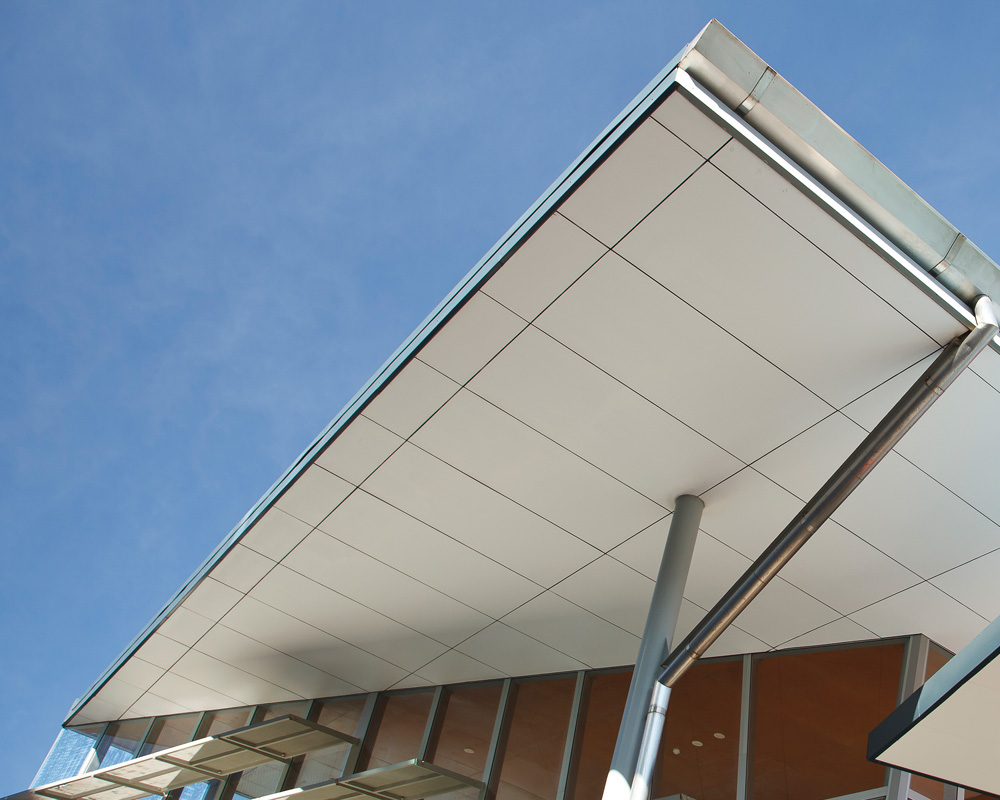
For exterior ceiling applications, such as soffits, mechanical fasteners (screws or nails) remain the preferred solutiondue to the effects of gravity and potential wind uplift. However, structural adhesives can be used in combination to help reduce vibration, noise, or to maintain a flush panel surface.
For example, adhesive may be applied between the panel and a metal framing system to provide stability, while screws or nails carry the primary load. If adhesive is used alone, temporary bracing or support systems are requiredthroughout the curing period.
As with wall cladding, ventilation behind exterior ceilings is essential—either through the use of perforated panels or by incorporating ventilation at eaves—to prevent heat buildup and moisture accumulation behind the panels.
Lap Siding and Trim Details
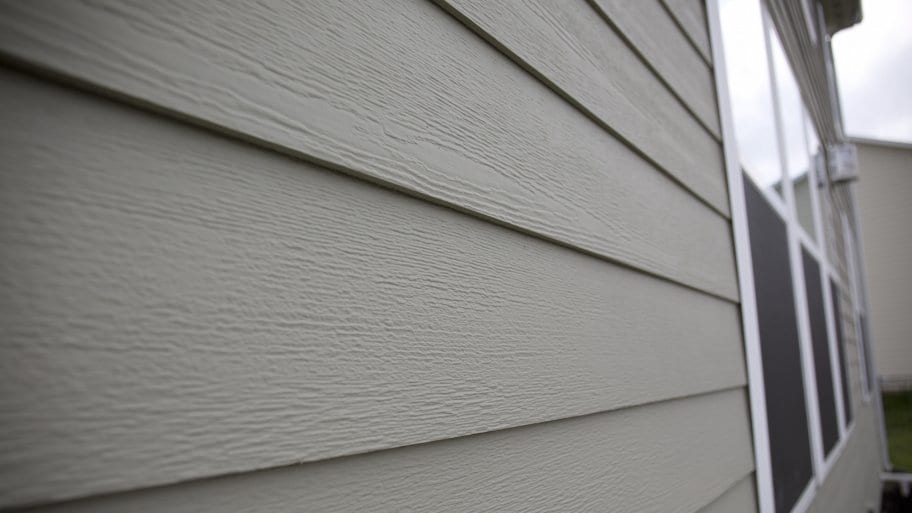
For fiber cement lap siding (such as HardiePlank-type boards), the standard installation method is almost always nailing or screwing, rather than adhesive bonding.
In general, adhesives are not used to attach lap siding to exterior walls, except in special cases—for instance, to bond small trim pieces, decorative edges, or accessories.
In certain applications—such as high-wind zones where visible face fasteners are to be avoided for aesthetic reasons—a certified panel adhesive system may be used. However, such systems should have documented wind-load performance, and are typically used in combination with tongue-and-groove joints or concealed mechanical fixingsfor added security.
For fiber cement trim elements (e.g. battens, corner trims, window surrounds), polyurethane construction adhesivesare commonly used at scarf joints or to bond trim to the wall surface, typically in combination with finish nails to ensure a tight, long-lasting fit.
Installers may also use adhesive to laminate two fiber cement boards together, for example, to increase thickness or create detailed edging. In such cases, the adhesive must be specifically formulated for exterior use and compatible with cementitious materials—such as PU-based adhesives or MS polymer sealant-adhesives.
Note: Always verify that the adhesive is certified for exterior applications and offers strong adhesion to both fiber cement and the intended substrate (such as wood or masonry).
Substrate and Subframe Materials

To ensure long-term bonding performance, adhesives used for fiber cement panels must be compatible with both the panel itself and the substrate (the surface or supporting frame behind it).
Common substrate materials include wood, concrete or masonry, and metal (steel or aluminum). Each material has distinct surface characteristics that directly impact adhesion quality:
Wood Substructures
Adhesives can be used to bond fiber cement panels to timber battens or plywood, but the wood must be dry, stable, and preferably pre-treated.
- Freshly cut or resinous wood may require light sanding or priming to ensure proper adhesion.
- Some adhesive systems include special primers for raw or pressure-treated wood, which help seal the wood fibersand create a stable bonding surface.
- The ideal timber should be kiln-dried or industrially treated, with moisture content below 18%.
- If the wood has been painted or coated, the coating may act as a weak layer—check adhesion carefully. If the paint peels off easily, it should be removed before bonding.
Note: Wood is hygroscopic and can expand or contract with humidity changes. Therefore, it is essential to use permanently elastic adhesives to prevent cracking or bond failure over time.
Concrete and Masonry Substrates
Direct bonding of fiber cement panels to concrete or masonry walls is not commonly used in ventilated façade systems, unless an intermediate subframe (wood or metal) is installed.
However, adhesives can be used on concrete or brick surfaces for interior applications, or in certain exterior caseswith proper surface treatment.
- Concrete is porous and dusty, so it must be thoroughly cleaned (e.g., wire brushing, air blowing), and primed with a compatible primer from the adhesive manufacturer.
- If the surface is soft or crumbly, an epoxy-based primer can be applied to harden it before bonding.
- If the concrete has a smooth mold-release finish, it should be lightly sanded or abraded to improve adhesion.
- For uneven wall surfaces, thick adhesive beads or adhesive pads may be needed to bridge gaps, and panels must be temporarily braced until full cure.
Note: When bonding large panels vertically, temporary supports are essential to prevent the panel from slipping before the adhesive cures.
Metal Subframes
Aluminum framing is widely used in ventilated façade systems, and modern adhesives are engineered to bond effectively to metals—provided that the surface is properly prepared:
- Metal surfaces must be clean and oil-free. Light abrasion or chemical priming may be required.
- For mill-finish aluminum or galvanized steel, cleaning with isopropyl alcohol or a designated cleaner is often sufficient.
- For anodized aluminum or powder-coated finishes, check adhesion carefully. If the coating delaminates easily, sand back to bare metal or apply a special primer.
- Some adhesive systems require a black primer coat on aluminum to ensure long-term durability.
Special notes:
- Stainless steel (inox) may need priming if the surface is highly polished.
- For regular steel, proper anti-corrosion treatment is essential—any moisture ingress can cause rust within the joint.
- Since metals expand more than fiber cement under temperature changes, the adhesive bead must have a minimum thickness (typically ~3 mm) to accommodate this differential movement.
Other Substrate Types
In retrofit or special applications, fiber cement panels may also be bonded to:
- Aluminum composite panels (ACM)
- Insulated sandwich panels
- Interior surfacing materials such as ceramic tiles, laminates, or porcelain finishes
Key requirements:
- The bonding surface must be clean, degreased, and may require a compatible primer.
Additional notes:
- Standard construction adhesives often do not adhere well to glass or glossy ceramic surfaces—in such cases, use specialty adhesives like industrial-grade epoxy or neutral-cure silicone.
- For non-porous materials (metal, plastics): thorough degreasing and possibly chemical priming are needed.
- For porous substrates (cement, wood): priming is recommended to stabilize the surface before bonding.
Types of Adhesives for Fiber Cement Panels
In fiber cement panel installation, a variety of adhesive chemistries are used—each offering specific advantages suited to different application conditions. Below is a comparison of the most common adhesive types:
| Adhesive Type | Key Advantages | Main Limitations | Recommended Applications |
|---|---|---|---|
| PU 1K (Polyurethane) | Durable, elastic, weather-resistant | Contains VOCs, often requires priming | Exterior façade panel bonding |
| Epoxy | Extremely high strength, heat resistant | Rigid, complex handling, lacks flexibility | Spot reinforcement, high-temperature areas |
| Silicone | Excellent elasticity, UV resistant | Lower strength, slower cure | Interior use, bonding glass to fiber cement |
| Hybrid (MS/SMP) | Safe, flexible, low VOC | Slower cure, UV stability depends on type | Versatile use, exterior façades |
| Acrylic | Fast bonding, adheres well to metals | Strong odor, lacks flexibility | Secondary bonding, retrofit reinforcement |
One-Component Polyurethane Adhesive (PU – 1K)
This type of adhesive cures by reacting with moisture in the air and is commonly supplied in cartridges or sausage packs.
Advantages:
- Strong adhesion to various substrates such as cement, aluminum, and wood
- Good elasticity; accommodates thermal expansion and vibrations
- Fast curing (~4 mm in 24 hours)
- Paintable after curing and non-corrosive to metals
- Performs well in outdoor conditions, with a service temperature range of -40°C to over +80°C
Considerations:
- Uncured PU may contain isocyanates and emit slight odor—gloves and proper ventilation are recommended during application
- Some PU products may foam on overly moist surfaces—use façade-grade, non-foaming formulations
- Certain substrates (e.g., metal, cement) may require a dedicated primer to ensure long-term bond
→ Suitable for: Exterior façade panel bonding where both strength and flexibility are required.
Epoxy Adhesive (2-Component)
A two-part system consisting of resin and hardener that cures through chemical reaction.
Advantages:
- Very high bond strength
- Excellent heat and chemical resistance
- Non-combustible; ideal for high-temperature environments (e.g., near boilers, industrial kitchens)
Disadvantages:
- Rigid and brittle after curing—not suitable for applications with thermal movement (e.g., between metal and cement)
- Mixing is complex, cure time is longer, and handling on large surfaces is challenging
- Typically used for small-scale reinforcement or back-side treatment (to increase panel rigidity and prevent delamination)
→ Suitable for: Spot bonding, high-strength applications, or surface reinforcement where heat or chemical exposure is expected.
Neutral-Cure Silicone Adhesive
Typically used as a high-elasticity sealant with strong weathering performance, common in glass bonding and interior applications with light loading.
Advantages:
- High flexibility; excellent adhesion to glass, aluminum, and glazed surfaces
- Does not degrade under UV or moisture exposure
- Remains elastic over a wide temperature range (up to ~150°C)
Disadvantages:
- Lower tensile strength compared to PU or hybrid adhesives → requires wider adhesive beads
- Slower curing time (~1–2 weeks for thick joints)
- Only neutral-cure silicones should be used—acid-cure types release acetic acid, which can corrode cement and metal
→ Suitable for: Interior bonding, soffits, decorative panels, or lightweight façade applications with low structural demands.
Hybrid Polymer Adhesives (MS Polymer / SMP)
Also known as hybrid polymer adhesives, combining the benefits of PU and silicone. Moisture-cured, free of isocyanates, and considered environmentally friendly.
Advantages:
- Permanently elastic and highly vibration-resistant
- High bond strength, comparable to PU, but without harmful solvents
- Often does not require primers on many surfaces
- Good resistance to weather, UV, and moisture; some variants are fire-rated to B-s1,d0
- Low VOC content, suitable for green building certifications
Disadvantages:
- Moderate cure rate (approx. 2–3 mm per day); panels must be held in place during curing
- Some formulations may offer slightly less UV stability than silicone over long-term exposure (product-dependent)
→ Suitable for: Most fiber cement panel bonding applications—both interior and exterior—and currently one of the most widely used adhesive types for façades.
Acrylic Adhesives and Acrylic Foam Tapes (Optional)
Not widely used, but may appear in specific cases:
- 2-Component Acrylic (MMA): Used for rapid, high-strength bonding (e.g., attaching stiffeners to the panel’s back). Strong odor, rigid after curing, not suitable for large façade bonding.
- Acrylic Foam Tapes (e.g., VHB): Double-sided tapes used primarily for temporary positioning within adhesive systems. Not suitable for sole use on fiber cement panels due to risk of peel failure and long-term creep under load.
Key Criteria for Selecting Adhesives for Fiber Cement Panels

When evaluating and selecting adhesives for fiber cement panels—especially for façade systems—consider the following technical factors:
Weather Resistance
Outdoor adhesives must withstand prolonged exposure to sunlight, rain, temperature fluctuations, and UV rays without performance degradation.
- UV resistance: Silicone offers the highest UV stability (remains flexible and non-brittle under sun exposure). PU and hybrid adhesives often include UV stabilizers—they may discolor slightly, but this doesn’t affect performance in concealed joints.
- Water resistance: Once cured, the adhesive must remain water-resistant and not soften or wash away. In ventilated façades, moisture can enter the cavity behind the panel—thus, adhesives must perform nearly as well as weather sealants.
- Cold resistance: Many high-performance adhesives remain elastic down to -40°C and resist cracking through freeze-thaw cycles.
→ Always choose adhesives specifically tested and certified for façade or exterior use, with proven weather aging performance.
Thermal Expansion & Movement Accommodation
Fiber cement has low thermal movement, but metals like aluminum expand significantly—without flexible adhesive, this can cause panel warping or delamination.
- The adhesive must have shear elasticity to absorb movement.
- A minimum adhesive thickness of ~3 mm is recommended to allow expansion/contraction.
- A triangular bead shape (applied with a V-nozzle) ensures consistent thickness and stress distribution.
- Good façade adhesives can handle ±20% movement of the adhesive bead thickness without cracking.
Fire Resistance
While fiber cement panels are non-combustible (A1 or A2-s1,d0), adhesives are organic and may ignite.
- Fire safety regulations—especially after incidents like the Grenfell Tower fire in the UK—require non-combustible façade components for high-rise buildings.
- Some adhesives are certified to B-s1,d0 (limited flame spread, low smoke, no flaming droplets)—among the best ratings for organic compounds.
- Mechanical reinforcement (e.g. screws, clips) is sometimes required in façade systems to prevent panel detachment if adhesive softens during fire.
- In the U.S., NFPA 285 tests assess flame propagation in multi-story wall assemblies; some façade adhesives pass this stringent test.
→ Always verify flame resistance certification (e.g., EN 13501-1, NFPA 285) for high-rise façade applications.
Elasticity & Modulus
- Low-modulus adhesives (softer): reduce stress transfer to the panel—ideal for brittle materials but may deform more, requiring larger bonding areas.
- High-modulus adhesives: better at holding panels flat and handling loads but may stress materials during thermal movement.
- A balanced adhesive should offer permanent elasticity with medium-high modulus.
- Top-grade adhesives offer elongation at break >200–300%, working elongation ~20–25%—important for vibration, seismic tolerance, and acoustic dampening.
Curing Time & Workability
- 1-component adhesives (PU, silicone, MS): typically require 24 hours to achieve handling strength; full cure takes days. Temporary supports are necessary.
- Double-sided foam tapes are used to hold panels in place initially and ensure a uniform adhesive thickness (~3 mm).
- 2-component systems or accelerators can shorten curing time to a few hours—useful in cold climates or projects requiring fast turnover.
- Open time (the window between application and bonding): typically 5–20 minutes—timing is critical.
- Avoid application below 5°C unless using winter-grade adhesives.
→ Plan installation considering adhesive curing speed, environmental conditions, and crew workflow.
VOC Content & Safety
- High-quality façade adhesives are mostly solvent-free and low-VOC, meeting certifications like LEED or GREENGUARD Gold.
- PU adhesives may contain isocyanates—use gloves, ensure ventilation.
- MS Polymer and neutral-cure silicones are usually odorless and user-friendly.
- For light-colored panels, improper adhesive choice can cause staining—opt for color-tested gray or black adhesives when needed.
→ Always check the product SDS (Safety Data Sheet) and follow personal protection guidelines: gloves, goggles, masks as required.
Comparison of only Adhesive Installation vs. Hybrid Adhesive-Mechanical Systems
| Criteria | Fully Adhesive-Bonded System | Hybrid Adhesive–Mechanical System |
|---|---|---|
| Aesthetics | Very high (no visible fasteners) | Slightly reduced if fasteners are exposed |
| Installation speed | Faster | May be slower |
| Load distribution | Even, without stress concentration | Has fixed mechanical load points |
| Fire safety | Depends on adhesive and project | Higher, with mechanical fail-safe |
| Technical requirements | Must be very precise | More complex but more flexible |
| Suitability for high-rise use | May require approval | More readily accepted |
Key Notes When Selecting a System:
- Always refer to local building codes, as not all regions have specific guidelines for adhesive façade systems.
- Adhesive manufacturers often provide technical documentation, calculations, and approval support.
- Close coordination between design teams (architectural, structural) and the panel/adhesive supplier is essential for reliability.
Fully Adhesive-Bonded Installation
In this method, the adhesive alone is responsible for securing the panel—no mechanical fasteners (screws, rivets) are used.
Key Benefits:
- Maximum aesthetics – no visible screw heads or rivets.
- Faster installation – no drilling or riveting required.
- Even stress distribution – prevents localized cracking that can occur with mechanical fastening.
Critical Requirements for Safety:
- The adhesive system must be certified for the panel type and design load.
- Strict adherence to application procedures: cleaning, priming, bead size and spacing.
- Panel size and subframe layout must comply with the load-bearing capacity of the adhesive.
Practical Application:
- Widely used in Europe, especially in low- to mid-rise buildings.
- Can meet structural requirements (wind load, vibration) when properly engineered.
- However, some fire codes may require supplemental mechanical anchoring (e.g., safety screws) in high-rise applications.
→ This method is ideal when aesthetics and fast installation are priorities, and manufacturer certification is in place.
Hybrid Adhesive–Mechanical System
Combines structural adhesive with mechanical fasteners or brackets for added safety or code compliance.
a) Safety Screws:
- Adhesive is the primary bonding agent, but each panel includes at least one concealed screw or anchor.
- This fastener serves as a fail-safe in case the adhesive bond is compromised (e.g., in fire).
- Screws are hidden—either under the overlapping panel or behind trim.
- Required by some European codes for high-rise façade systems even with certified adhesives.
b) Spot-Fix + Full Adhesive Bead:
- Mechanical fixing at corners or edges for alignment and reinforcement, with adhesive covering the remaining surface.
- Suitable for high wind zones or when temporary support time needs to be shortened.
- Design must ensure that screws and adhesive work together—e.g., screws should not be overtightened, which may damage the adhesive or restrict thermal expansion.
c) Adhesive with Hanging Brackets:
- Panels are hung on hidden hooks or subframe brackets, with adhesive providing stabilization and vibration resistance.
- Often used in exterior soffits or where vibration or acoustic control is needed.
→ This approach is suited for added safety layers, essential buildings, or when explicitly required by local codes.
Contact Information
Recommended Products
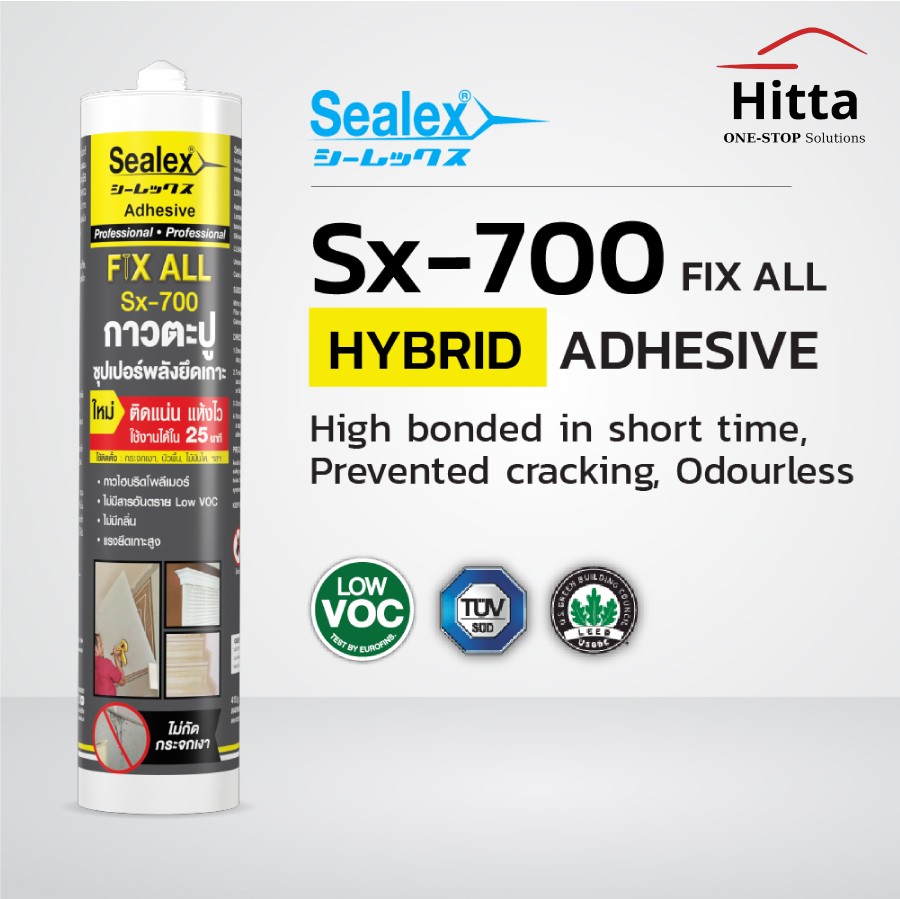
Hitta is a trusted supplier of a wide range of adhesive and bonding tape solutions from leading global brands. Backed by a team of experienced technical experts with hands-on knowledge across various industries, we offer not only premium products but also tailored consultation to optimize your existing processes—ensuring they meet specific requirements and project challenges.
If you are looking for a high-performance, durable, and reliable bonding solution, let Hitta be your partner—from consultation through to implementation.
Contact us today to discover the most suitable adhesive solution for your application.
- ☎️ Hotline: 0565.336.879
- ✉️ Email: hittajsc@hitta.vn





