

Understanding PVC Marble Sheets

PVC marble sheets are a modern and cost-effective alternative to natural marble, widely used in interior decoration thanks to their durability, lightweight nature, and easy installation. They offer a luxurious marble-like appearance without the high cost and maintenance requirements of real stone. Whether installed on walls, ceilings, or furniture surfaces, proper installation ensures long-lasting performance and a flawless finish.
Material Composition: Made from polyvinyl chloride (PVC) and calcium carbonate, giving the sheets a lightweight yet sturdy structure.
Thickness & Sizes: Available in various thicknesses (e.g., 2mm–6mm) and common sizes (1220mm × 2440mm).
Surface Finish: Coated with a decorative marble pattern and a protective UV layer, enhancing durability and scratch resistance.
Applications: Ideal for interior walls, ceilings, furniture, and even bathroom spaces due to their water-resistant properties.
Recommended Installation Areas
1. Bathroom Walls
- Can be installed behind sinks or on door walls.
2. Kitchen Backsplashes
- Suitable for placement behind sinks, between storage units, or on door walls.
- Avoid installing near cooking areas to prevent damage and early replacement.
3. Laundry Rooms
- Perfect for laundry spaces, helping to reduce noise and create a harmonious environment.
4. Living Rooms
- Install behind the TV for an aesthetic focal point.
- Can also be placed behind the main sofa or on empty walls to enhance the sense of space.
5. Bedrooms
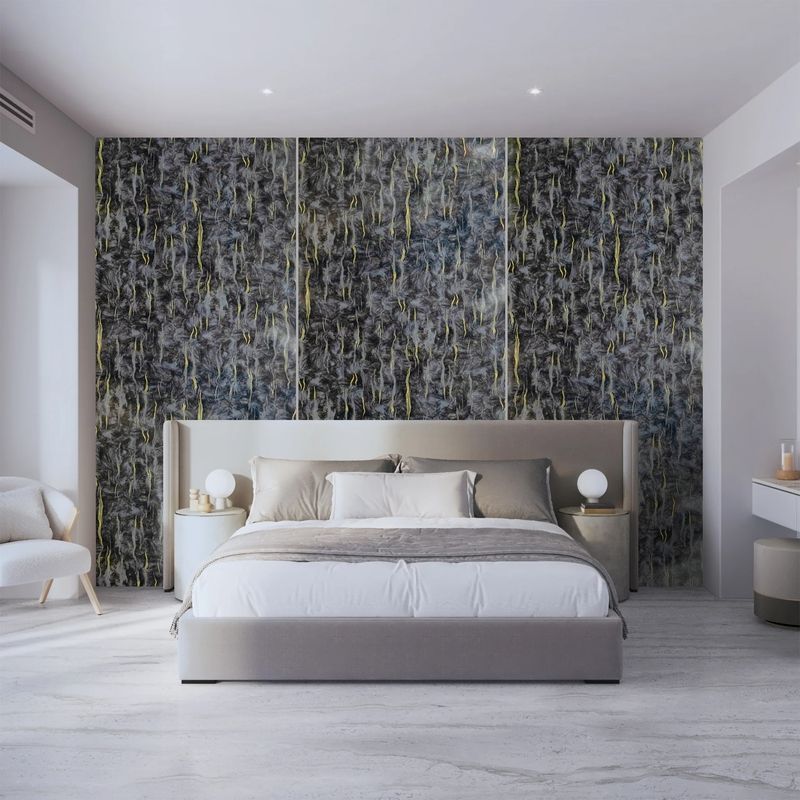
- Ideal for installation behind the bed or dressing table.
- Avoid placing behind wardrobes, as the panels will be hidden and the investment wasted.
6. Offices and Commercial Spaces
- PVC sheets with unique designs are perfect for offices or retail spaces, transforming the overall look.
7. Doors
- PVC marble can also be applied to doors, offering a cost-effective alternative to replacing them.
- Enhances home decor and appearance, giving doors a real marble look.
Overview of Suitable Adhesives
Installing UV-coated PVC marble sheets on walls requires adhesives that bond strongly to both the plastic sheet and the substrate (cement, tile, wood, metal, etc.).
- Solvent-based adhesives and polyurethane/construction adhesives generally provide the highest bond strength.
- Epoxy and contact cements also create very strong and durable bonds.
On the other hand, water-based adhesives (acrylic/latex) and hot-melt adhesives are safer, low-odor (low-VOC), and easier to use, but they typically take longer to cure or offer slightly weaker adhesion. Double-sided tape provides instant grip but is limited in load-bearing capacity.
Each adhesive type differs in curing time, ease of application, and resistance to heat, moisture, and plasticizers in PVC.
Below is a comparison table summarizing key properties, followed by a detailed discussion of each adhesive category.
| Adhesive Type | Bond Strength | Durability & Resistance | Ease of Use & Cure | PVC Compatibility |
|---|---|---|---|---|
| Solvent-Based (Polyurethane/Acrylic)– includes heavy-duty construction adhesives, PVC cement, contact cements | Very High: Often the strongest bond (solvent slightly melts PVC surface). Excellent for large panels or PVC-to-PVC joints | Excellent: Waterproof, heat-resistant; many suitable for outdoor use. Moderate VOC, flammable | Moderate: Usually 1-component. Fast grab, full cure 24–48 hrs. May require solvent cleanup | High: Formulated for PVC. Works on most surfaces after prep (sanding or priming if tile) |
| Water-Based (Acrylic/Latex) – includes panel adhesives, water-based construction glue | Medium: Good adhesion on PVC and porous surfaces, not as aggressive as solvent-based | Good: Low odor, low VOC, mold/UV stable. Slower cure and lower initial grab | Easy: Tubes or buckets, clean with water. Open time 10–20 min, full cure 24–72 hrs | Good: Compatible if specified by manufacturer. Prime tile or metal surfaces |
| Contact Cement (Solvent-based, neoprene or acrylic) | High: Very strong immediate bond on contact, good for large area coverage | Moderate: Good water resistance. Strong odor, flammable. Not suitable for high heat | Difficult: Apply on both surfaces, let dry, then press. No repositioning possible | High: Bonds PVC to wood, metal, tile (surface prep needed) |
| Epoxy (Two-part) | Very High: Rigid, strong bond. Fills gaps, bonds dissimilar materials (PVC-metal-concrete) | Excellent: Waterproof, chemical- and heat-resistant | Difficult: Requires precise mixing. Work time 5–30 min, longer curing | Medium–High:Some epoxies cure too rigidly for PVC expansion; use flexible epoxy |
| Hot-Melt Adhesives – EVA, acrylic, or PUR | Medium: Fast initial tack; strength varies. Acrylic sticks bond PVC better than regular EVA | Moderate: Sets immediately on cooling. PVC plasticizers may weaken bond over time; low heat resistance | Very Easy: Use hot glue gun, immediate adhesion. Suitable for lightweight panels or temporary fixes | Caution: Regular hot melt may not hold heavy PVC. Use solvent-resistant or PUR if needed |
| Double-Sided / High-Tack Tape (Acrylic) | Low–Medium: Instant adhesion, limited by surface area | Good: Waterproof, UV-resistant, withstands 200–250 °C depending on type | Very Easy: No cure time, just press. Bond increases over 24 hrs | High: Works on flat PVC and smooth walls. Not suitable for textured or heavily plasticized PVC |
Summary of Key Factors:
- Solvent-based or polyurethane adhesives provide the strongest and most durable bond on almost any surface, making them ideal for permanent PVC sheet installation, especially outdoors.
- Water-based adhesives are low-odor and beginner-friendly, but they generally take longer to cure and offer slightly less bonding strength.
- Contact cement bonds almost instantly, leaving little to no time for repositioning, and is ideal for achieving uniform adhesion over large areas.
- Epoxy adhesives offer extremely strong, waterproof bonds, but require mixing and longer curing times, making them suitable for heavy-duty applications or filling gaps.
- Hot-melt adhesives set quickly and are easy to use, but their bond strength can weaken over time on PVC.
- High-tack double-sided tape provides immediate adhesion, works indoors and outdoors, but is best suited for small panels or as supplemental support; it should not be relied on as the primary anchor for large sheets.
Solvent-Based & Polyurethane Adhesives
These one-part construction adhesives chemically “weld” PVC surfaces and fill gaps.
- Bond strength: Very high (among the strongest), moisture- and heat-resistant, ideal for permanent installations, especially outdoors.
- Mechanism: The adhesive slightly softens the PVC surface to create a durable bond.
- Application: Usually packaged in cartridges for caulking guns; apply in straight or zigzag lines.
- Curing: Tack sets in seconds; fully cures in 24–48 hours.
- Notes: Strong odor; requires ventilation. Repositioning is nearly impossible. For non-porous surfaces (tiles, smooth metal), lightly sand or use a primer to improve adhesion.
Water-Based Adhesives (Acrylic/Latex)
Water-based adhesives are easy to use, low-odor, beginner-friendly, and cleanable with water.
- Bond strength: Develops more slowly and slightly weaker than solvent/PU adhesives.
- Applications: Ideal for indoor use, especially in poorly ventilated areas.
- Compatibility: Bonds well to cement walls, wood, and offers moderate moisture resistance.
- Installation: Panels may need clamping during curing (typically 1–2 days). On tiles or metal, sand or prime first. Apply with a notched trowel or caulking gun depending on the product.
Contact Cement (Solvent-Based)
Contact cement bonds instantly when two coated surfaces meet.
- Application: Apply adhesive to both the PVC sheet and wall, allow to become tacky, then press together.
- Advantages: Provides uniform adhesion over the entire back surface, ideal for large, smooth panels. Good moisture resistance.
- Limitations: No repositioning; panel must be placed correctly the first time. Strong odor and flammable—ensure good ventilation. Does not fill gaps; wall surface should be relatively flat.
Two-Part Epoxy Adhesives
Epoxies create extremely strong, waterproof, and chemical/heat-resistant bonds.
- Composition: Consists of resin and hardener; must be mixed before use.
- Capabilities: Fills gaps, suitable for uneven walls.
- Working time: Limited (a few minutes to an hour depending on the formula).
- Curing: Fully hardens in 4–24 hours. Once cured, the bond is almost permanent.
- Ideal use: Wet areas, outdoor installations, and load-bearing applications.
Hot-Melt Adhesives
Applied with a glue gun, hot-melt adhesives set quickly, are easy to use, and have low odor.
- Properties: Sets instantly when cooled; suitable for temporary fixing.
- Bond strength: Moderate; can weaken over time due to plasticizers in PVC. Poor heat resistance (softens at 100–120 °C).
- Best for: Temporary fixing until main adhesive cures, small panels. Not recommended as the primary adhesive for large panels.
High-Tack Double-Sided Tape
Acrylic foam or high-strength mounting tape provides instant adhesion without curing time.
- Properties: Water- and UV-resistant; suitable for outdoor use. Works best on smooth, clean, dust-free surfaces. Does not fill gaps—wall must be very flat. Removing the tape may peel paint.
- Best for: Small panels, supplemental support, securing edges before applying main adhesive. Should not be used alone for large PVC panels.
Installation Guide for PVC Marble Sheets
Tools & Materials Needed
Tools:
- Measuring tape
- Pencil / marker
- Spirit level
- Utility knife or cutting machine
- Sandpaper (for smoothing edges)
- Rubber roller (for pressing sheets)
- Caulking gun (for adhesive application)
Materials:
- PVC marble sheets
- Construction adhesive (high-bonding, suitable for PVC)
- Double-sided tape (optional for temporary support)
- Sealant / silicone (for joints, waterproofing)
- Edge trims or corner moldings (for finishing and edge protection)
Surface Preparation
Proper surface preparation ensures strong adhesion and smooth installation.
1. Cleaning the Wall Surface
- The wall must be dry, clean, free from dust, grease, or moisture.
- Remove any oil stains or dirt with a detergent solution and allow the surface to dry completely.
- For damp walls, apply waterproof treatment before installation.
2. Leveling the Surface
- Check for uneven spots or cracks.
- Use putty or plaster to smooth imperfections.
- For highly uneven walls, consider adding a backing layer (plywood or fiberboard) to create a flat base.
3. Marking Guidelines
- Use a spirit level and pencil to mark installation lines.
- Plan the sheet layout for symmetry and to minimize material waste.
Cutting PVC Marble Sheets
1. Measuring and Marking
- Measure the wall and mark cutting lines on the back of the PVC sheet with a pencil and ruler.
2. Cutting Techniques
- Thin sheets (≤3mm): Score multiple times with a utility knife along the marked line.
- Thicker sheets (≥4mm): Use a jigsaw, table saw, or circular saw with a fine-tooth blade.
3. Smoothing Edges
- Sand edges to make them smooth and even.
- Wipe away dust before installation.
Adhesive Application & Installation
1. Choosing the Right Adhesive
- Polyurethane (PU) adhesive: Strongest bond for permanent installations.
- Acrylic adhesive: Suitable for smooth, non-porous surfaces.
- On tiles, apply a primer coat before adhering.
2. Applying Adhesive
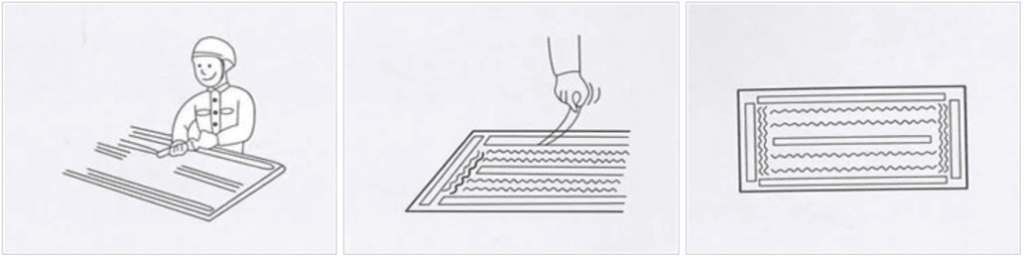
- Apply adhesive in a zigzag pattern on the back of the sheet.
- Focus on edges and corners.
- Optional: Apply double-sided tape along the edges for temporary positioning.
3. Fixing the PVC Sheet onto the Wall
- Align the sheet with marked guidelines.
- Press from the center outward to remove air bubbles.
- Use a rubber roller to apply even pressure and ensure strong adhesion.
Joining & Sealing
1. Aligning Multiple Sheets
- Ensure tight, straight joints.
- Leave a 2–3mm expansion gap for thermal movement.
2. Using Edge Trims and Moldings
- Corner trims protect edges.
- H-molding strips provide seamless transitions between sheets.
3. Sealing the Joints
- Apply silicone sealant along the joints for waterproofing.
- Wipe excess with a damp cloth for a clean finish.
Final Touches & Cleanup
1. Checking for Air Bubbles
- Inspect installed sheets for air pockets or loose sections.
- Press out any bubbles using a rubber roller.
2. Cleaning the Surface
- Wipe with a soft cloth and mild detergent to remove adhesive residue.
- Avoid abrasive cleaners that can damage the UV coating.
3. Allowing Adhesive to Cure
- Let adhesive cure fully for 24–48 hours before heavy use or exposure to water.
Special Installation Considerations
1. Bathrooms and Kitchens
- Use waterproof adhesive.
- Ensure joints are properly sealed to prevent water penetration behind the sheets.
2. Installing Over Existing Tiles
- Sand tile surfaces to improve adhesion.
- Apply a bonding primer before installing PVC sheets.
3. Ceiling Installations
- Additional mechanical fasteners (screws) may be required for strong support.
- Ensure proper alignment and weight distribution to prevent sagging.
Common Installation Mistakes & How to Fix Them
| Mistake | Solution |
|---|---|
| Uneven adhesive application | Use a notched trowel or apply in a zigzag pattern to ensure even coverage. |
| Uneven wall surface | Fill gaps and smooth out uneven areas before installation. |
| Skipping expansion gaps | Leave 2–3mm gaps between sheets to prevent warping. |
| Using low-quality adhesive | Choose construction-grade adhesive for long-lasting bonding. |
| Improper joint sealing | Apply waterproof silicone sealant to improve durability and prevent water infiltration. |
Maintenance and Care After Installation
- Regular Cleaning: Wipe surfaces with a damp cloth and mild detergent.
- Avoid Scratches: Do not use sharp objects, harsh cleaners, or abrasive brushes.
- Annual Joint Inspection: Check silicone sealant, especially in moisture-prone areas, to ensure joints remain sealed.
Contact Information
Hitta is a trusted provider of advanced adhesive and tape assembly solutions from leading global brands.
With a highly experienced technical team across multiple industries, we not only supply products but also deliver tailored bonding solutions that optimize your existing processes and address your specific application challenges.
If you are looking for a high-performance, durable, and reliable adhesive solution, let HITTA be your partner — from consultation to implementation.
- ☎️ Hotline: 0565.336.879
- ✉️ Email: hittajsc@hitta.vn





