
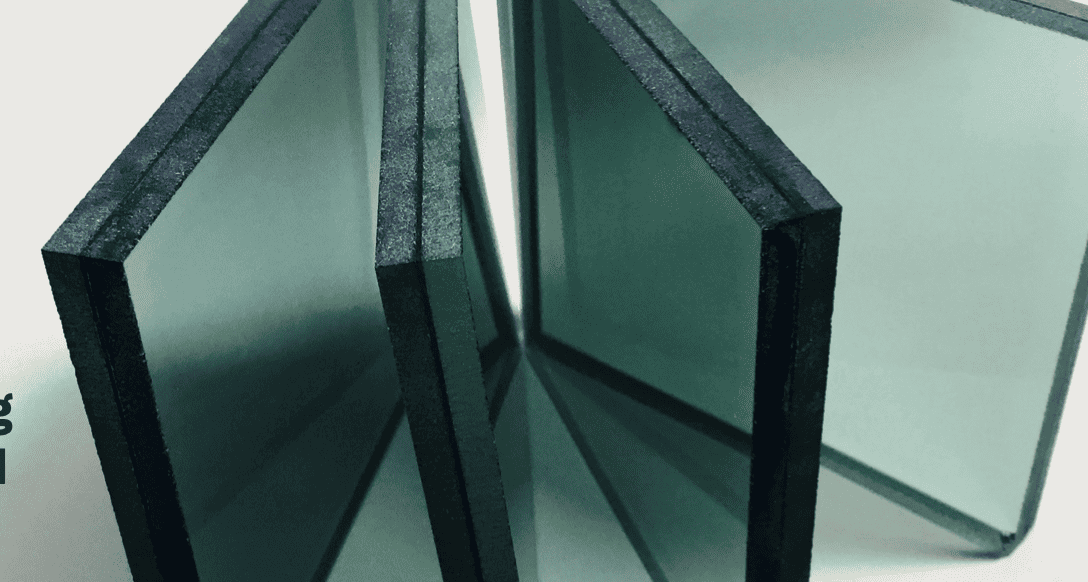
Structure of Insulating Glass Units (IGUs)
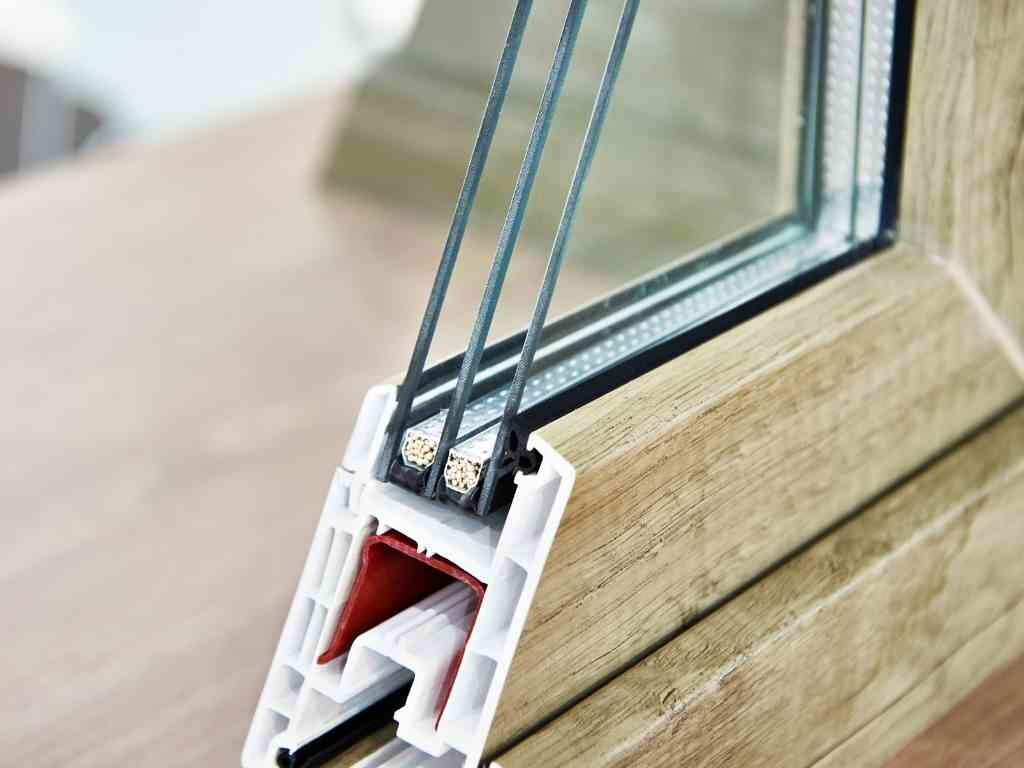
Insulating Glass Unit (IGU) is a hermetically sealed assembly consisting of two or more glass panes separated by a spacer bar, filled with inert gas, desiccant, and sealed with a dual-seal adhesive system.
Typically, IGUs are manufactured in double-glazed (two panes) or triple-glazed (three panes) configurations, with the edges tightly sealed to form an insulating airspace.
The glass panes can be tempered or laminated safety glass, often coated with a Low-E (low-emissivity) layer to reflect heat and improve energy efficiency.
The spacer bar, made of aluminum or warm-edge composite materials, maintains a uniform gap between the panes and houses a desiccant that absorbs residual moisture.
The gas cavity is filled with argon, krypton, or dry air, which significantly reduces heat transfer.
Finally, the dual-seal system—comprising a primary sealant and a secondary sealant—ensures long-term hermeticity and the mechanical integrity of the glass unit.
Glass Layers: Two or more panes (3–10 mm thick each), which may be tempered, laminated, or Low-E coated to enhance solar control and safety.
Spacer & Desiccant: Spacer bars made of aluminum, stainless steel, or composite warm-edge materials are bent around the perimeter to maintain spacing and contain silica gel or molecular sieve desiccant. Warm-edge spacers minimize thermal bridging at the edges.
Insulating Gas: The cavity is commonly filled with argon (cost-effective, good performance) or krypton (higher efficiency in thinner cavities). Premium IGUs may use SF₆ or vacuum spaces to further enhance acoustic and thermal insulation.
Sealant System:
- Primary Seal (Butyl / Polyisobutylene – PIB): Acts as the vapor and gas barrier, providing airtightness and adhesion between glass and spacer.
- Secondary Seal (Silicone, Polysulfide, or Polyurethane): Provides structural strength, UV resistance, and weather durability, ensuring long-term stability of the glass unit.
How Insulating Glass Units Work

IGUs minimize heat transfer through multiple thermal barriers:
- The argon or krypton-filled cavity has low thermal conductivity, reducing heat loss or gain.
- The Low-E coating reflects infrared radiation, retaining heat indoors during winter and blocking solar radiation during summer.
As a result, IGUs achieve a low thermal transmittance (U-value) — typically 0.20–0.50 W/m²·K — and a solar heat gain coefficient (SHGC) optimized for various climates.
For sound insulation, the combination of multiple glass layers and varied thicknesses disrupts sound waves, while laminated glass with PVB interlayers dampens vibration and external noise effectively.
The edge seal plays a decisive role in the durability and performance of an IGU:
- Primary Seal (Butyl / PIB): Features ultra-low moisture permeability, excellent flexibility, and strong adhesion to glass and spacer surfaces — preventing gas leakage and moisture ingress.
- Secondary Seal (Silicone / Polysulfide / PU): Provides high mechanical strength, UV resistance, and weather durability, bonding the entire unit into a rigid and stable assembly.
These two sealants work in tandem:
- Butyl maintains the gas and moisture barrier.
- Silicone or Polysulfide reinforces structure and protects against environmental degradation.
When properly combined — with butyl as the vapor barrier and silicone as the structural protector — the IGU maintains its airtightness, durability, and superior thermal and acoustic insulation for decades.
Role of Sealants in Insulating Glass Units (IGUs)
Moisture and Gas Barrier (Low Permeability)
The chemical composition of a sealant determines its ability to prevent the ingress of moisture and gas.
PIB (Polyisobutylene) or butyl sealant—used as the primary seal—is a hydrocarbon-based polymer with extremely low permeability, serving as the main vapor and gas barrier.
In contrast, silicone sealants (polysiloxane-based) allow slightly higher moisture vapor transmission (approximately 15 g/m²·day), but are selected for their outstanding UV and weather resistance.
The dual-seal configuration—PIB as the inner seal and silicone as the outer structural seal—balances airtightness and durability under environmental exposure.
Adhesion
Modern sealant formulations incorporate primers and adhesion promoters to ensure a strong and lasting bond between glass and spacer materials.
Neutral-cure silicones are engineered to adhere effectively to glass, metal, and plastic substrates.
Polyurethane and polysulfide sealants also provide excellent adhesion when properly compounded and applied.
It is critical that glass surfaces are thoroughly cleaned and prepared, as even a thin layer of dust or oil can significantly reduce long-term adhesion performance over decades of service.
Elasticity and Modulus
Post-curing elasticity allows the sealant to absorb expansion and contraction caused by temperature fluctuations.
Polysulfide and polyurethane sealants generally exhibit lower elongation but higher initial modulus, making them ideal for large-span glazing or high-rise applications exposed to wind loads.
Sealant formulations are optimized to resist flow under heat and prevent cracking at low temperatures, maintaining dimensional stability across varying climates.
UV and Weather Resistance
Due to their siloxane (Si–O) backbone, silicone sealants exhibit exceptional resistance to UV radiation and weathering.
Conversely, polysulfide and polyurethane sealants may yellow or harden over time, so stabilizers are added to extend service life.
The entire sealant system must withstand repeated freeze–thaw cycles over many years while maintaining adhesion strength and hermetic integrity.
Compatibility
Chemical inertness is a critical factor in long-term performance.
Certain plasticizers or additives from older materials (such as butyl or polysulfide spacers) can migrate into the sealant, causing degradation or loss of adhesion.
High-quality sealants are tested for chemical compatibility to ensure stability in multi-material assemblies.
Manufacturers also warn against mixing incompatible sealant types (e.g., oil-based compounds), as this can lead to oil migration, surface staining, or delamination over time.
Benefits of Using High-Quality and Compatible Sealants
Durability and Service Life
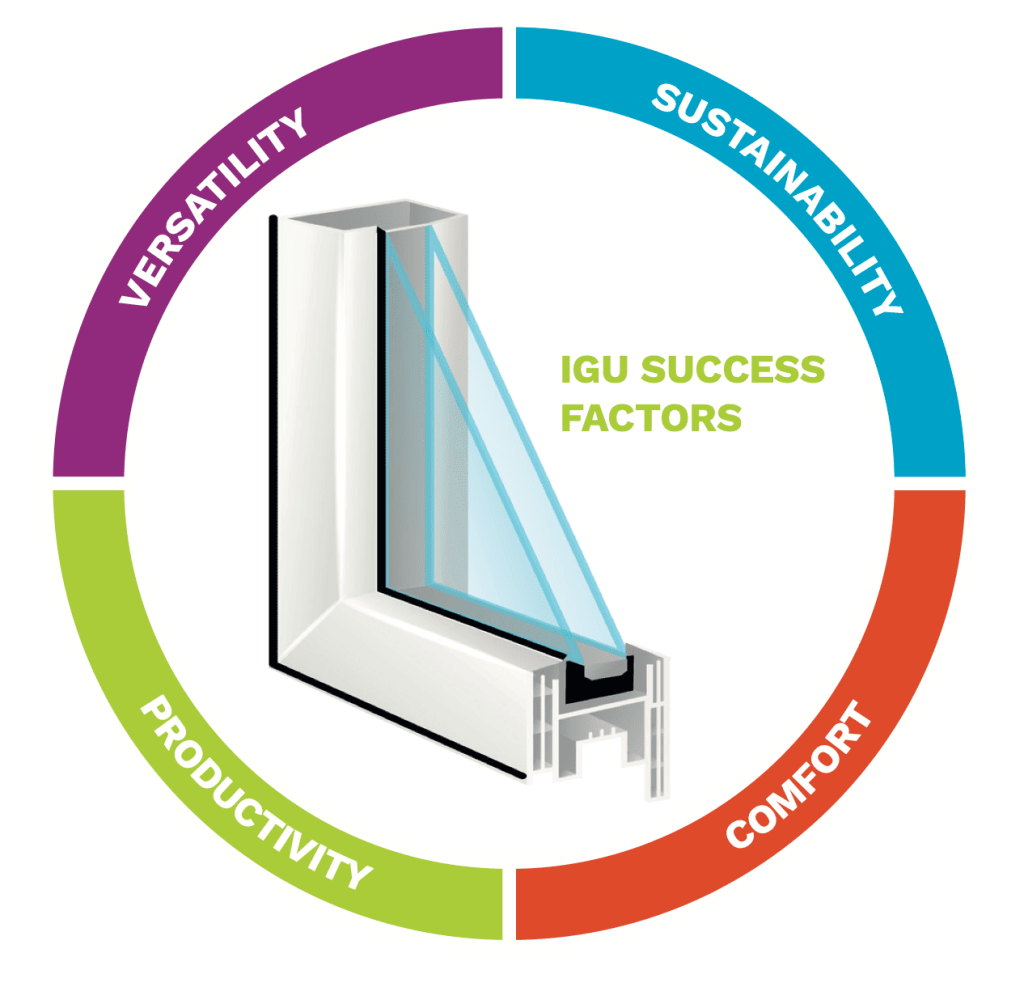
A high-performance dual-seal system ensures the long-term durability of double-glazed insulating glass units (IGUs)over decades of use.
Premium-grade sealants effectively block moisture ingress and maintain the internal gas fill, preserving the unit’s thermal insulation performance throughout its service life.
Studies indicate that IGUs using high-quality sealants experience only about 5% degradation in thermal efficiency after 20 years, whereas units made with inferior sealants can lose up to 30% of their performance.
In practice, a well-sealed IGU can last 10 to over 30 years, provided the edge seal remains intact and airtight.
Energy Efficiency
By maintaining gas retention and low U-values, high-quality sealants enable IGUs to deliver consistent energy savingsover time.
Effective moisture control also prevents fogging or condensation, keeping the glass clear and transparent while enhancing solar control performance.
Industry reports consistently highlight that the longevity and efficiency of insulating glass units are directly dependent on the quality of the sealant system.
Structural Integrity
The secondary sealant serves a structural bonding function, securely joining the glass panes and spacer bar to form a rigid, unified assembly capable of withstanding wind loads and mechanical handling during installation.
This property is critical for safety and performance, particularly in curtain wall systems and high-rise façades.
If the secondary seal lacks sufficient strength, the panes may deflect or separate under pressure, compromising both aesthetics and safety.
Economic Efficiency
High-quality sealants reduce maintenance and warranty costs by preventing early fogging, delamination, or seal failure.
Over the long term, a properly sealed IGU offers excellent return on investment, thanks to sustained energy efficiencyand extended service life without frequent replacement.
Therefore, the quality and compatibility of the sealant system are fundamental factors in achieving optimal energy performance, safety, and long-term durability for any building using double-glazed insulating glass.
Key Factors to Consider When Choosing the Right Adhesive
When selecting the most suitable adhesive for insulating glass units (IGUs), there are several key factors worth careful consideration.
First, evaluate the environmental conditions in which the adhesive will be used.
Temperature fluctuations, humidity, sunlight, and UV exposure can all have a significant impact on the long-term performance and durability of the sealant.
Choosing a product specifically engineered to withstand these environmental stresses ensures maximum longevity, optimum performance, and minimizes the risk of premature failure.
Another critical factor is the adhesion compatibility of the sealant with the materials in your project.
Depending on whether the substrates are glass, metal, or plastic, each requires a specific adhesive chemistry to achieve strong and lasting bonding.
Whenever possible, conduct adhesion testing to verify the bond strength and durability under real-life conditions.
The curing time is also an important practical consideration.
Some projects may require fast-curing adhesives to maintain construction schedules, while others can allow longer curing times to achieve maximum bond integrity.
By carefully evaluating these factors, you can select the most appropriate insulating glass adhesive, ensuring high performance, long-term reliability, and reducing the likelihood of future issues or failures
| Adhesive Type | Key Features | Best Applications | Cure Time | Temperature Resistance (°C) |
|---|---|---|---|---|
| Polyurethane (PU) | High flexibility, strong adhesion | Residential and commercial glazing | 24–48 hours | -40 to 82 |
| Silicone | Excellent UV resistance, waterproof | Exterior glazing, curtain walls | 24 hours | -51 to 204 |
| Epoxy | Extremely strong bond, chemical resistance | High-load or structural applications | 5–24 hours | -46 to 121 |
| Butyl | Excellent airtightness, flexible | Insulating glass units, window seals | Tack-free immediately; fully cured in 7 days | -29 to 82 |
| Acrylic | Fast-drying, easy cleanup | Interior use, quick repairs | 1–2 hours | -34 to 71 |
This table is for reference only. Please contact our technical team for detailed consultation and material recommendations.
How to Use Insulating Glass Sealant Effectively
When working with insulating glass (IG) sealants, proper application techniques are crucial to ensuring long-term durability and performance.
According to industry studies, up to 30% of thermal insulation failures in glazing systems are caused by incorrect sealant application. This highlights that following the correct procedure is not just a technical guideline — it’s a critical factor for project quality.
One essential rule is to apply the sealant evenly along the entire glass edge.
A smooth, continuous bead of sealant not only enhances adhesion but also prevents air and moisture infiltration, maintaining the IG unit’s insulation performance over time.
Experts recommend applying the sealant slowly and steadily to avoid bubbles or breaks in the joint.
It’s also vital to follow the manufacturer’s recommended curing time.
Temperature and humidity have a direct effect on curing — the ideal conditions are 18–24°C (65–75°F) with 40–60% relative humidity.
Sudden environmental changes can alter the curing process and compromise the sealant’s strength.
For better precision and consistency, it is recommended to use a pneumatic caulking gun.
Professional equipment like this can increase application efficiency by up to 25% while ensuring a smooth and uniform sealant line.
In short, proper application allows the sealant to perform at its best and enhances the overall quality of the entire glazing system.
By paying attention to every detail and doing it right from the start, you’ll clearly see the difference.
Common Mistakes When Choosing Insulating Glass Sealants

When selecting an insulating glass sealant, there are several common mistakes to avoid — as they can directly impact the durability and lifespan of your entire glazing system.
1. Ignoring the environmental conditions
Each sealant reacts differently to temperature, humidity, and UV exposure.
Using the wrong type can lead to delamination or seal failure, especially in humid environments or areas with extreme temperature fluctuations.
2. Overlooking curing time and conditions
Every sealant requires specific temperature, humidity, and curing duration.
If these conditions are not met, the sealant bond may fail to reach the necessary strength, reducing insulation efficiency and potentially leading to early damage.
Incorrect application can significantly lower performance, resulting in higher maintenance and replacement costs.
3. Not consulting experts before selection
Each project has unique technical requirements — from glass type and spacer material to installation environment.
That’s why consulting with HITTA’s technical experts can help you select the right sealant and ensure proper application, avoiding costly mistakes and ensuring long-term performance.
Proposed Solution
HITTA proudly introduces an advanced insulating glass adhesive solution from BOSTIK, for which HITTA is the official authorized distributor in Vietnam.
With over 35 years of expertise in the production of adhesives for Insulating Glass Units (IGUs), Bostik has become one of the industry pioneers, renowned for innovation and reliability.
Key Advantages
» Outstanding product performance and superior workability
» Comprehensive product range, including both primary and secondary sealants for insulating glass applications
» A dedicated R&D team and specialized technical support, continuously innovating and collaborating with customers to optimize processes and maximize product efficiency
International Standards
Bostik’s IG sealants are certified and compliant with leading global standards:
- ASTM
- CEKAL (for selected products)
- EN 1279-2 & 3 (system) / EN 1279-4 (sealant)
Contact Information
HITTA supplies a wide range of adhesive and bonding solutions from world-leading brands, serving diverse industrial and construction applications.
With a highly experienced technical team, we go beyond product supply — providing process optimization consultingtailored to each customer’s unique requirements and challenges.
If you’re looking for an efficient, durable, and reliable bonding solution, let HITTA be your trusted partner — from consultation to implementation.
📞 Hotline: 0565 336 879
✉️ Email: hittajsc@hitta.vn





