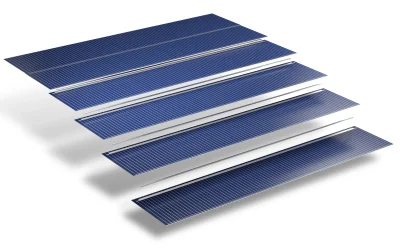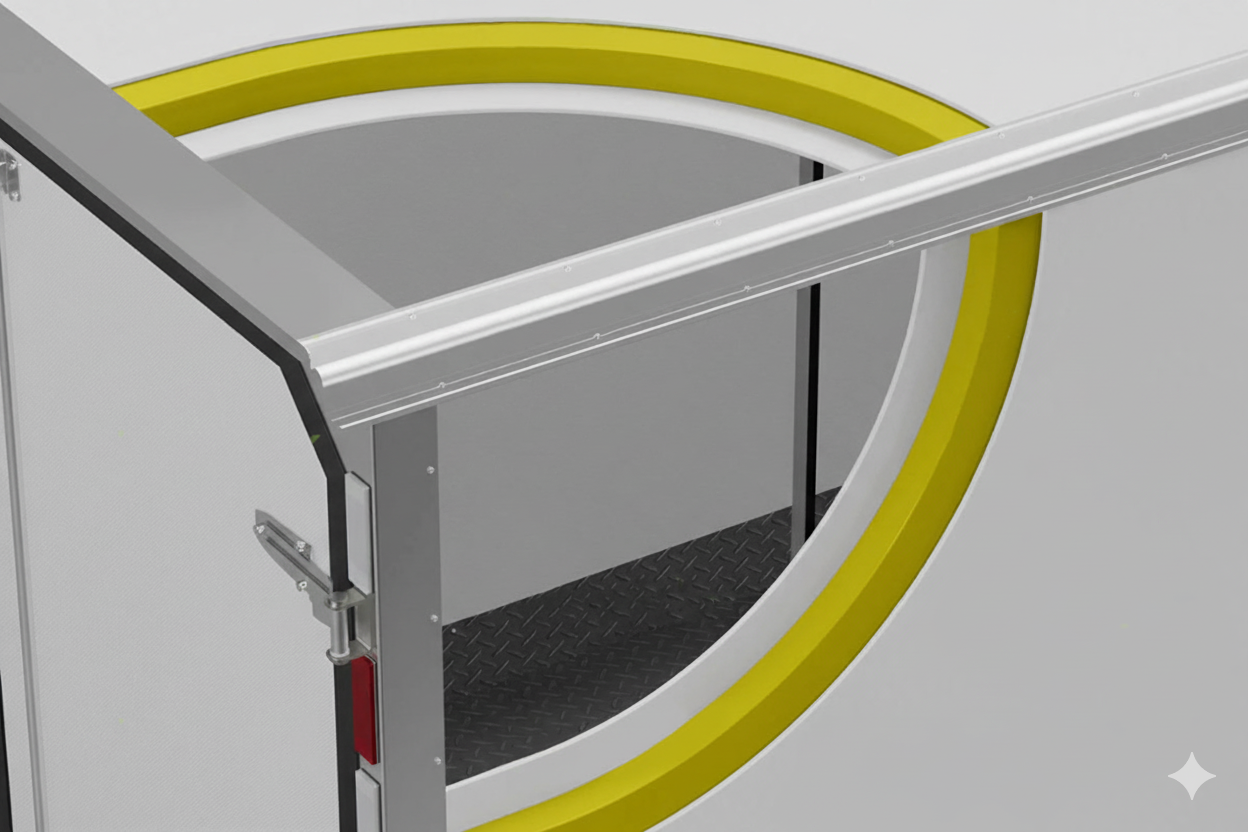
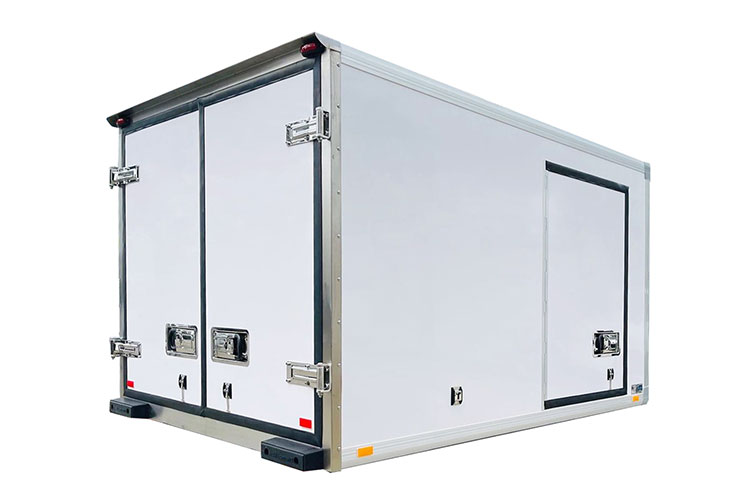
Truck bodies, refrigerated vehicles, and food transport containers rely on insulated sandwich panels to maintain cold temperatures for perishable goods. These panels are typically made of high-performance foam cores (such as PU or XPS) sandwiched between rigid facings like fiberglass-reinforced plastic (FRP) or metal sheets (aluminum or steel). In the past, mechanical fasteners or steel frames were commonly used to assemble truck bodies, but today polyurethane (PU) adhesives are widely applied to bond sandwich panels, creating a robust, airtight box structure.
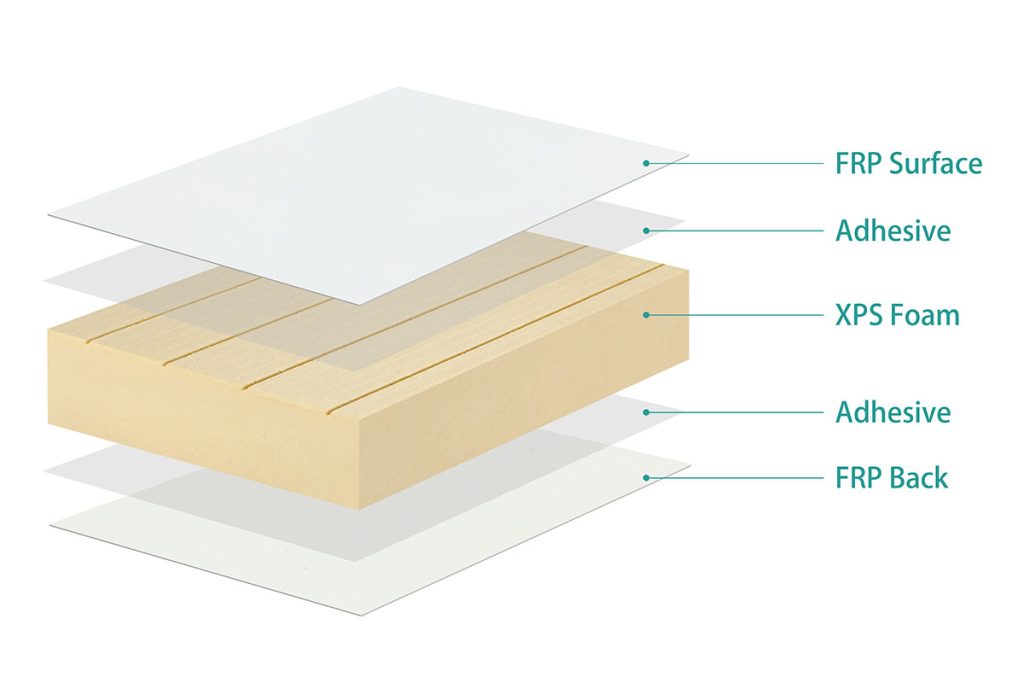
Structure of Sandwich Panels in Refrigerated Truck Bodies and Food Transport Containers
PU adhesives provide a continuous bond across the entire interface (between the foam core and facings or between adjacent panels), forming a self-supporting, airtight, and stable insulated enclosure.
Solution Summary
Polyurethane adhesives have become a key technology in the construction of refrigerated truck bodies, enabling sandwich panels to be bonded into lightweight yet durable insulated enclosures. These adhesives simultaneously fulfill multiple roles—structural connector, insulator, and sealant—in a single solution, delivering performance that mechanical fasteners or rigid adhesives cannot easily achieve in the cold-chain environment. By reliably joining different materials such as FRP, metals, and foam, PU adhesives allow manufacturers to leverage the strengths of each (high mechanical strength, low weight, excellent thermal insulation) to create a unified composite structure.
These adhesive bonds can withstand harsh service conditions: from continuous road vibrations to daily freeze/thaw cycles and humid cleaning environments. International standards such as the ATP Agreement (for the transport of perishable goods) highlight the importance of a well-insulated and tightly sealed vehicle body—and adhesive bonding plays a decisive role in achieving this requirement.
Published technical data typically show that PU adhesives achieve lap shear strengths of around 8–12 MPa, service temperature ranges from –30 °C to +80 °C (or higher), and compliance with ISO, ASTM, DIN quality standards. In addition, some PU adhesives are formulated to be flame-retardant, meeting fire safety regulations for transport vehicles while still maintaining strong bonding performance.
In terms of design, a refrigerated truck body constructed with adhesively bonded sandwich panels exemplifies the synergy of modern materials: the insulating foam core and load-bearing skins are unified by the PU adhesive into a structure that is more than the sum of its parts. The result is a refrigerated truck that is energy-efficient, structurally sound, and durable against the demanding conditions of daily operation.
Looking ahead, as adhesive technology continues to evolve (e.g., nano-reinforced systems, faster curing chemistries, “smart” adhesives with bond health monitoring), production efficiency and bond reliability will further improve. For now, polyurethane adhesives remain the industry standard for sandwich panel bonding in refrigerated trucks, delivering the strength, flexibility, and resilience required to keep global cold-chain logistics running smoothly.
Key Bonding Areas
Each bonding area places unique demands on the adhesive – from the ability to adhere to different materials to forming large-area structural bonds. Polyurethane adhesives, with their versatility and high strength, are regarded as the optimal solution to meet these requirements.
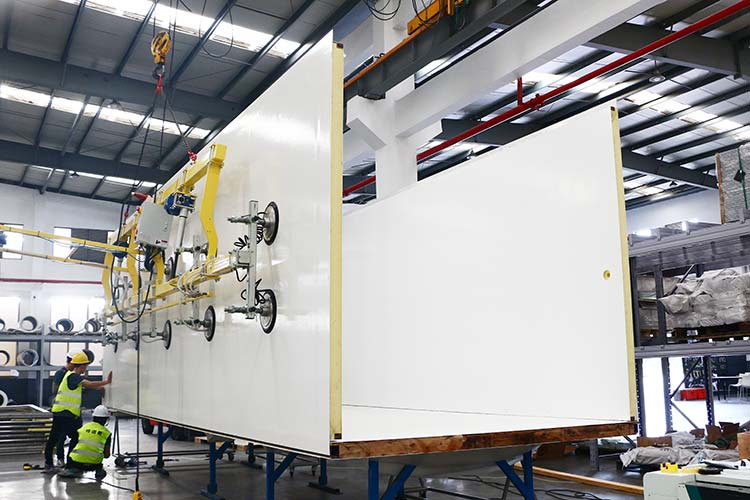
Skin-to-Core Lamination
During panel manufacturing, PU adhesive is applied to bond the metal or FRP facings to the insulation foam coreacross the entire panel area. This creates a rigid composite panel with high structural stability yet low weight. The adhesive must ensure strong adhesion to various substrates—for example, fiberglass/gelcoat, aluminum, or steel on one side, and PU or polystyrene foam on the other. Modern PU formulations achieve excellent adhesion to both foam cores and composite or aluminum skins without the need for primers.
Panel-to-Panel Joints
The walls, floor, and roof panels of the refrigerated truck are typically bonded along their mating surfaces (e.g., wall-to-roof corner joints). Adhesive is applied across the full interface, with temporary screws or clamps used until curing (the screws mainly serve as pressure application and can remain for added reinforcement). These bonded joints create an airtight, monolithic box, enhancing insulation performance and structural continuity.
Attachment of Frames and Fittings
PU adhesives are also used to bond metal profiles, reinforcements, and liners to the sandwich panels. For example, aluminum corner extrusions, door frames, or floor rails are often bonded to FRP/foam panels with structural PU adhesive (sometimes combined with mechanical fasteners) to spread loads and avoid heat distortion from welding. Inside, fiberglass liner sheets can be bonded directly to spray-foam insulation with fast-curing PU adhesives. These adhesives typically provide long open times for easy installation but still cure overnight even in high humidity, enabling trucks to return quickly to service.
Common Challenges and Solutions in Bonding Sandwich Panels
Although PU adhesives offer many advantages, manufacturers still face certain challenges when bonding sandwich panels for refrigerated trucks. The main challenges include:
Differential Thermal Expansion
The materials in the panel (metal, foam, FRP) have different coefficients of thermal expansion. Within the truck’s operating range (–30 °C to +40 °C), this mismatch can stress the adhesive joint.
Solution: PU adhesives are designed with semi-flexible structures that can stretch slightly to absorb movement. Adding elastomeric components or using low-Tg polyols keeps the adhesive pliable at low temperatures. Thin bond lines, avoiding rigid constraints, and thermal cycling tests are essential. The goal is to ensure the adhesive does not glassify within the operating range while maintaining high adhesion. Properly applied PU-bonded panels can withstand years of thermal cycles without delamination.
Long-Term Durability and Aging
Refrigerated bodies often operate for 10+ years, so adhesive joints must maintain strength and sealing performancedespite vibrations, freeze/thaw cycles, humidity, and cleaning. Risks include hydrolysis, UV degradation at exposed edges, and creep under long-term load.
Solution: Conduct accelerated aging tests (heat, humidity, salt spray) to ensure adhesive reliability. PU adhesives generally provide good resistance to moisture and chemicals once cured, but edge sealing and proper bond line thickness are crucial (too thin = brittle, too thick = bubble risk and creep). PU also excels in fatigue resistance, enduring millions of flex cycles. Reinforcing fillers can be added to improve fatigue life. Non-destructive inspection (ultrasound, thermography) may be used to detect early bond issues, though in practice PU-bonded panels show excellent long-term performance.
Curing Time and Production Constraints
Unlike welding or fasteners that provide instant strength, adhesives require curing time, which may create bottlenecksin high-volume production. Cold or low-humidity conditions can significantly slow curing of 1K PU adhesives.
Solution: Use 2K PU adhesives (chemically cured, independent of humidity) or heat-assisted curing to speed up production. Reactive hot-melt PUR adhesives can provide immediate handling strength and continue curing with moisture. Manufacturers select adhesives with suitable open time and cure speed for each application. With these solutions, curing delays are largely mitigated, and process stability is maintained.
Surface Preparation and Material Compatibility
Bond reliability depends heavily on surface preparation. Metals may need abrasion and degreasing, FRP surfaces may require removal of mold-release agents, and foam cores may need priming. Poor preparation risks adhesion failure.
Solution: Standard practice includes cleaning, drying, and roughening surfaces. Some modern PU adhesives bond directly without primers, but proper prep is strongly recommended. Solvent-free PU adhesives are preferred for food transport applications since they do not attack foam cores and emit no harmful gases once cured. PU adhesives also isolate dissimilar materials (e.g., aluminum–FRP joints), minimizing galvanic corrosion.
Curing Shrinkage and Surface Print-Through
Some adhesives may shrink or exotherm during curing, causing print-through or distortion on thin FRP skins.
Solution: PU adhesives generally have low shrinkage, but correct application is key: typically 200–400 g/m², spread evenly with a notched trowel or roller. Many PU adhesives are thixotropic, preventing sagging and ensuring uniform bond lines.
Performance Requirements for Adhesives in Cold Environments
Refrigerated trucks and food transport containers must operate under harsh temperature and humidity conditions. Adhesive joints must not only maintain strength in sub-zero internal environments, but also withstand high external temperatures, all while carrying the mechanical loads of the vehicle in motion. Key technical requirements include:
Thermal Insulation and Temperature Resistance
Thermal Insulation and Temperature Resistance
The insulated body must minimize heat transfer, so bonding methods must not create thermal bridges. Unlike screws or bolts, adhesive bonds do not penetrate the insulation or form conductive paths, thus preserving the panel’s thermal efficiency. PU adhesives, with their low thermal conductivity and thin bond lines, have negligible impact on the overall U-value. At the same time, they act as a tight seal, preventing air and moisture leaks at joints—an essential factor for meeting strict cold-chain transport regulations.
Adhesives must also withstand large temperature swings: inside the box may stay at –20 °C or lower, while the external skin can heat up to over 40 °C under sunlight. PU adhesives are engineered to perform across this range. Standard grades remain functional from –20 °C to –30 °C, while specialized formulations can tolerate –40 °C up to 120–150 °C without cracking. Their glass transition temperature (Tg) is tailored so the adhesive remains tough and semi-flexible at freezer conditions. Unlike epoxies, which may become brittle at low temperatures, PU retains elasticity and avoids sudden bond failure.
Flexibility and Thermal Cycling
Refrigerated truck bodies combine dissimilar materials—aluminum, foam insulation, and steel frames—each with different coefficients of thermal expansion. As temperatures fluctuate (loading, defrosting, day–night cycles), these materials expand and contract unevenly, creating stress at joints. The adhesive must absorb these differential movements to prevent debonding or cracking. PU adhesives, with their flexibility and toughness, dissipate thermal stresses by deforming slightly instead of transferring them to substrates.
As a result, PU bonds can endure repeated hot/cold or freeze/thaw cycles without losing adhesion. Their elasticity also provides a vibration-damping effect, absorbing road shocks and protecting both the structure and insulation.
Humidity and Moisture Resistance
Refrigerated trucks often face high humidity: condensation on cold surfaces, frequent door openings, and cleaning processes. Adhesives must resist water exposure, maintain bond strength, and avoid hydrolysis over time. Once cured, PU adhesives are generally durable against moisture and chemicals.
This is critical because moisture ingress at joints can drastically reduce insulation efficiency (water has 25× the thermal conductivity of air). Proper PU adhesive joints act as a continuous moisture barrier, preventing vapor from penetrating the foam core and avoiding freeze–thaw expansion inside the panel. For food transport, adhesives must also resist mold and cleaning chemicals—properties PU adhesives fulfill due to their inert and chemically stable nature once cured.
Structural Strength and Load Bearing
Adhesive joints must serve as load-bearing components. When sandwich panels are bonded, the adhesive transfers forces between skins, cores, and frames. Thus, high shear strength, peel resistance, and creep resistance are essential.
Structural PU adhesives typically achieve lap shear strengths ≥10 MPa on aluminum, ensuring that under heavy loads (cargo weight, road shocks), the panel fails in the foam or facing before the bond gives way. Flatwise tension strengths ≥1 MPa are common, often limited by foam cohesion. Importantly, unlike screws or rivets that create stress concentrations, adhesive bonds distribute loads uniformly across a wide area, enabling lighter yet stiffer constructions.
PU bonds also add torsional and racking strength, helping the truck body resist twisting and dynamic forces. Fatigue testing shows PU adhesives provide long-term durability, maintaining bond integrity through millions of vibration and load cycles.
Polyurethane adhesives are engineered to meet the extreme demands of refrigerated truck service: low temperatures, high humidity, and mechanical loads. They preserve both the thermal and structural integrity of sandwich panels throughout the vehicle’s lifetime, ensuring compliance with international cold-chain transport standards.
Advantages of Polyurethane Adhesives vs. Mechanical Fastening
Switching from mechanical fastening to adhesive bonding in sandwich panel construction offers multiple advantages in both performance and manufacturing. Polyurethane (PU) adhesives enable refrigerated truck bodies to achieve greater strength, reduced weight, and improved insulation compared to mechanically fastened assemblies. They simultaneously act as both a structural connector and sealant, delivering an optimized solution for the cold-chain industry, where efficiency, durability, and hygiene are paramount.
Improved Insulation and Elimination of Thermal Bridging
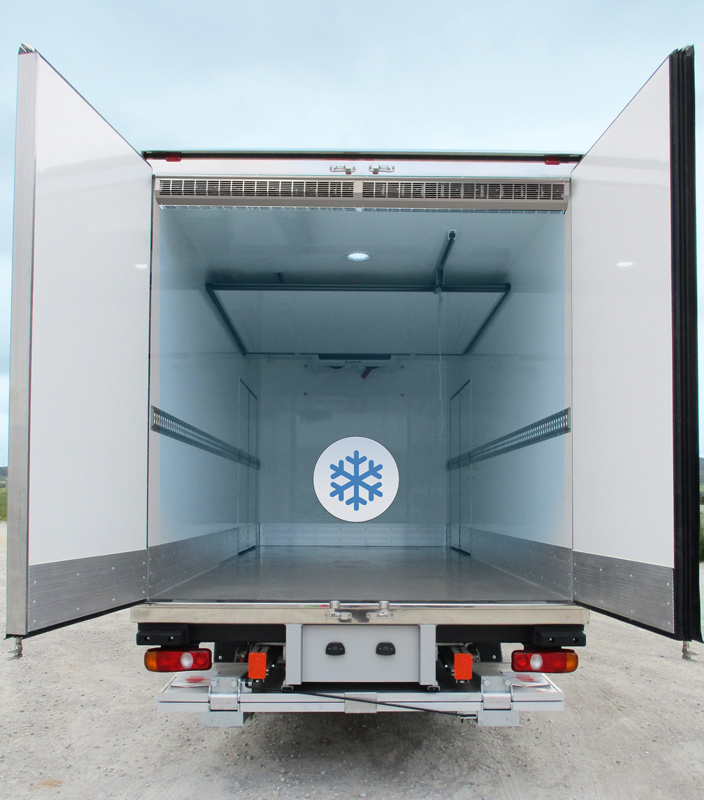
Screws, rivets, or bolts that penetrate insulated panels create thermal bridges, conducting heat and reducing insulation efficiency. By contrast, adhesive joints form a continuous bond without metal penetrations, eliminating thermal bridges and cold spots. This ensures uniform insulation performance and compliance with cold-chain standards. Adhesive bonding also avoids foam compression (caused by overtightened fasteners), preserving the panel’s full thickness and R-value. A bonded joint is essentially thermally invisible, maintaining the isothermal integrity of the box.
Uniform Stress Distribution and Better Load Transfer
Unlike fasteners that create point loads, adhesives distribute stresses evenly across the entire bonded area. This reduces localized damage and increases load capacity. The adhesive layer spreads forces broadly, allowing the use of thinner, lighter facings without sacrificing strength. As a result, bonded panels achieve a high stiffness-to-weight ratio, contributing to lighter vehicles, higher payloads, and improved fuel efficiency. Furthermore, no drilling is required—eliminating crack initiation points and moisture ingress—leading to longer fatigue life.
Vibration Damping and Enhanced Durability
PU adhesive joints act as a thin elastomeric layer, absorbing and dissipating vibrations and shocks. This prevents loosening of fasteners or rattling noises, protects cargo, and improves ride comfort. Bonded seams also provide a built-in seal against water and dust, eliminating the need for extra sealants. By removing fasteners, the risk of corrosion at fastener sites is eliminated—an especially critical factor in food transport, where hygiene and cleanability are essential.
No Penetrations – Better Aesthetics and Hygiene
Adhesive bonding leaves no visible rivet or screw heads on either interior or exterior surfaces. This results in a smooth, clean appearance and makes the refrigerated interior easier to clean, with no crevices for dirt or bacteria to accumulate. Externally, flush panels improve aerodynamics and enhance vehicle branding, as graphics are uninterrupted by rivet lines.
Protecting Insulation and Substrates
Fasteners can crack FRP skins or crush foam cores, while welding can cause heat distortion and damage temperature-sensitive materials. Adhesive bonding is gentler, introducing no drilling stresses and no heat, making it ideal for composites and foams.
Increased Rigidity with Lightweight Design
A continuous adhesive bond makes components act as one monolithic structure. When bonding stiffeners or frames, forces are distributed evenly, enabling semi-monocoque designs with less metal reinforcement. This reduces weight and further improves fuel economy.
Faster and Safer Assembly
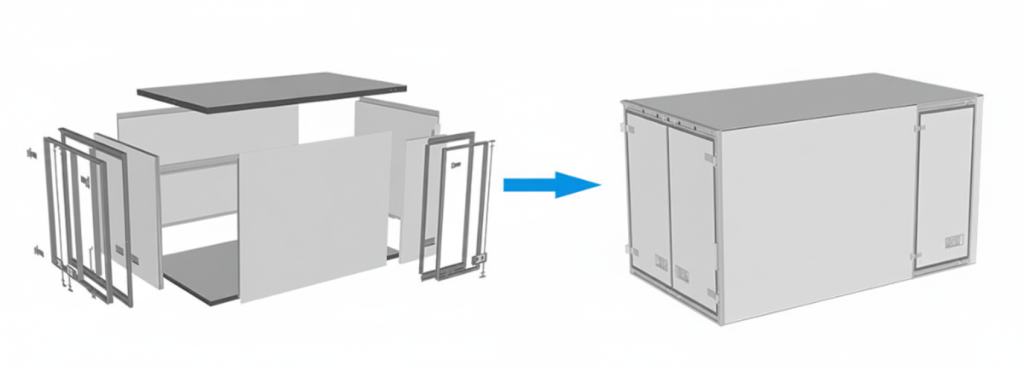
Adhesive bonding can shorten production time: while the adhesive cures, workers can perform other tasks. It avoids noise, sparks, and fumes associated with riveting or welding, improving workplace safety. PU adhesives can achieve initial handling strength within minutes and full cure within hours, often faster overall than drilling and fastening. Moreover, bonding requires less skilled labor than welding and minimizes rework from heat-related distortions.
Compatibility with Multiple Materials
PU adhesives are highly versatile, bonding metals (aluminum, galvanized steel), composites (FRP, PVC), foams, and wood. This flexibility is a major advantage over welding (limited to metals) or epoxies (less effective with low-energy plastics). Many PU adhesives bond without primers, simplifying production. Unlike mechanical fasteners, which may require inserts for foam or plastic, adhesives directly bond surfaces while accommodating differences in stiffness and thermal expansion.
Corrosion and Leak Prevention
Every drilled fastener hole is a potential entry point for water and corrosion. Adhesive bonds seal joints completely, maintaining the vapor barrier and preserving insulation performance. By eliminating micro-movements around fasteners, adhesive bonding also extends fatigue life. The result is a longer-lasting, low-maintenance structure.
Contact Information


Hitta is a trusted provider of diverse adhesive and tape solutions sourced from the world’s leading brands. With a team of highly experienced engineers across multiple application fields, we don’t just deliver products—we deliver tailored solutions to help you optimize existing processes and overcome specific challenges.
If you are looking for a reliable, sustainable, and high-performance bonding solution, let HITTA be your partner—from consultation to implementation.
📞 Hotline: 0565.336.879
✉️ Email: hittajsc@hitta.vn