
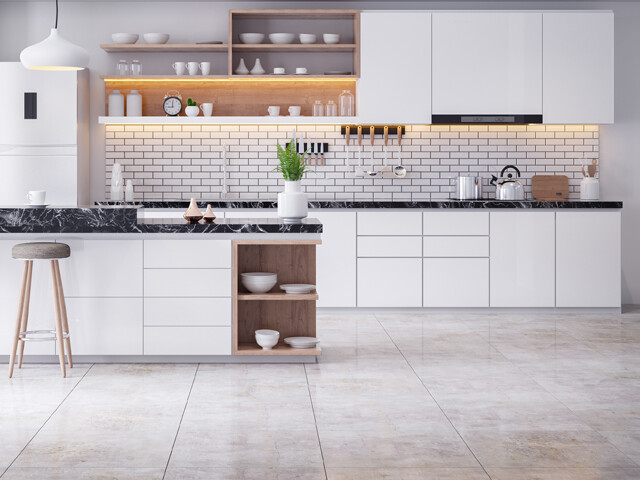
Whether you’re tiling for commercial or residential purposes, for practical function or aesthetic appeal, there are several important factors to consider before installing ceramic tiles.
Ceramic tiles are used in a wide variety of applications and environments. Because there are many different types of substrates and subfloors you may encounter, choosing the right adhesive is a critical factor in ensuring long-lasting quality and durability.
Key Characteristics of Ceramic Tiles
Ceramic tiles are flat, durable slabs made from natural clay and other inorganic materials. They are shaped and fired at high temperatures to achieve specific hardness and technical properties. Ceramic tiles can be glazed (with a glass-like surface coating) or unglazed, and all fall under the broad category of “ceramic tiles,” which includes several subtypes:
- Wall tiles: Typically thinner and designed for vertical surfaces, such as interior walls and kitchen backsplashes.
- Mosaic tiles: Small tiles (usually under 5 cm), mounted on mesh sheets, ideal for decorative patterns or surfaces requiring curvature.
- Porcelain tiles: A high-performance subtype of ceramic tile, fired at extremely high temperatures with water absorption ≤ 0.5% (per ANSI A137.1). These tiles are exceptionally dense and hard, making them ideal for floors, high-traffic areas, and outdoor use thanks to their low porosity and frost resistance.
- Pressed floor tiles: Standard floor-grade ceramic tiles, typically thicker and more robust than wall tiles, formed by dry-pressing clay.
- Quarry tiles: Unglazed tiles, extruded from natural clay, known for their thickness and strength. Commonly used in commercial kitchens and outdoor patios.
Compatible Substrates
Walls
- Drywall and gypsum boards
- Cement-rendered surfaces
- Concrete blocks
- Dense concrete
- Plywood
- Painted walls (emulsion paint only)
- Reinforced fiberglass mesh
- Smooth-faced cement boards
- Tile backer boards
- Tile-over-tile installations
- Lightweight concrete blocks
Floors
- Concrete substrates
- Anhydrite (calcium sulfate) screeds
- Existing ceramic or natural stone tile floors
- Asphalt bases
- Timber floors
- Floating plywood subfloors
- Vinyl tiles
- Acoustic underlayments
- Damp-proof membranes
Ceramic Tile Adhesive Solutions for Decorative Applications
Using specialized ceramic tile adhesives for wall and floor installations provides significant advantages—both during application and after completion.
If you require an adhesive with rapid grab, fast setting time, or high resistance to water and mold (especially in wet areas like bathrooms), there is a wide range of advanced adhesive technologies available to meet these needs.
Ultimately, the goal is to ensure that your tiling installations remain durable and long-lasting, whether you’re tiling a kitchen floor or a bathroom wall.
Ceramic Tile Adhesive Technologies
- Waterproof tile adhesive
- Cement-based tile adhesive
- Acrylic polymer
- Polymer-modified thin-set mortar
- Polymer-modified cement
- Polymer-modified tile adhesive
- Ready-mixed (emulsion-type) tile adhesive
- Standard-setting tile adhesive
- Rapid-setting tile adhesive
- Non-sag tile adhesive
- Large and heavy tile adhesive
- Adhesive for thin porcelain panel tiles
Installing Large-Format Ceramic Tiles
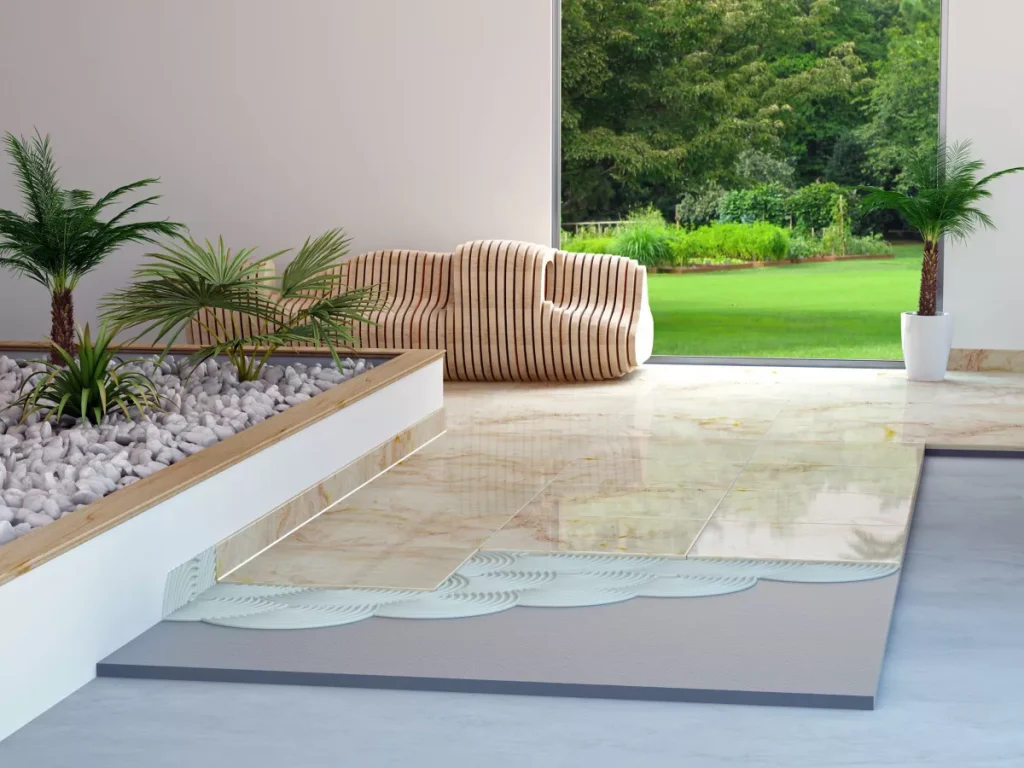
Large-format ceramic and natural stone tiles offer a seamless, modern, and sophisticated aesthetic. However, to ensure a successful and long-lasting installation, it takes more than skilled workmanship—it also requires advanced installation systems that guarantee precision and high performance.
A modern tile installation system for large-format tiles must include:
- An ultra-flat substrate, achieved through professional leveling and surface preparation technologies, ensuring a smooth and even finish.
- Polymer-modified tile adhesive, applied using the double-spreading technique (adhesive on both the substrate and tile back) to maximize contact and bonding strength.
- Flexible, water-repellent, and mold-resistant tile grout, combined with a high-performance polyurethane-based elastic sealant for safely and durably sealing movement and expansion joints.
Installing Porcelain Tiles

Porcelain tiles are a premium type of ceramic tile, known for their exceptional hardness and near-zero water absorption, achieved through extremely high pressure and temperature during manufacturing. Thanks to these properties, porcelain tiles are commonly selected for demanding projects where durability and performance are critical—especially in high-traffic or harsh environmental conditions.
For such applications, the tile installation system must meet strict mechanical and structural performance requirements, including:
- Proper substrate preparation, with high compressive and tensile strength, capable of withstanding load and thermal movement.
- Use of a next-generation polymer-modified tile adhesive, specifically formulated to bond effectively to non-absorbent surfaces like porcelain.
The finishing system includes:
- Flexible grout with high mechanical strength and excellent abrasion resistance.
- A high-performance polyurethane-based elastic sealant, applied to movement joints, separation joints, and connection joints, ensuring the entire system can accommodate movement and deformation over time.
Tiling on Drywall in Dry Areas
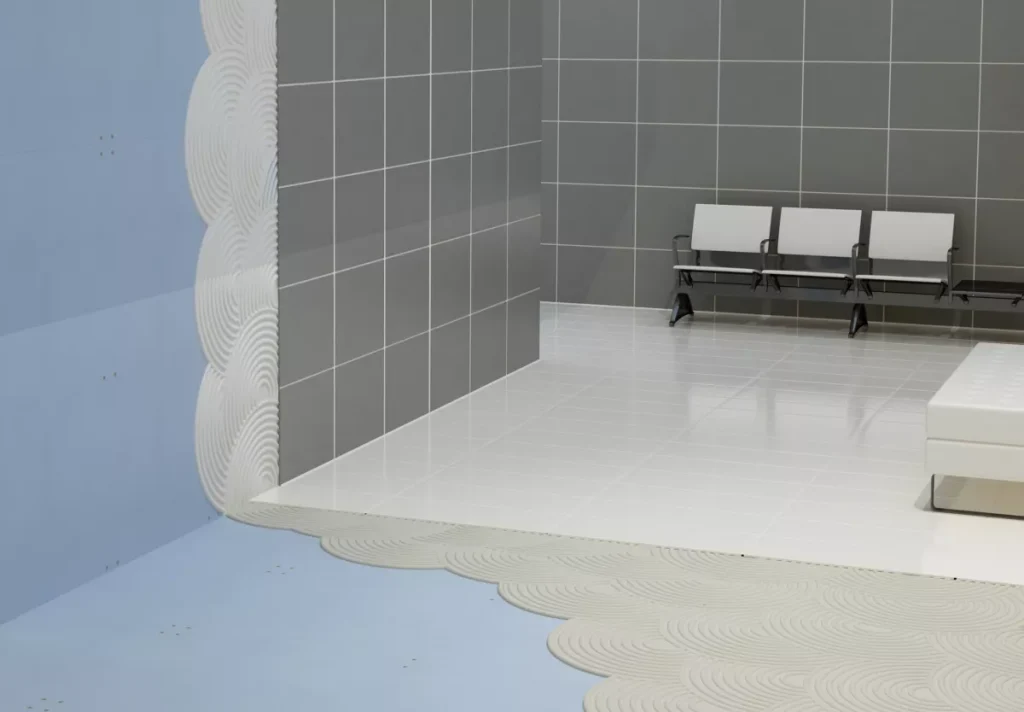
Drywall construction systems for walls and ceilings are among the most widely used solutions in modern medical, hospitality, educational, and urban residential projects.
To ensure safe and long-lasting tile installation on these surfaces, a complete and reliable system must be followed:
- A specialized primer is first applied to promote proper adhesion of the tile adhesive to the drywall surface.
- Then, a polymer-modified cement-based tile adhesive is used, suitable for both walls and floors.
- Flexible grout with high mechanical strength and abrasion resistance is applied to finish the tile joints.
- Finally, the system is completed with a high-performance elastic joint sealant, offering mold resistance and excellent flexibility, used for expansion and connection joints.
Contact Information
Sealex SX‑700 is an ideal choice for bonding ceramic tiles in dry interior spaces. The product is especially well-suited for surfaces such as indoor walls or facades not directly exposed to water, offering strong adhesion and lasting aesthetic performance.
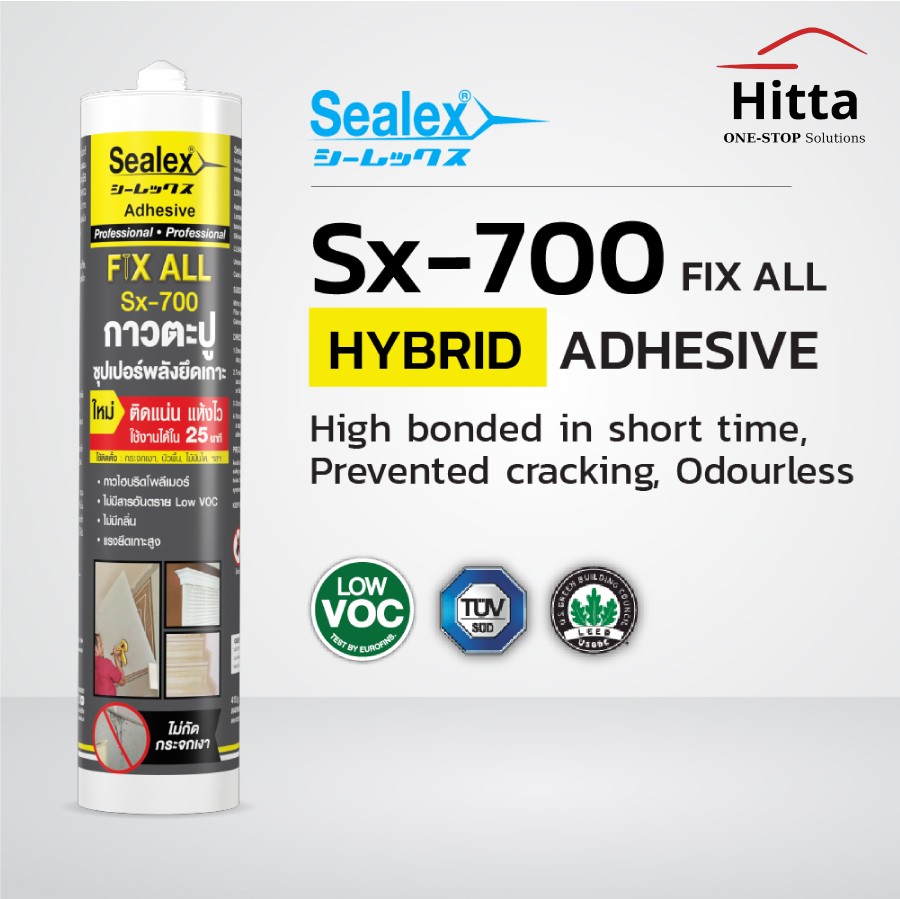
For ceramic tile applications in wet areas or other specialized environments, please contact HITTA for detailed consultation and tailored solutions.
Hitta is a trusted supplier of a wide range of adhesive and bonding tape solutions from leading global brands. Backed by a team of experienced technical experts with hands-on knowledge across various industries, we offer not only premium products but also tailored consultation to optimize your existing processes—ensuring they meet specific requirements and project challenges.
If you are looking for a high-performance, durable, and reliable bonding solution, let Hitta be your partner—from consultation through to implementation.
Contact us today to discover the most suitable adhesive solution for your application.
- ☎️ Hotline: 0565.336.879
- ✉️ Email: hittajsc@hitta.vn





