
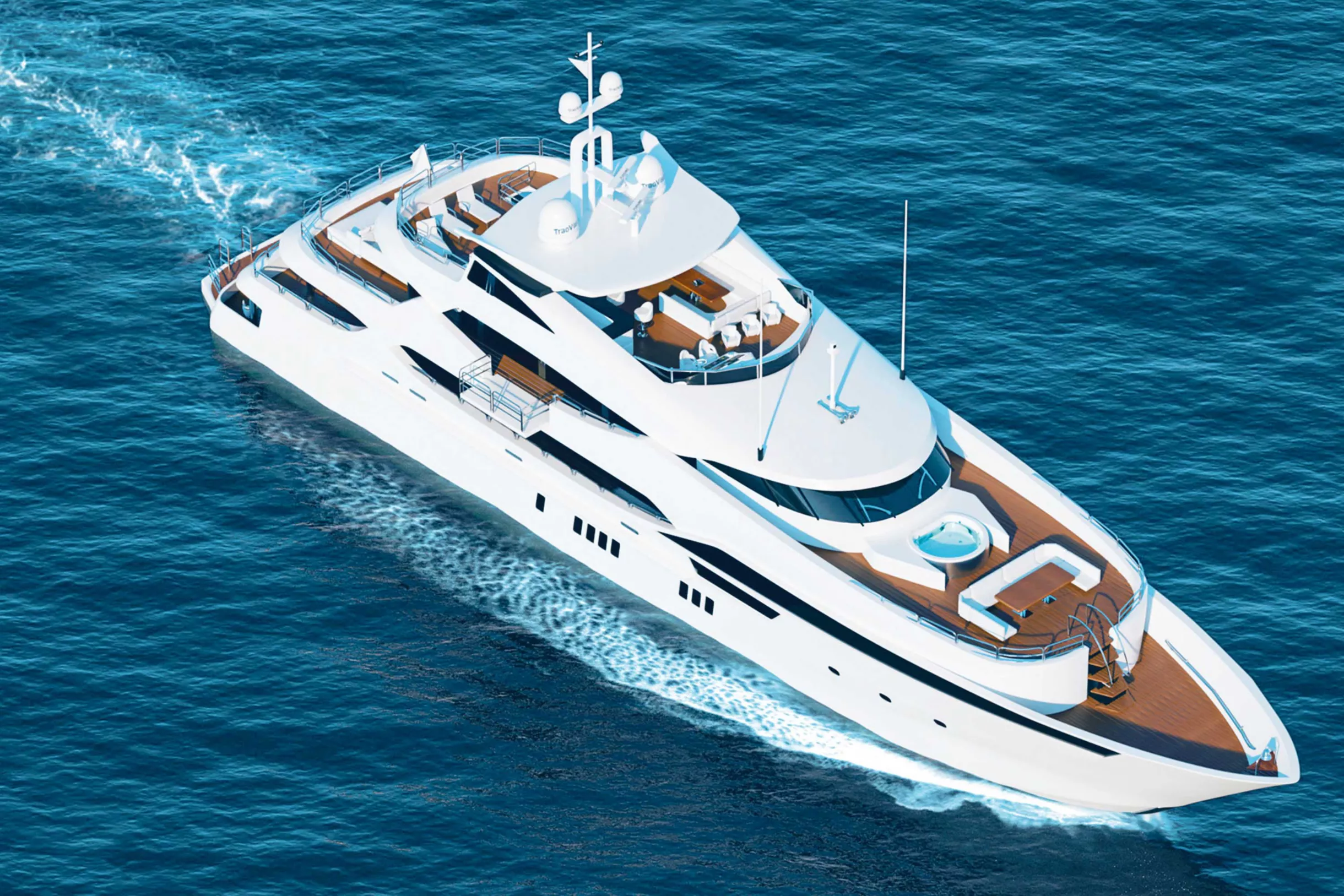
The shipbuilding and marine industry imposes extremely stringent requirements on materials—particularly on sealing and bonding solutions. The structural integrity and service life of vessels are highly dependent on the performance of sealant systems.
From traditional materials such as bitumen and tar, the industry has evolved significantly with the development of advanced polymer technologies—effectively addressing the severe mechanical and chemical stresses encountered in harsh marine environments.
Recommended Product

Bostik Simson MSR Construction Adhesive SSKF is a one-component structural adhesive with permanent elasticity and fast curing properties, based on Silyl Modified Polymer (SMP) technology. This variant offers a longer open time compared to the standard MSR Construction Adhesive.
The product has been specifically developed for structural bonding and sealing applications in the shipbuilding and yacht industry. MSR Construction Adhesive SSKF has been tested and certified according to the International Maritime Organization (IMO) fire testing procedures for surface flammability, in compliance with Resolution A.653(16), and is approved for use in wall, ceiling, and flooring applications.
When combined with Dual SMP® technology, the adhesive ensures controlled and enhanced curing speed, improving process reliability and expanding its range of applications.
Applications:
- Designed for shipbuilding and yacht construction where high adhesion strength and flexibility are required.
- Bonding of push borders.
- Bonding and sealing of deck fittings.
- Bonding deck coverings and sheet materials.
- Bonding and sealing deck-to-hull connections.
- Bonding ship windows, deck hatches, and portholes.
- Used as a bedding compound in applications requiring high initial bonding strength.
Contact for Consultation
HITTA is a trusted provider of a wide range of adhesive and assembly tape solutions from leading global brands. Backed by a team of experienced technical specialists with hands-on expertise across various industries, we not only supply products but also deliver optimized solutions tailored to your specific processes and challenges.
If you are looking for an efficient, durable, and reliable bonding solution — let HITTA support you from consultation through implementation.
Contact HITTA today for the most suitable solution:
☎️ Hotline: 0565 336 879
✉️ Email: hittajsc@hitta.vn
Challenges in Marine Environments
Marine environments are among the harshest conditions for engineering materials. Sealants are not merely gap fillers — they must withstand multiple simultaneous stresses:
| Factor | Impact on Sealants |
|---|---|
| Water pressure & long-term immersion | Can cause swelling and structural degradation in low-quality sealants |
| UV exposure & weathering | Leads to aging, brittleness, and loss of elasticity |
| Salt & chemicals | Accelerates corrosion and polymer degradation |
| Thermal expansion & contraction | Creates stress due to different material expansion rates |
| Vibration & torsion | May cause cracking or debonding if elasticity is insufficient |
Sealant Comparison
| Type | Advantages | Disadvantages | Typical Applications |
|---|---|---|---|
| Polyurethane (PU) | Very high adhesion, excellent water resistance | Poor UV resistance, difficult to remove | Load-bearing structures, below waterline |
| Silicone | Excellent UV resistance, high elasticity | Low adhesion, not paintable | Glass, plastics, electrical insulation |
| Polysulfide | Fuel-resistant, highly durable | Not compatible with plastics | Teak decking, expansion joints |
| Hybrid (MS Polymer) | Versatile, strong adhesion, UV resistant | Higher cost | Suitable for most applications |
| Butyl | Easy to apply, remains flexible | Not load-bearing | Temporary installations, removable joints |
Sealant Selection by Area
| Area | Requirements | Recommended Solution | Not Recommended |
|---|---|---|---|
| Below waterline | Absolute sealing, pressure resistance | PU, specialized Hybrid | Silicone, Butyl |
| Above waterline | UV resistance, long-term durability | Hybrid, UV-resistant PU | — |
| Hull-to-deck joints | Torsion resistance, load distribution | High-strength PU / Hybrid | — |
| Marine glazing | Flexibility, material compatibility | Hybrid, Silicone | Polysulfide |
| Teak decking | Oil resistance, elasticity | PU, Polysulfide | — |
Keel-to-Hull Joints
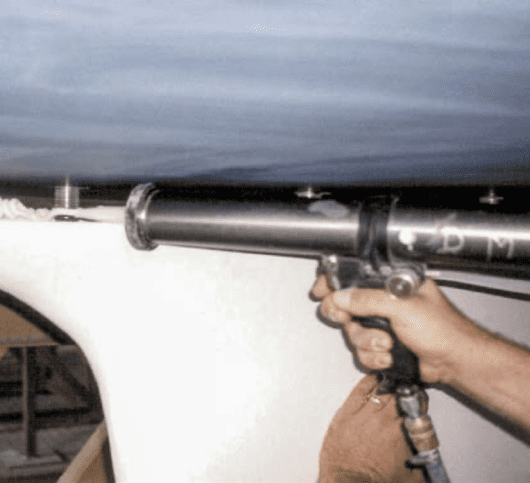
The joint between the keel and the hull is one of the most highly stressed areas on any vessel, particularly on sailing yachts when sailing close-hauled or in the event of grounding.
Function of the Sealant:
This area is highly prone to leakage, often indicated by rust streaks running along the keel when the vessel is hauled out. Sealant, in combination with mechanical anchor bolts, helps distribute stress more evenly and prevents water ingress into the joint.
Application Technique:
Elastic spacers, approximately 10 mm thick, are typically placed in the gap before applying the sealant. The sealant is then injected in continuous closed loops around the circumference and around the bolt holes. Bolts are only fully tightened (to maximum torque) after 3–4 days, once the sealant has cured, creating a joint with optimal torsional stiffness and full absorption of dynamic stresses.
Hull Sealing & Seams
For wooden-hulled or composite vessels with expansion joints, hull sealants must accommodate structural movement.
Technical Requirements:
These seams are subject to repeated compression and elongation due to hull movement, combined with potential exposure to fuel and oil leaks. The sealant must maintain excellent chemical resistance and long-term elastic recovery (flex-fatigue performance) to prevent micro-leakage over time.
Deck Hardware Bedding
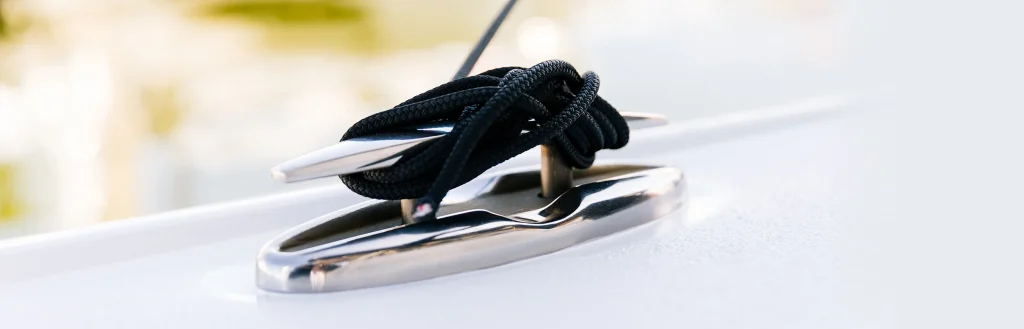
Installing deck hardware such as cleats, stanchions, winches, and hinges requires bolts passing through the deck.
Function of the Sealant:
If not properly sealed, saltwater can accumulate in low-oxygen areas under metal bases. For stainless steel, this can lead to dangerous crevice corrosion, causing rust and damage to fasteners. The bedding compound acts as a physical isolation layer, preventing water ingress and protecting the core material.
Application Guidelines:
- High-load hardware (winches, cable guides): Requires high-modulus structural adhesive combined with mechanical fasteners to absorb dynamic loads.
- Low-load hardware (vents, trim strips, rod holders): Use medium-adhesion bedding compounds or Butyl sealants for easy removal, maintenance, or replacement without damaging the deck surface.
Teak Decking Systems
Teak decks offer a luxurious aesthetic and natural anti-slip properties but present some of the most technically challenging sealing requirements.
Challenges:
Teak wood continuously expands and contracts with temperature and humidity changes. The joints must be filled with a sealant that is fully waterproof, UV-resistant, chemical-resistant, and sandable to achieve a smooth finish.
Bond Breaker Technique:
To prevent three-sided adhesion (adhesion to both sides and the bottom of the joint), a release tape must be applied at the bottom of the joint before injecting sealant. This allows the joint to function like a stretched elastic cord, accommodating wood movement without tearing the sealant.
Rub Rails & Fenders
Fender strips protect the hull from collisions at docks. Using an elastic adhesive system instead of just mechanical fasteners significantly improves shock absorption. The sealant absorbs most of the shear and tensile stress during docking and seals bolt holes to prevent water and debris accumulation behind the rub rail.
Deck-to-Hull Bonding
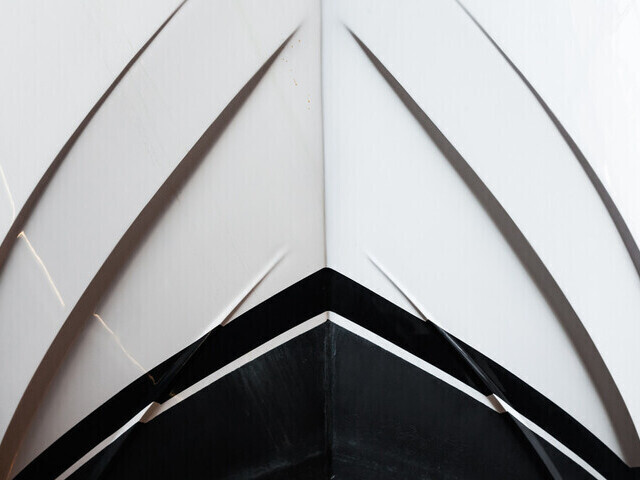
One of the most critical structural joints. Decks and hulls are often manufactured separately, sometimes from different materials (aluminum, composite, FRP).
Advantages of Adhesive Solutions:
Elastic adhesives eliminate the need for mechanical rivets, saving drilling and alignment time. The sealant fills gaps and tolerances, providing flexibility during assembly. Once in service, the adhesive layer absorbs temperature fluctuations, torsional forces from waves, and impact shocks, preventing structural failure.
Flybridge Bonding
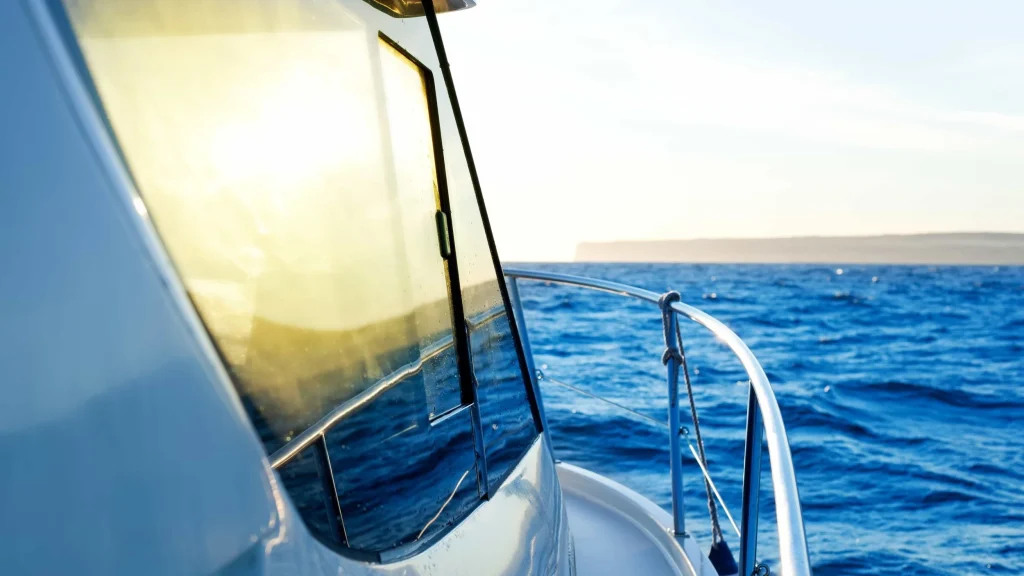
Modern motor yachts often feature upper-level flybridges, which experience high aerodynamic loads at speed.
Rigid mechanical fastening can concentrate stress, causing cracks. Using high-modulus elastic adhesives distributes stress more evenly and provides “give,” preventing the flybridge from separating from the hull under strong dynamic forces.
Mineral Glass (Tempered / Inorganic Glass)
Mineral glass is rigid and minimally thermally expansive. High-modulus polyurethane adhesives are required to absorb the movement of surrounding aluminum or composite frames.
UV Protection Requirements:
The structural adhesive under glass is highly sensitive to UV exposure. The interior glass border must be coated with a ceramic layer (ceramic coated border) with less than 0.01% light transmission to block UV. If not, a specialized UV-blocking tape must be applied to protect the adhesive.
Organic Glass (PMMA, Acrylic, Polycarbonate)
Expansion Challenges:
Plastic glazing (Lexan, Perspex, etc.) has a very high thermal expansion coefficient. Moving from cold to tropical waters can significantly change dimensions. Sealants must accommodate this movement without causing edge failure or cracking.
Important Notes:
Polysulfide adhesives must never be used with plastic glass due to chemical reactions causing stress cracking. Neutral-cure silicone, hybrid adhesives, or specially formulated polyurethane with appropriate primers are recommended.
UV & Gap Management:
UV-protective coatings or masking borders are required to prevent UV degradation of sealant through the plastic glazing. Gap calculations (backfilling) must allow free movement of the panel without direct contact with the frame.
Interior & Specialty Applications

Sealants are not limited to exterior use; they significantly enhance safety, aesthetics, and comfort inside cabins and machinery spaces.
- Anti-Slip Plates for Engine Rooms: Traditional riveted aluminum plates produce noise and loosen over time under vibration. Elastic adhesives absorb sound and vibration while providing corrosion protection.
- Hardwood Stairs & Handrails: Adhesive bonding preserves the aesthetic surface, prevents moisture ingress, and provides silent, cushioned steps.
- Sandwich Panels & Flooring: Industrial adhesives bond lightweight sandwich panels, providing structural integrity while keeping weight low. Flooring adhesives help level uneven surfaces and meet strict fire-safety standards (IMO Wheelmark certification).
Standard Installation Procedure
Surface Preparation:
- Surfaces must be clean, dry, and free of oil or grease.
- Metal: Lightly abrade to promote adhesion.
- Composite: Remove wax or release agents.
- Plastics / Glass: Avoid introducing stress points that could cause cracking.
Primer Use:
- Enhances adhesion and corrosion resistance.
- Strictly follow recommended evaporation/dry times.
Application Conditions:
- Humidity and temperature directly affect curing.
- Ideal temperature range: 5–35°C (41–95°F).
- Apply using correct techniques to prevent air entrapment and voids.
Technical Standards
| Standard | Content / Requirement |
|---|---|
| IMO / MED | Fire resistance and maritime safety |
| ISO 11600 | Classification by elasticity and joint movement |
| LR / DNV / ABS | Certified for use in marine structural applications |





