Characteristics of MDF and Adhesive Challenges
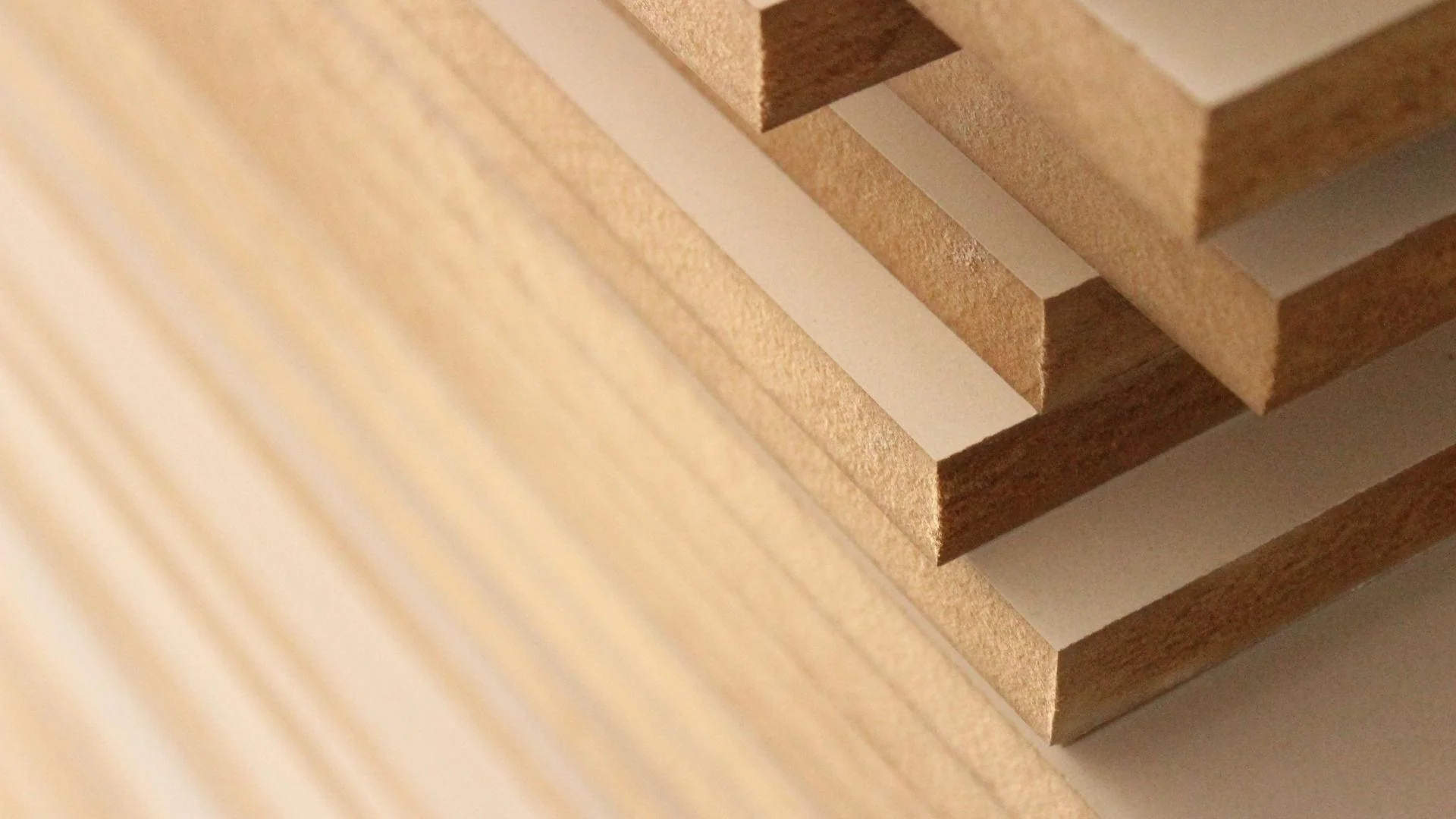
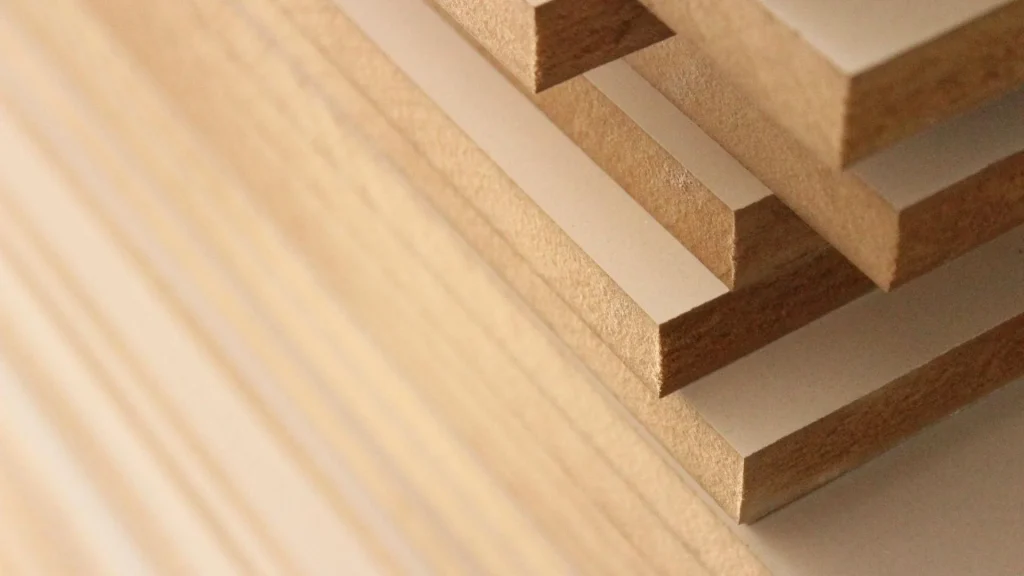
MDF (Medium-Density Fiberboard) is manufactured from fine wood fibers combined with resin binders and wax, then hot-pressed under high pressure. This process creates a uniform-density core (typically 600–800 kg/m³) with an extremely smooth, grain-free surface.
Unlike natural wood, MDF has no long wood grain or natural pore structure on its faces; its overall porosity is relatively low. However, the internal fibers and cut edges are highly absorbent. During bonding, exposed edges readily absorb adhesive and moisture — which can lead to edge swelling or “glue starvation” at the joint if not pre-treated properly.
In practice, when high-quality MDF is used and adhesives are applied correctly, the bond strength is often so high that the board itself fails before the glue joint — indicating that a properly formed adhesive bond can exceed the strength of the MDF substrate.
To mitigate excessive absorption at cut edges, surface preparation such as applying a diluted PVA sealer is commonly performed before assembly, helping reduce adhesive penetration and ensure consistent bonding.
In summary, MDF’s fine-fiber structure and high density provide a flat, dimensionally stable surface; however, achieving optimal adhesion requires selecting adhesives with strong wetting and penetration properties and properly treating high-absorption edges.
Common Adhesives for MDF
PVA (Polyvinyl Acetate)
Water-based PVA glue penetrates MDF fibers and forms a rigid bond as it dries.
Advantages: easy to use, low odor, water-cleanup. With proper clamping, PVA provides a very strong and economical bond for indoor MDF furniture.
Limitations: standard PVA is not waterproof (except D3/D4 or Type II/III). It does not fill gaps, so joints must be tight. Apply an even layer and clamp for ≥30 minutes; full cure in ~24 hours. Use thicker-grade PVA for panel bonding to avoid glue starvation.
Applications: indoor furniture joints, dowels, panel lamination, cabinets, shelving, interior framing.
PU (Polyurethane)
Single-component PU adhesive cures with moisture and expands to fill gaps. It provides extremely strong, waterproof bonds. Surfaces should be slightly moist; use sparingly since the adhesive foams. Clamp firmly to avoid joint movement. Initial set in 1–2 hours, full cure ~24 hours.
Safety note: uncured PU contains isocyanates — use gloves and proper ventilation.
Applications: humid environments (bathroom cabinets), marine use, gap-filling joints, MDF-to-other-materials, outdoor projects.
Two-Part Epoxy
Epoxy creates an exceptionally high-strength bond, often exceeding the MDF’s internal strength. It offers excellent water resistance, gap filling, and adhesion to most materials. Mix accurately (1:1 or 2:1 ratios). Open time varies from minutes to hours; full cure in 4–24 hours. After curing, epoxy resists chemicals and moisture.
Drawbacks: higher cost, more complex handling, brittle glue line, may yellow over time.
Applications: load-bearing joints, fastener/insert reinforcement, MDF repairs, maximum strength and waterproofing needs.
Hot-Melt Adhesive
Used with glue guns (EVA/PO). Provides fast tack and is convenient for temporary assembly. However, it has low structural strength, poor water resistance, and shallow penetration into MDF fibers — not suitable for load-bearing joints.
Applications: temporary positioning, small craft components, light fixtures; not for structural bonding.
Cyanoacrylate (CA / Super Glue)
Bonds rapidly and adheres well to MDF with fast wicking action. However, it is brittle and costly, so best used in small, quick-fix applications.
Applications: minor repairs, instant tacking and positioning for decorative MDF components.
| Adhesive Type | Bond Strength | Water Resistance | Cure / Dry Time | Applications & Notes |
|---|
| PVA (Wood Glue) | High (often exceeds the strength of MDF itself) | Moderate; standard PVA is not waterproof. Exterior grades (Type II/III or D3/D4) offer better moisture resistance | Short open time; clamp 30–60 minutes, full cure ~24 hours | Ideal for dry interior joints: edge-to-edge bonding, dowels, grooves. Easy to use, low VOC. For humid areas, use waterproof PVA. |
| Polyurethane (PU) | Very high (rigid, strong bond) | Excellent; fully waterproof | Initial set in 1–2 hours (expands/foams), full cure ~24 hours | For cabinet doors, kitchen/bathroom furniture, outdoor/boat use. Fills small gaps. Requires slight surface moisture and firm clamping. |
| Epoxy (2-Part) | Extremely high (often stronger than MDF) | Excellent; waterproof and chemical-resistant | Open time 5–30+ minutes; full cure within several hours, full strength ~24 hours | Structural joints, repairs, wood-to-metal bonding. Excellent gap-filling. Slower process and forms a hard glue line. |
| Contact Cement | High (surface adhesion) | Low to moderate; solvent-based indoor types not suited for high humidity | Bonds instantly on contact; no clamping required | For laminates/veneers/edge banding on MDF. No repositioning once surfaces meet. Not suitable for structural joints or wet locations. |
| Hot-Melt Glue | Low–Medium | Low; softens with heat, poor moisture resistance | Sets within seconds as it cools | Temporary holding, craft work, light assembly. Not suitable for load-bearing or outdoor use. Low VOC. |
| Cyanoacrylate (CA / Super Glue) | Very high (brittle bond) | Low; not for wet environments | Cures in seconds; clamping rarely needed | Touch-up fixes, small components, quick tacking. Bonds skin easily. Not ideal for structural load-bearing joints. |
| Resorcinol / Phenolic | Very high | Excellent; fully waterproof and UV-resistant | Slow cure (several hours; requires long clamping) | Rare in furniture; mainly used in marine and exterior structural applications. Contains formaldehyde; high VOC. |
Adhesive Performance Under Different Environmental Conditions
The effectiveness of adhesives on MDF is highly dependent on the service environment. In humid, wet, or high-temperature conditions, epoxy and polyurethane (PU) are the preferred options thanks to their ability to maintain strong, stable bonds. These adhesives are well suited for areas near sinks, bathrooms, or locations with frequent water exposure.
In contrast, standard PVA should only be used in dry indoor environments. For moderate moisture resistance, exterior-grade PVA can be used; however, it is still not suitable for prolonged water immersion. Contact cement performs well in normal indoor conditions, but long-term humidity or heat can weaken certain solvent-based formulations. Hot-melt and cyanoacrylate (CA) adhesives should only be used for auxiliary joints, light loads, and dry environments without moisture exposure.
General guideline: in areas with potential water contact, PU or epoxy adhesives are the optimal choice.
VOC & Emissions
- Solvent-based adhesives (e.g., contact cement, rubber adhesives) release strong odors and high VOCs.
- PVA, hot-melt, and fully-cured epoxy typically have low VOC emissions.
- PU adhesives contain isocyanates, which are hazardous before curing → use gloves, masks, and ensure proper ventilation.
Formaldehyde
- Modern PVA, PU, and epoxy adhesives do not contain formaldehyde.
- Certain UF/PF adhesives and some MDF boards may release formaldehyde → for green and healthy builds, select products certified E0/E1 or CARB Phase II, and allow MDF to off-gas before installation.
Application Safety
- Always wear gloves and safety goggles when handling PU or epoxy.
- CA bonds instantly to skin and may irritate the respiratory system.
- Dispose of adhesive waste and solvents according to safety guidelines.
The Importance of Priming Glue Sizing for MDF
Applying a primer adhesive (glue sizing) to MDF significantly enhances surface hardness and structural stability. The primer penetrates the fiberboard core, locking fine wood fibers in place and preventing fiber pull-out or shedding during machining.
This treatment also reduces moisture absorption and swelling—especially along edges, which are the most vulnerable areas of MDF. Among available options, PVA sizing is widely used due to its excellent fiber-wetting ability and slower drying time, allowing deeper penetration and stronger bonding.
Additionally, priming serves as a crucial step before painting or finishing, improving coating adhesion and surface smoothness. As a result, MDF becomes denser, more durable, and resistant to delamination, extending its service life and reducing deterioration.
Surface Penetration
Primer adhesive penetrates the fine surface fibers of MDF, strengthening the board and reducing loose dust fibers. With a typical MDF density of ~720 kg/m³, penetration stabilizes the surface structure, minimizing moisture uptake and swelling.
The viscosity of MDF primer typically ranges between 0.02–0.05 Pa·s, allowing deep absorption, a smoother surface profile, and improved adhesion for top-coats and finishes.
Fiber Bonding
The primer acts as a binder between wood fibers, ensuring tight cohesion. In manufacturing, MDF undergoes a sizingprocess to enhance adhesion for both the main bonding resin and subsequent finishing layers.
Adhesive viscosity for fiber bonding commonly ranges 25–50 mPa·s, ensuring fibers compress into a uniform, solid matrix with no delamination or fiber breakdown.
Improved Tensile Strength
Sizing increases tensile performance by preventing fiber tear-out and inter-layer separation. During production, adhesive curing at ~120 °C strengthens inter-fiber bonds, helping the board withstand tensile and bending loads without cracking or separating.
Enhanced Compression Resistance
Primer adhesive reinforces fiber cohesion, improving compressive resistance and preventing deformation under load. Standard MDF offers an average compressive strength of ~15 MPa, allowing the board to maintain structural integrity and resist surface denting or compression over long-term use.
How Does Glue Sizing Prevent Surface Delamination in MDF?
Fiber Bonding Layer
The primer adhesive reinforces the wood fibers within MDF, locking them into a unified structure. PVA is commonly used due to its strong adhesion and stable performance.
A thin adhesive layer penetrates into the fiber network, reducing surface cracking, edge chipping, and long-term delamination. The initial gel/cure time is typically 10–15 minutes, allowing the material to set quickly and stabilise.
Result: A stable surface with reduced cracking, fiber shedding, and top-layer peeling.
Edge and Panel Reinforcement
MDF edges are the most porous and fragile zones, prone to moisture uptake and fiber tear-out. Applying primer/sealer to edges helps:
- Increase edge hardness
- Prevent fiber fraying and layer separation
- Reduce edge chipping from impact
- Improve load resistance at joints
In manufacturing, MDF edges are typically sized + edge-banded to maximise durability.
Result: Strong, chip-resistant edges suitable for load-bearing interior applications.
Improved Load-Bearing Performance
The adhesive distributes stress across the fiber matrix, preventing:
- Panel cracking under load
- Surface delamination
- Fiber displacement under pressure
With a stable glue interface, MDF can be used for tabletops, cabinetry, and shelving without deformation.
Result: Enhanced strength and crack resistance in furniture and structural assemblies.
Internal Layer Bonding
Within MDF, the primer helps “lock” fiber layers together, preventing:
- Blistering under humidity
- Layer separation over time
- Dimensional instability from expansion and contraction
Heat-pressing and curing complete the bonding, ensuring long-term stability.
Result: MDF maintains structural integrity, dimensional stability, and durability even in mildly humid environments.
Why Is MDF’s Moisture Resistance Dependent on Primer (Glue Sizing)?
Creates a Moisture-Barrier Film
The primer penetrates the MDF surface and forms a thin protective film that blocks moisture intrusion.
It prevents ambient humidity from entering the wood-fiber core — the primary cause of fiber breakdown, swelling, and surface delamination.
When applied evenly, the primer stabilizes the board in humid environments and helps maintain long-term surface hardness.
Reduces Surface Porosity
MDF surfaces and edges contain fine fiber structures that readily absorb moisture.
Primer fills micro-capillaries and open pores, forming a smoother and more sealed surface:
- Reduced moisture absorption
- More uniform coating and paint adhesion
- Increased durability of decorative finishes
By lowering surface porosity, MDF becomes less moisture-sensitive and retains its shape more effectively.
Prevents Warping and Edge Swelling
MDF is prone to edge swelling when exposed to water.
Primer penetrates cut edges and reinforces fiber bonding, minimizing:
- Edge expansion
- Surface bubbling
- Finish peeling
By “locking” fibers in place, the board maintains its thickness and performs more reliably in humid settings.
Protects the Edges — the Most Vulnerable Zone
MDF edges absorb moisture far more readily than flat surfaces.
Primer acts as a dedicated edge-seal layer, protecting against:
- Fiber erosion
- Edge crumbling
- Veneer/laminate lifting
Edge priming is essential when MDF is used in moisture-exposed zones such as kitchens, vanities, and sink cabinets.
How Does Wood-Sealing Primer (Sizing) Affect the Bond Strength of MDF?
Enhances Joint Strength and Stability
A wood-sealing primer penetrates the MDF fibers and fills surface and edge capillaries. This helps:
- Prevent excessive adhesive absorption into the MDF core
- Create a uniform bonding surface for the main adhesive (PVA, PU, epoxy)
- Avoid “glue starvation,” which can lead to weak or failing joints
Once the surface is properly conditioned with sizing, the primary adhesive bonds more effectively and produces stronger, more durable joints.
Improves Adhesion Performance
MDF has a smooth surface but highly porous and absorbent edges. A sizing layer helps:
- Lock and stabilize surface fibers
- Create a controlled, balanced absorption layer
- Ensure the main adhesive forms a continuous bonding film
As a result, MDF joints achieve optimal adhesion with significantly reduced risk of delamination over time.
Increases Shear Strength
In furniture and cabinetry, MDF joints often experience lateral shear forces. Sizing helps:
- Seal porous edge fibers
- Prevent fiber breakdown under sideways load
- Increase the actual contact area between bonded surfaces
This improves resistance to sliding and cracking—especially in edge joints, tenon joints, and dowel connections.
Improves Load-Bearing Capacity
When the MDF surface is pre-sealed, the primary adhesive remains on the bonding line rather than being absorbed into the core, allowing it to form a proper-thickness bond layer.
Key benefits:
- More even stress distribution across joints
- Higher load capacity without sagging or adhesive failure
- Reduced risk of edge breakage—the most common MDF failure point
This is especially critical in kitchen cabinets, wall-mounted shelves, and household furniture.
| Parameter | Definition | Effect on MDF | Adhesive Type | Shear Strength (MPa) | Bond Strength (kN) | Load Capacity |
|---|---|---|---|---|---|---|
| Surface Preparation (Glue Sizing) | Pre-treatment to condition the surface before bonding | Improves uniformity of the bonding interface | PVA, Urea-Formaldehyde | 2.0 – 4.5 | 12 – 24 | Medium → High |
| Joint Integrity | Durability and stability of the bonded joint | Critical for long-term structural performance | Epoxy, Polyurethane | 3.0 – 5.5 | 15 – 30 | High |
| Adhesive Cohesion | Internal molecular bonding strength within the adhesive | Directly affects final strength | PVA, Polyurethane | 2.0 – 3.8 | 18 – 25 | Medium → High |
| Shear Strength | Resistance to lateral shear forces | Increases significantly with proper surface treatment | Epoxy, PVA | 3.5 – 6.0 | 20 – 35 | Very High |
| Load-Bearing Capacity | Maximum load the joint can support | Depends on adhesive distribution and penetration | Urea-Formaldehyde, Epoxy | 4.0 – 5.5 | 22 – 32 | Very High |
| Adhesive Type | Type of glue used | Determines final bond performance | PVA, Epoxy | 2.0 – 5.0 | 12 – 30 | Medium → High |
How Does Glue Sizing Affect MDF Surface Quality and Paint Performance?
Smoother Surface
Glue sizing forms a thin film that smooths and stabilizes the MDF surface.
- The first coat creates a thin “skin layer” that evens the surface fibers.
- The second coat (~0.02 mm) further levels the fiber structure and reduces porosity.
As a result, paint applies more evenly, producing a smooth finish with reduced blotching and surface pinholes.
Improved Paint Adhesion
Glue sizing significantly enhances paint adhesion on MDF:
- A cured film of approximately 0.03 mm increases surface cohesion.
- Paint bonds more effectively and remains stable over time.
- Reduces peeling, cracking, blistering, and color fading.
This ensures long-lasting finish quality and consistent visual appearance.
Easier Sanding
Once sealed with glue sizing, MDF becomes smoother and easier to sand:
- Reduces surface fiber raising by ~15%
- Creates a more uniform surface, reducing sanding time and effort
- Minimizes scratch marks and surface imperfections during finishing
This results in faster, more efficient finishing with higher surface quality.
How Does Glue Sizing Improve the Load-Bearing Capacity of MDF?
Reinforces Structural Layers
Glue sizing forms a reinforced surface film of approximately 0.2 mm and penetrates the wood fibers, helping to:
- Strengthen internal fiber bonding
- Reduce fiber tear-out and delamination
- Improve resistance to impact and heavy loads
With bonding strength reaching up to ~4.5 MPa, MDF maintains rigidity even under high impact forces, significantly extending its service life.
Efficient Stress Distribution
The sizing layer helps distribute mechanical load evenly across the board:
- Load distribution capacity: ~120 N/mm²
- Fills micro-gaps between fibers, reducing weak points
- Prevents cracking caused by localized stress concentration
As a result, MDF is less prone to edge chipping, surface cracking, or layer separation under load.
Enhanced Structural Durability
Glue sizing increases board stiffness and dimensional stability:
- Structural bonding force: ~2.6 kN/m²
- Prevents fiber movement and compression fatigue
- Minimizes warping or deformation under long-term load
Outcome: MDF maintains shape integrity, rigidity, and long-term durability, making it more reliable for furniture, cabinetry, and light-structural applications.
How Does Glue Sizing Affect MDF Cutting & Machining Performance?
Cleaner Edge Quality
Glue sizing forms a firm and smooth surface layer on MDF, resulting in cleaner cut edges.
- Sizing layer thickness: ~0.2 mm
- Carbide blade speed: 12,000 RPM
- Feed rate: 5 m/min
- MDF moisture content: ~8%
Outcome: Smooth edges, minimal fiber fuzzing, reduced edge chipping in panel cutting and CNC operations.
Improved Fiber Bonding
Glue encapsulates wood fibers, preventing fiber tear-out during machining.
- Resin film thickness: ~0.3 mm
- Pressing pressure: 180 PSI
- Diamond blade: 10,000 RPM
- Glue density: ~1.5 g/cm²
Result: Smooth cutting, reduced cutting force, extended tool life.
Reduced Chipping
Sizing fills surface pores and micro-cracks, minimizing chip-out issues.
- PU glue density: ~1.1 g/cm³
- Dry-to-touch time: ~4 minutes
- HSS blade: 15,000 RPM
- Cutting feed rate: 4 m/min
Outcome: Crisp edge quality, minimal corner breakout during straight cuts or groove routing.
Stable Fiber Structure During Cutting
Sizing secures fibers, preventing fiber pull-up along cut paths.
- Pressure: 180 PSI
- Diamond blade: 10,000 RPM
- Sizing layer: ~0.3 mm
- Feed rate: 5 m/min
Result: Smooth tool movement, reduced vibration, slower blade wear.
Surface Protection During Machining
Glue sizing acts as a protective film during contact with cutting tools.
- Sizing film: ~0.9 mm
- Tack-free time: ~4 minutes
- HSS blade: 15,000 RPM
- Cutting speed: 4 m/min
Outcome: Scratch-free, clean surface finish—MDF remains strong and visually clean after machining.
Types of MDF Joints & Recommended Adhesives
In MDF furniture manufacturing, adhesive selection must match the joint type and environmental conditions. MDF has a smooth surface and uniform core, but its edges are highly absorbent — proper preparation and glue application are essential for long-term durability.
Dry Indoor Spaces — Living Rooms, Bedrooms, Offices
Suitable for low-humidity areas with minimal moisture exposure.
Common joints:
Face-to-face bonding, edge joints, dowels, biscuits, miter joints.
Recommended adhesives:
✔ PVA glue (primary choice) — easy to use, low VOC, excellent bonding when clamped properly.
Moderate-Moisture Areas — Kitchens & Bathrooms
These spaces have higher humidity, steam, and frequent cleaning. Using the wrong adhesive can lead to water absorption → swelling → joint failure.
Recommended adhesives:
✔ Moisture-resistant PVA
✔ Polyurethane (PU) — superior strength and water resistance
✔ Epoxy — for maximum load-bearing durability
Application notes:
- Apply extra adhesive on edges
- Ensure proper clamping to prevent “glue starvation” in MDF
Outdoor or Constant-Moisture Environments
MDF is not ideal for outdoor use, but if required:
Recommended adhesives:
✔ Polyurethane (PU)
✔ Epoxy
Veneer & Laminate Bonding on MDF
Decorative surfaces require smooth substrate and firm pressure.
Recommended adhesives:
✔ PU adhesive
✔ Specialized PVA veneer adhesive (for high-quality veneer bonding)
Edge Banding on MDF (PVC, Wood, Melamine)
Recommended adhesives:
✔ Hot-melt EVA
✔ PU hot-melt (premium durability and heat/moisture resistance)
Proper MDF Wood Adhesive Application Guide
Surface Preparation
- Remove all dust — glue bonds to dust, not wood, causing weak joints.
- Lightly sand cut edges and clean with a brush or cloth.
- For MDF edges, apply a diluted PVA sizing coat (≈50%) or use a dedicated edge sealer to reduce glue absorption and prevent “glue starvation.”
Adhesive Application
- Apply a thin, even coat on both bonding surfaces.
PVA Glue
- Brush/roller apply an even layer, ensuring full surface coverage.
Polyurethane (PU)
- Apply sparingly (it expands as it cures).
- Lightly mist one surface with water to activate curing.
Contact Cement
- Apply two thin coats.
- Allow to flash off and become tacky before pressing surfaces together.
Assembly & Clamping
- Align components accurately and apply uniform clamping pressure.
- Recommended clamp spacing: ~20 cm (8″) between clamps.
- For large panels, use cauls to distribute pressure evenly.
- Maintain clamping for 30–60 minutes; avoid applying load for 24 hours to achieve full strength.
For contact cement:
- Use a roller to press firmly immediately after placement — no clamping needed.
Curing
- Follow recommended curing time and environmental conditions.
- PU & epoxy cure effectively with ambient moisture.
- Once fully cured, sanding and machining can begin — note that cured epoxy and PU are harder than MDF and may dull blades faster.
Contact Information
Hitta is a trusted provider of advanced adhesive and tape assembly solutions from leading global brands.
With a highly experienced technical team across multiple industries, we not only supply products but also deliver tailored bonding solutions that optimize your existing processes and address your specific application challenges.
If you are looking for a high-performance, durable, and reliable adhesive solution, let HITTA be your partner — from consultation to implementation.
- ☎️ Hotline: 0565.336.879
- ✉️ Email: hittajsc@hitta.vn