
Why is bonding mirror a challenge?
Bonding mirrors is inherently difficult. Mirrors are heavy and rigid, which means not just any adhesive can be used.
Moreover, in most cases, adhesive is the only method used to secure the mirror. Mechanical fasteners are rarely applied because they exert stress on the mirror and often require pre-drilled holes — which can weaken or crack the reflective glass.
Another critical factor is the potential hazard if the mirror were to detach or fall. For safety reasons, many countries have established national standards to minimize this risk.
For example, in the United States, FMVSS 212 is the designated standard for bonding mirrors in vehicles such as cars, trucks, and buses.
In Germany, the DIN 6701 standard applies to bonded joints in the rail industry. More recently, DIN 2304 has been introduced to cover bonding applications in other sectors, including construction, automotive, and general manufacturing.
According to DIN standards, mirror bonding is often classified as high risk, or even very high risk.
This means that extreme care must be taken when selecting the right adhesive — not only to ensure reliable performance but also to comply with strict regulatory requirements (depending on the national standards in use).
All of these factors combined make mirror bonding one of the most complex and demanding adhesive applications.
Key Characteristics of a Good Mirror Adhesive
Bonding mirrors is never a simple task, but there are several essential characteristics that a mirror adhesive must have to ensure effectiveness:
1. High flexibility combined with strong adhesion
Many people tend to overlook flexibility when selecting adhesives. However, since mirrors are brittle and fragile, flexibility is a crucial factor. That said, flexibility alone is not enough — without sufficient bonding strength, the mirror may still detach. Therefore, a mirror adhesive must be both flexible and strong.
2. High initial tack and good extrudability
An ideal mirror adhesive must strike a balance between viscosity, tack, and ease of application (extrudability). High initial tack helps hold the mirror in place during the curing process. However, overly viscous adhesives can be difficult to apply. The optimal adhesive should offer good initial grab while still being easy to dispense using standard caulking guns or application tools.
These features are considered must-haves for any effective mirror adhesive.
However, there are also nice-to-have characteristics that can enhance workability and overall performance:
1. Long open time combined with fast cure
Open time refers to the time window before the adhesive starts to skin over and becomes unworkable. Ideally, mirror adhesives should have an open time of 15–20 minutes, allowing enough time to apply the correct amount of adhesive and properly position the mirror. After that, a fast cure is preferred so the adhesive can quickly reach handling strength, minimizing downtime.
2. Primerless application – saving time and effort
Many adhesives require extensive surface preparation, including sanding, cleaning, and priming both the mirror and the substrate. Using a primerless adhesive eliminates these steps, saving time and labor while still achieving reliable bonding. It also avoids the need to remove old adhesive or rework surfaces.
While the last two features are not mandatory, we strongly recommend choosing a mirror adhesive that includes them to ensure optimal results.
In addition, depending on your specific application, you may also want to consider other factors such as:
- UV resistance
- Health and safety compliance (e.g., low or zero VOC)
- Compatibility with special substrates
Recommended Adhesive Types for Mirror Bonding Applications
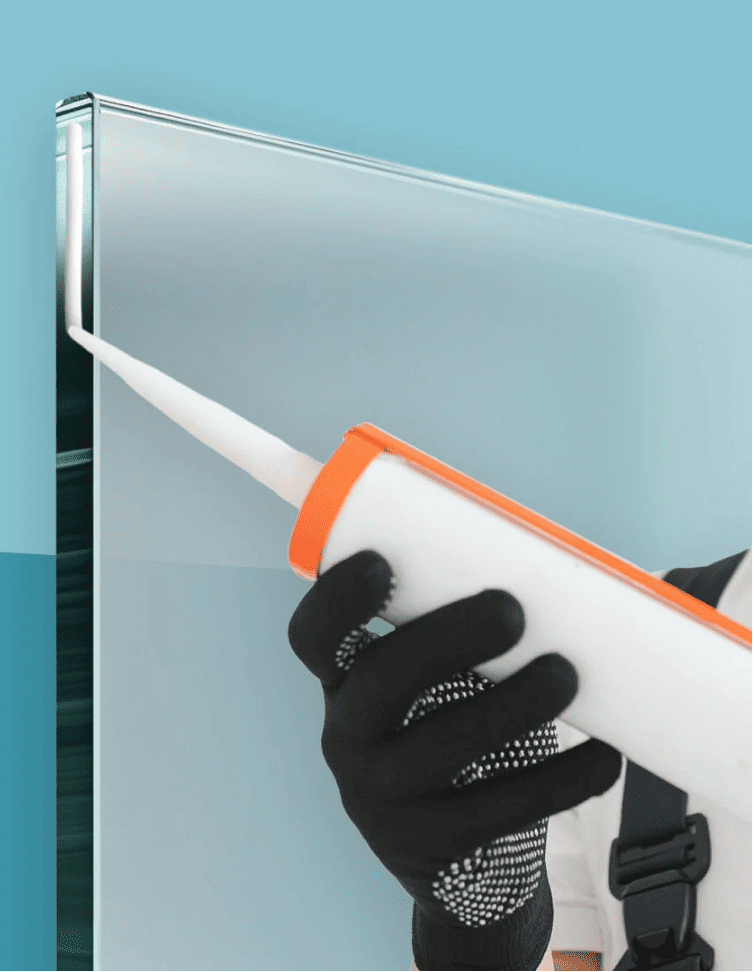
We all know that silicone, polyurethane, and MS polymer adhesives are among the most commonly used options for bonding mirrors.
As previously mentioned, polyurethane is one of the most popular choices for mirror bonding. Its combination of high bonding strength and reasonable flexibility makes it a reliable solution. However, one limitation of polyurethane adhesives is that their flexibility can be reduced, especially when high tensile strength is required.
Silicones are also frequently used in mirror applications. In fact, they are primarily used as sealants due to their exceptional flexibility. However, the major drawback of silicones is their relatively low bonding strength, which is often insufficient for securing large or heavy mirrors.
MS polymer adhesives offer the best of both worlds — stronger than silicones and more flexible than polyurethanes. While they may not match the bonding strength of polyurethane or the extreme flexibility of silicone, MS polymers strike the ideal balance between durability and elasticity, making them highly suitable for mirror bonding applications.
That’s why we strongly recommend using MS polymer adhesives for mirror installation. These adhesives cure quickly, require no primer, and offer high initial tack along with excellent flexibility and long-term bonding performance.
Understanding the Structure of a Mirror

A mirror is made of glass. On its back side, it is typically coated with a thin layer of silver, followed by a layer of copper or lead, both of which are protected by specialized protective coatings. These metallic layers are extremely sensitive to moisture, water vapor, and chemical fumes or liquids.
If exposed, the metal layers may corrode, resulting in dark or hazy spots appearing on the mirror surface. To prevent this, these layers are coated with protective materials to a certain degree — although 100% protection cannot be guaranteed, as the actual resistance depends on the specific application environment. (Always refer to the mirror manufacturer’s guidelines for proper handling.)
Understanding Mirror Adhesives
When bonding mirrors, it is essential to use adhesives that do not corrode the reflective coating or metal layers on the back of the mirror. Modern adhesives are typically formulated to provide a combination of strong bonding and sufficient flexibility, which allows for thermal expansion and contraction between the mirror and the substrate.
Requirements for the Bonding Surface:
The surface to which the mirror is bonded must meet several key conditions:
- Flat and level enough to avoid stress points on the mirror (minor irregularities can be compensated by the adhesive).
- Strong and stable, capable of supporting the weight of the mirror without deformation.
- Free of dust, grease, and contaminants, which can hinder adhesion.
- Sufficiently dry — for instance, plaster or putty on walls must be completely dry to prevent moisture buildup behind the mirror.
Even though modern adhesives have excellent adhesion to many types of surfaces, there are still cases where adhesion may fail — especially with unknown materials, plastics, or coated surfaces. In such cases, an adhesion test is strongly recommended before full-scale application.
Some mirror adhesives are specially formulated to withstand high humidity environments, such as bathrooms. Thanks to their high initial tack, once the adhesive grips, most mirrors will not require additional support during the curing process.
Effective Mirror Bonding Solutions
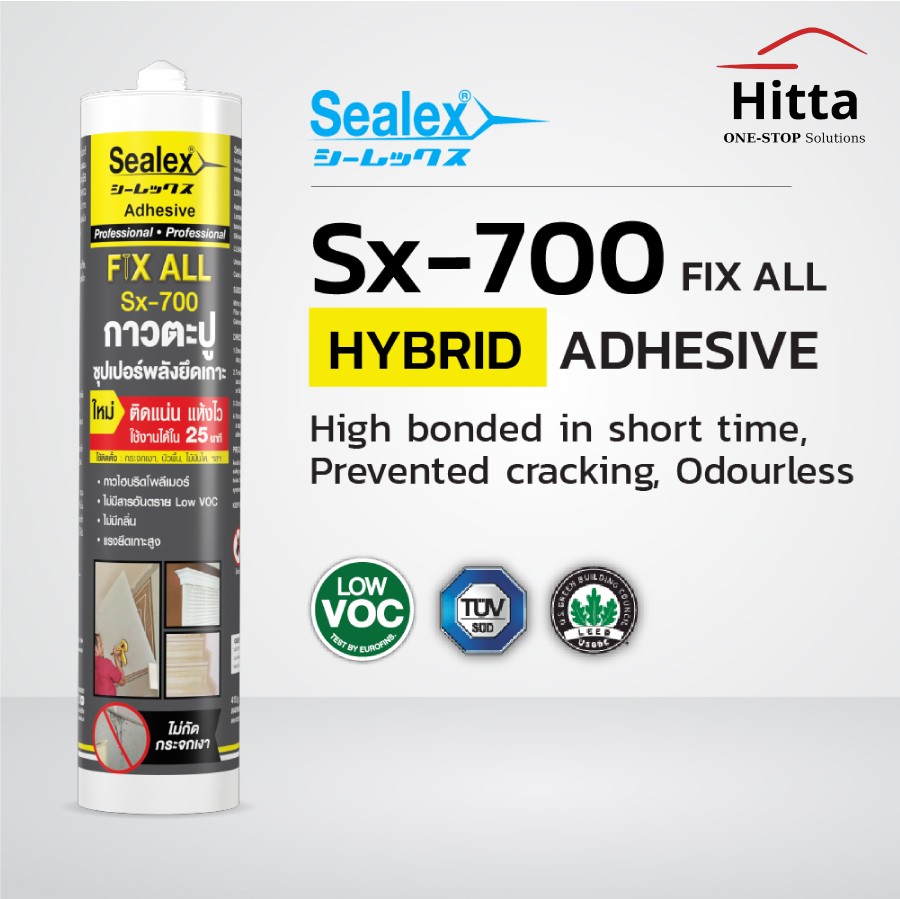
HITTA introduces Sealex Sx-700 mirror adhesive – a reliable solution with fast curing time (within 25 minutes), non-staining on mirror surfaces, strong bonding performance, user safety, and environmental friendliness. The product meets all essential criteria of a high-quality mirror adhesive.
Sealex Sx-700 is based on silyl-terminated hybrid polymer technology, offering excellent adhesion on most common construction and interior materials. SX-700’s profiles:
| Feature | Benefit |
|---|---|
| Excellent adhesion on most surfaces | Versatile and easy to apply in a wide range of applications. |
| Free of isocyanates and solvents | Safe for users and homeowners, especially for indoor use. Environmentally friendly. |
| Low VOC content | Less than 2%. Certified according to LEED 2009 for new construction and major renovations. Complies with SCAQMD Rule 1168 (2005). |
| Odorless | Creates a safe and comfortable environment for occupants. |
| Non-flammable | Enhances safety for both people and property. |
| One-component system, primerless | Easy to use, adheres well even on damp surfaces. |
| High bonding strength | Shear tensile strength between wood and mirror reaches 100 kg/in² after 7 days. |
| Non-toxic | Safe for users. |
| Non-corrosive to mirror coatings | Leaves no stains or damage on the mirror surface. |
| Fast curing | Cures within 25 minutes, reaching up to 85% of its final shear strength. |
Sealex SX-700 Mirror Adhesive – Product Specifications:
Mirror Adhesive Application Guide
Proper wall surface preparation is the most important step to ensure maximum adhesion. Follow these steps to install a mirror in a bathroom for optimal results:
Step 1. For heavy mirrors, use a supporting tool at the bottom edge to hold the mirror in place during installation.
Step 2. Ensure the bonding surface is flat and smooth. Use plywood or fiber cement board to level the wall if needed.
Step 3. Clean the surface with a dry cloth. If there is any grease or oil, wipe it off using IPA or Xylene and allow it to dry completely.
Step 4. Apply Sx-700 adhesive to the back of the mirror in the appropriate amount (refer to the application guide), then press the mirror firmly against the wall and hold it in place for 5 minutes.
Step 5. Sx-700 will cure within 25 minutes. After this time, the supporting tool can be removed.
Step 6. If the mirror weighs less than 1kg, it can be installed directly on the wall following the same steps above, without the need for a support tool as in Step 1.
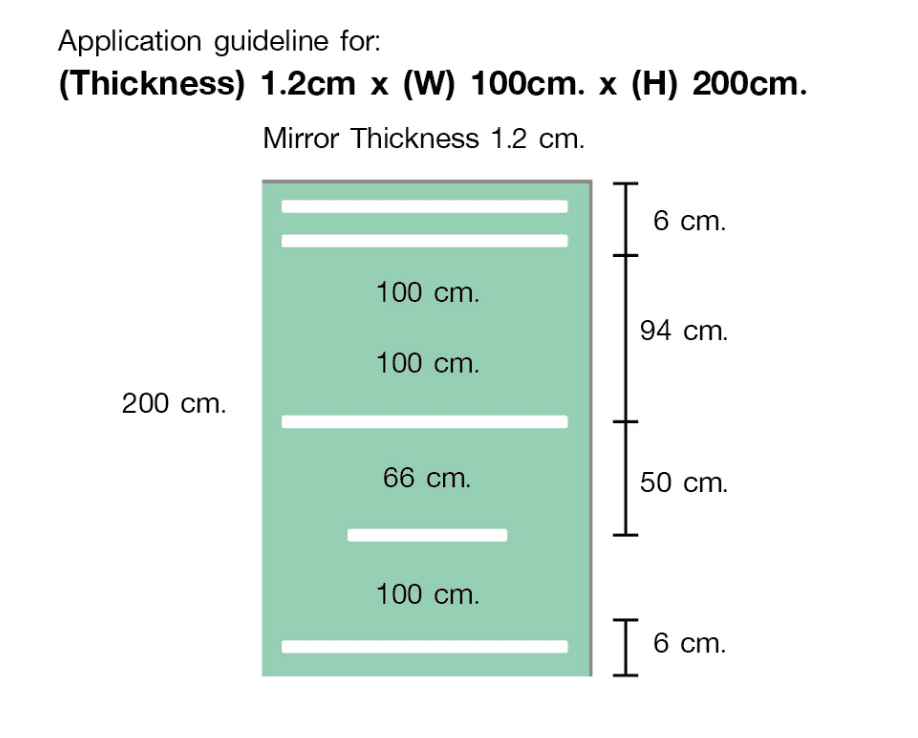
Installation Guide for Mirror Size 1.2x100x200 cm
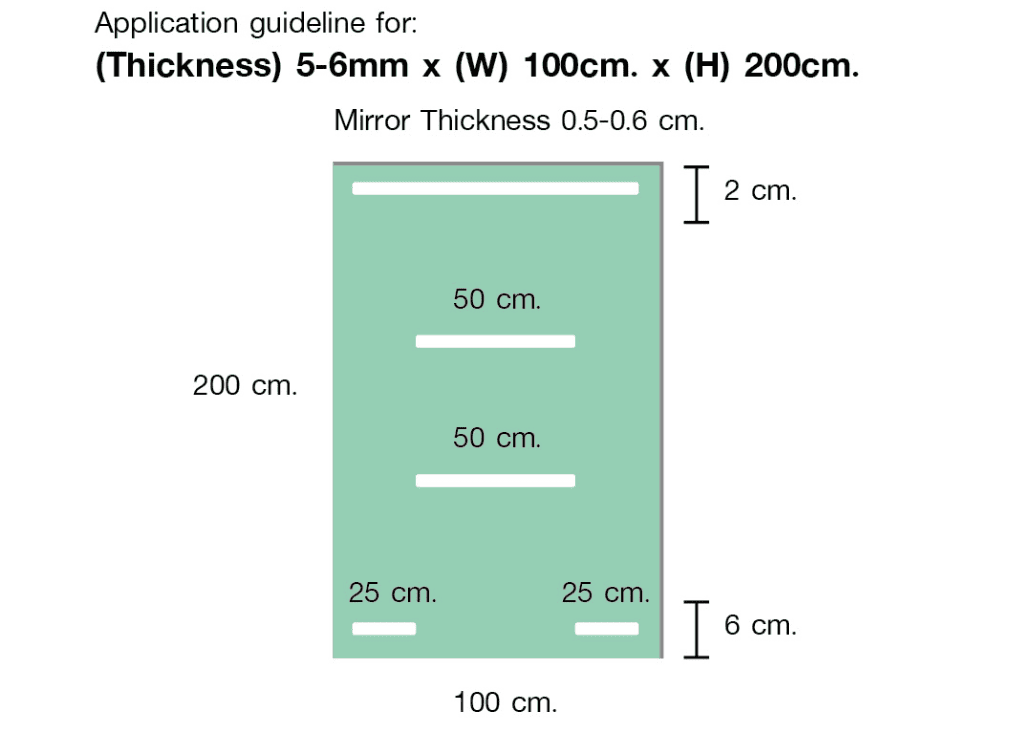
Mirror Bonding Instructions – Dimensions: 5–6 × 100 × 200 cm
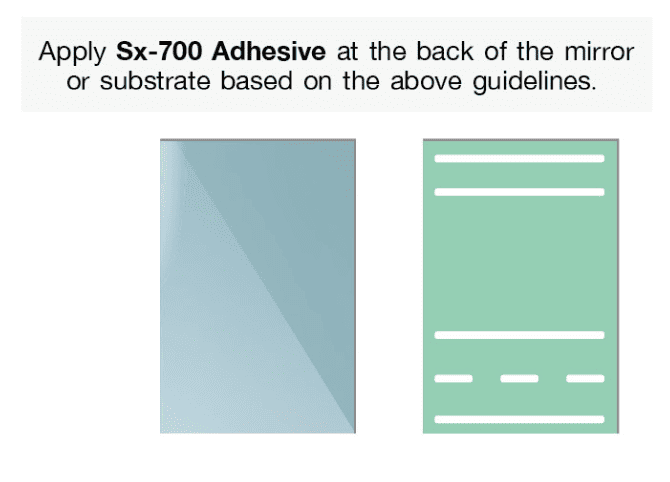
Apply SX-700 adhesive to the back of the substrate as shown in the image
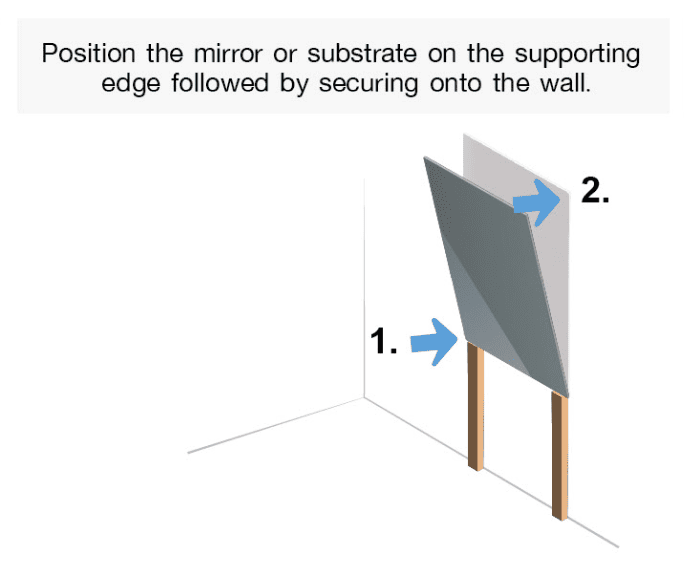
Place the mirror or material onto the bottom support, then secure it to the wall
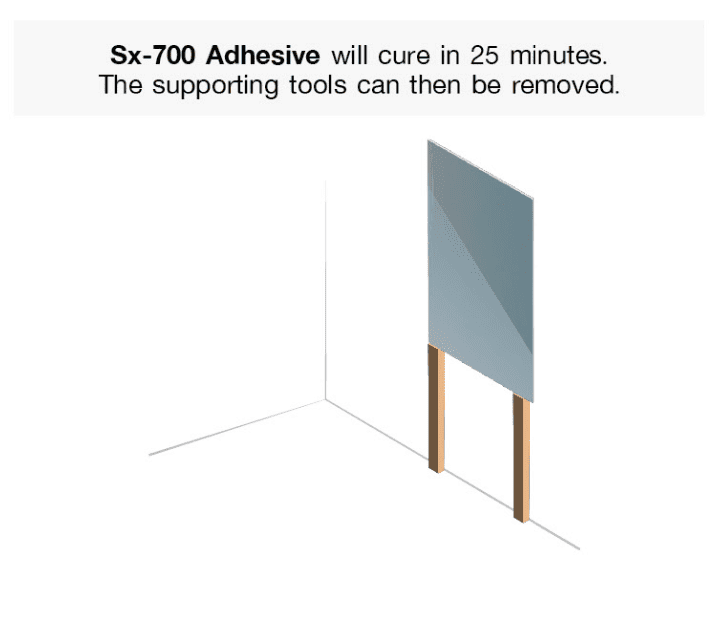
Sx-700 adhesive will cure in 25 minutes. The support can then be removed
Contact information
Hitta is a trusted provider of a wide range of adhesive and assembly tape solutions from leading global brands. Backed by a team of experienced technical specialists with hands-on expertise across various industries, we don’t just supply products — we offer tailored consulting to optimize your existing processes and meet your specific needs and challenges.
If you’re looking for a bonding solution that is effective, sustainable, and reliable, let HITTA be your partner — from consultation to implementation.
Contact Hitta today for the best solution to your adhesive needs.
- ☎️ Hotline: 0565.336.879
- ✉️ Email: hittajsc@hitta.vn





