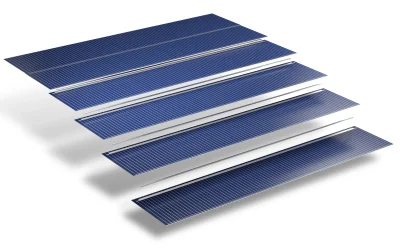
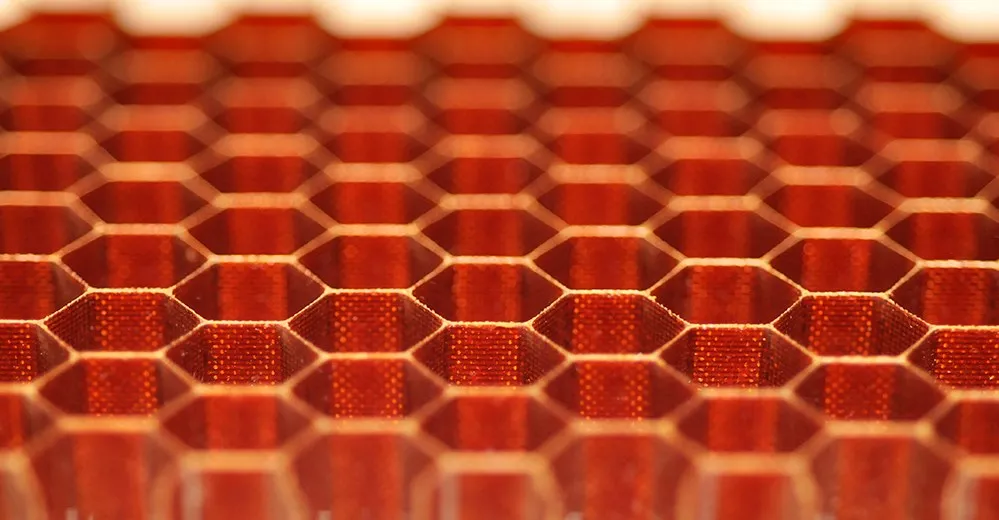
Honeycomb sandwich panels — consisting of metal or composite face sheets combined with a lightweight core — are widely used in the automotive, construction, and marine industries due to their high strength-to-weight ratio.
Bonding these panels requires high-performance adhesives capable of securely joining thin face materials (such as aluminum or carbon fiber composites) to core substrates (such as polypropylene, Nomex aramid, or aluminum honeycomb) under demanding operating conditions.

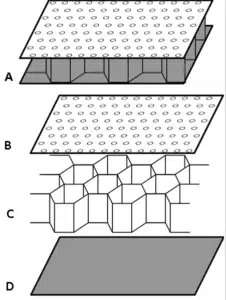
Key factors to consider include:
- High shear and peel strength
- Resistance to environmental conditions (temperature, humidity, UV exposure)
- Vibration damping or flexibility
- Compatibility between different materials
The following provides an overview of the main adhesive technologies and their suitability for various face sheet–core combinations.
Material Combinations & Compatibility
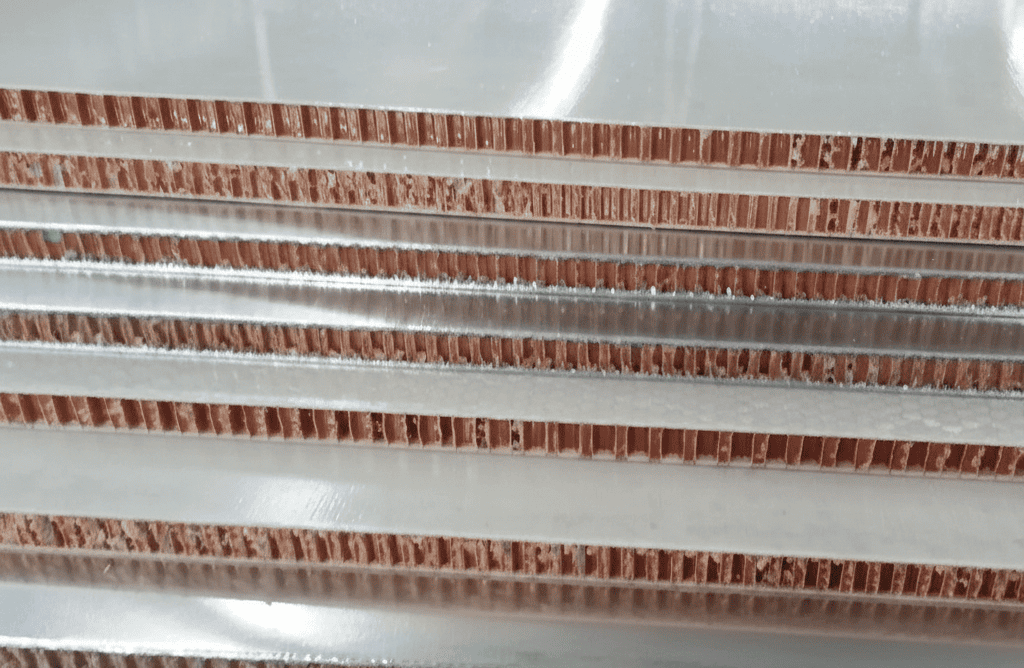
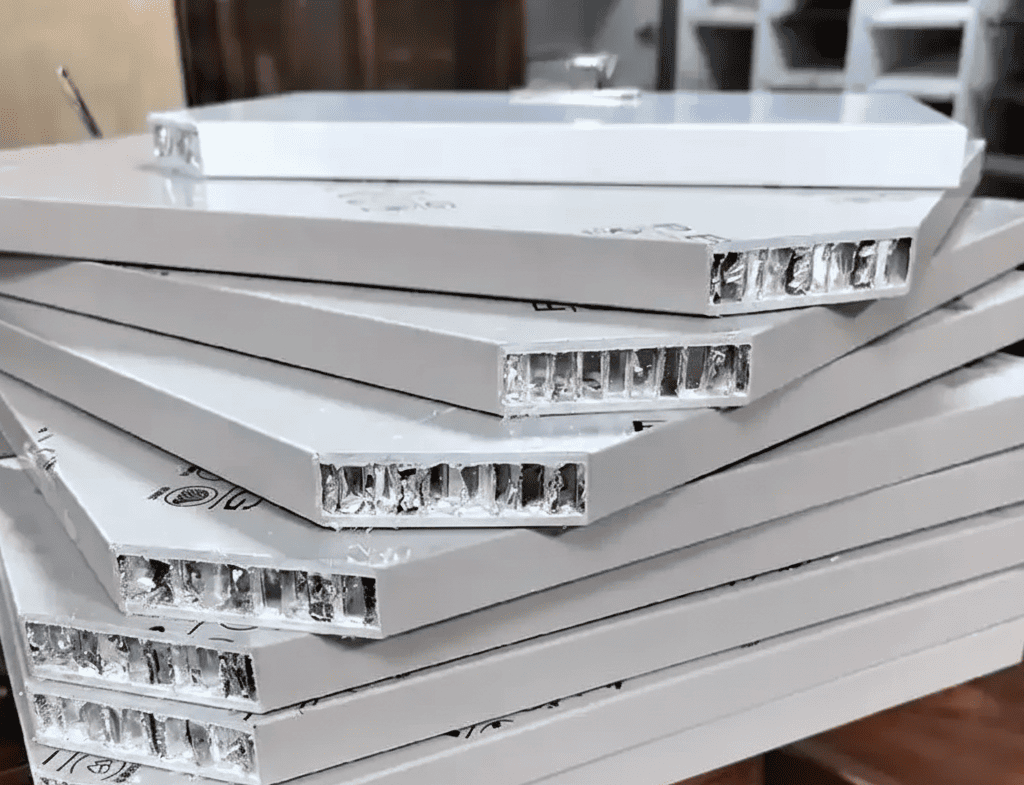


Selecting the right adhesive depends greatly on the materials used for the face sheet and the core. Below are common material pairings along with corresponding adhesive recommendations:
Aluminum Face – Aluminum Core
This structure offers high stiffness and strength.
- Two-component epoxy adhesives or structural acrylic (MMA) adhesives are typically used to achieve maximum bond strength with excellent shear and peel resistance.
- When slight flexibility or faster curing is required, flexible polyurethane (PU) adhesives are suitable.
- Silyl Modified Polymer (SMP) adhesives can also be used for aluminum bonding, but surface pretreatment (such as priming or chemical cleaning) is essential to ensure proper adhesion.
Aluminum Face – Nomex (Aramid) Core
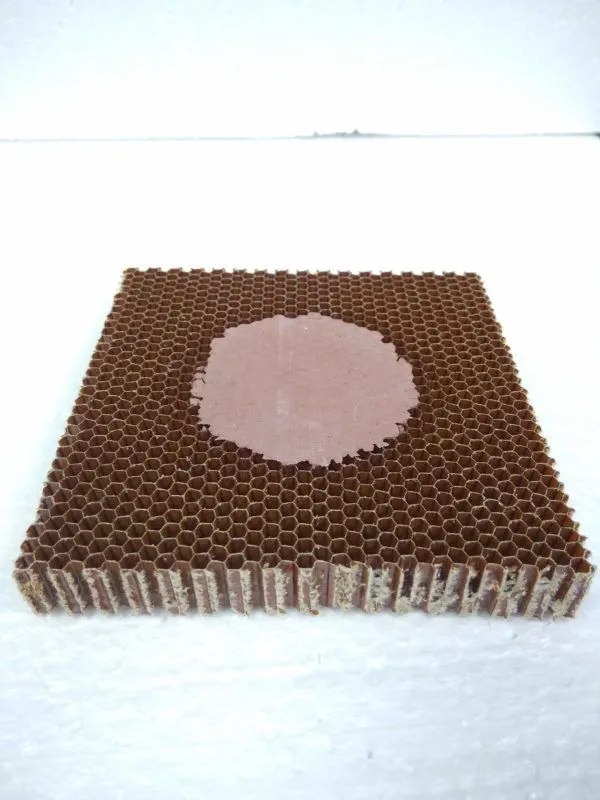
Nomex aramid honeycomb cores are commonly bonded to metal or composite face sheets in aerospace applications.
- Epoxy film adhesives or two-component epoxy systems are widely used for their rigid bonds and excellent wetting of the core surface.
- Two-component polyurethane adhesives may also be applied when bonding composite face sheets, as they penetrate the honeycomb cells, increasing the bonding area and overall joint strength.
- Note: Curing temperature should be moderate to avoid damaging the aramid paper structure.
Aluminum Face – Polypropylene (PP) Core
Polypropylene honeycomb cores (often glass-fiber reinforced) have low surface energy, making them difficult to bondusing standard adhesives.
- Recommended systems include acrylic (MMA) or specialized polyurethane adhesives with dedicated surface primers.
- Surface treatment of PP is required (e.g., flame, plasma, or primer coating) to enhance adhesion.
- In certain cases, mechanical joining such as co-molding or insert bonding may replace adhesive bonding for better structural reliability.
Carbon Fiber Composite Face – Aluminum Core
This combination is used in lightweight, high-strength structures requiring long-term stability.
- Epoxy adhesives (film or paste) are the preferred choice, similar to typical CFRP–metal joints in aerospace.
- Acrylic (MMA) or modified epoxy systems are also suitable alternatives.
- Proper surface preparation—such as anodizing or priming the aluminum, and priming the carbon surface—is critical to achieve durable adhesion.
- SMP adhesives may be used when vibration damping or flexibility is required, although they are not considered primary structural adhesives.
Carbon Fiber Composite Face – Polypropylene (PP) Core
Bonding composites to PP cores presents challenges similar to aluminum–PP combinations due to PP’s surface properties.
- Thermoplastic adhesive films or webs, or reactive hot-melt adhesives, can be applied through heat and pressure, creating uniform bonds without solvents.
- SMP or one-component PU adhesives (with appropriate primer) may also be used for bonding composite face sheets to PP cores.
- In some designs, mechanical interlocking is adopted, where the PP core is surface-treated or co-molded with the composite resin to enhance adhesion.
| Face Sheet – Core Combination | Performance Requirements | Recommended Adhesive Types |
|---|---|---|
| Aluminum – Aluminum Core | Rigid metal-to-metal bonding with high shear strength | Two-component epoxy (2K Epoxy), two-component polyurethane (2K PU), or structural acrylic (MMA) adhesive |
| Aluminum – Nomex (Aramid) Core | Panel lamination; bonding metal to aramid paper honeycomb | Epoxy film adhesive, two-component epoxy, or two-component polyurethane adhesive |
| Aluminum – Polypropylene (PP) Core | Bonding metal to low-surface-energy plastic | Two-component structural acrylic (MMA) adhesive with primer, or specialized polyurethane adhesive |
| Carbon Fiber Composite – Aluminum Core | Composite-to-metal bonding requiring high shear strength | Two-component epoxy adhesive, or structural acrylic (MMA) adhesive |
| Carbon Fiber Composite – Nomex (Aramid) Core | Composite sandwich lamination with high stiffness and durability | Epoxy film adhesive, two-component epoxy, or heat-curing epoxy film |
| Carbon Fiber Composite – Polypropylene (PP) Core | Composite-to-plastic bonding requiring flexibility and vibration damping | Silyl Modified Polymer (SMP) adhesive, one-component polyurethane (1K PU), or thermoplastic hot-melt film/web adhesive |
Polypropylene (PP) cores often require a primer or specialized adhesive to ensure reliable adhesion.
When bonding materials with different coefficients of thermal expansion, it is recommended to use more flexible adhesives—such as polyurethane (PU) or silyl modified polymer (SMP)—to absorb stress and prevent delamination or cracking.
Comparison of Major Adhesive Types — Key Characteristics
| Adhesive Type | Shear / Peel Strength | Heat & Environmental Resistance | Flexibility / Vibration Damping | Notes |
|---|---|---|---|---|
| Epoxy (2-component) | Very high | Excellent (–40 ~ +150 °C or higher) | Low (rigid bond) | Highest load-bearing capacity; available in FST/FR fire-retardant grades |
| Polyurethane (PU – 2-component) | High | Good (–40 ~ +80 °C, moisture-resistant) | Medium | Tough and impact/fatigue-resistant; cures at room or elevated temperature |
| Polyurethane (PU – 1-component, moisture-cure) | Medium–High | Good (water-resistant) | High (elastic) | Commonly used as flexible adhesive–sealant for joints and panels |
| Acrylic / MMA (2-component) | Very high | Very good (up to ~120 °C) | Medium (tough, non-brittle) | Excellent for multi-material bonding; fast curing (minutes) |
| SMP / Hybrid (1-component) | High | Excellent (UV and weather resistant) | Very high (highly elastic) | Primerless bonding for many materials; durable for outdoor use |
| Reactive Hot-Melt Adhesive | High | Good (after curing) | Medium | Supplied as pellets or film; reactivatable by heat for adjustment or repair |
Quick Summary:
- Epoxy → Rigid bond, high load-bearing strength.
- PU (Polyurethane) → Tough, flexible, excellent vibration resistance.
- MMA (Acrylic) → High-strength, ideal for multi-material bonding.
- SMP (Silyl Modified Polymer) → Elastic, weather-resistant, and easy to apply.
Face–Core Combinations and Adhesive Solutions
| Face Sheet – Core Combination | Bonding Challenge | Typical Adhesive Solution |
|---|---|---|
| Aluminum – Aluminum Core | Metal-to-metal bonding requiring high rigidity | Two-component epoxy or structural acrylic (MMA)adhesive; two-component PU may be used where moderate flexibility is needed |
| Aluminum – Nomex (Aramid) Core | Composite-to-metal bonding requiring low-temperature curing | Epoxy film or paste adhesive; two-component PU can enhance core penetration and lower curing temperature |
| Aluminum – Polypropylene (PP) Core | Bonding metal to low surface energy plastic (difficult to bond) | Acrylic (MMA) with primer or specialized PU adhesive; surface treatment required — thermoplastic film/web adhesive may also be used |
| Carbon Fiber Composite – Aluminum Core | Composite-to-metal bonding requiring high stiffness and strength | Two-component epoxy is the primary choice; PU or MMAadhesives can also be used as alternatives |
| Carbon Fiber Composite – Nomex (Aramid) Core | Lightweight, stiff composite sandwich bonding | Epoxy film adhesive or prepreg-integrated resin; structural two-component epoxy suitable for out-of-autoclave processes |
| Carbon Fiber Composite – Polypropylene (PP) Core | Bonding composite to plastic core | SMP or one-component PU (with primer); thermoplastic hot-melt film for low-temperature lamination processes |
Epoxy Adhesives
Two-component epoxy adhesives offer high mechanical strength and excellent thermal and chemical stability, making them widely used in honeycomb panel structures for aerospace, automotive, and construction industries.
They typically feature a moderate working time (around 1–2 hours), low viscosity for good surface wetting, minimal shrinkage after curing, and are available in fire–smoke–toxicity (FST) compliant grades.
Certain toughened epoxy formulations provide improved impact and vibration resistance, ideal for metal–compositeor Nomex core bonding applications.
Polyurethane (PU) Adhesives
PU adhesives are available in two-component (2K) and one-component (1K, moisture-curing) systems.
- 2K PU adhesives are commonly used for metal honeycomb panels (aluminum, steel). They are solvent-free, can be heat-activated, and deliver high bonding strength. Some grades are designed to penetrate honeycomb cell walls, increasing mechanical interlocking.
- 1K PU adhesives offer superior elasticity and weather resistance, ideal for vibration damping and thermal movement joints, frequently used in vehicle body and container assembly.
Overall, PU adhesives balance strength, toughness, and flexibility, making them a preferred choice for applications involving dynamic loads or slight deformation.
Acrylic (MMA) Adhesives
Methyl Methacrylate (MMA) adhesives are fast-curing (within minutes), extremely strong, and exhibit excellent adhesion to a wide range of materials — from metals and composites to engineering plastics.
Thanks to their good heat and fatigue resistance, they are ideal for bonding composite panels, metal skins, or high-load structural joints with larger bond gaps.
Compared to epoxy, MMA adhesives cure faster and require no heat, making them well-suited for high-volume production or on-site repairs.
SMP / Hybrid (Silane-Modified Polymer) Adhesives
Silyl-Modified Polymer (SMP) or MS Polymer adhesives provide high elasticity, excellent weatherability, and UV and moisture resistance, making them ideal for metal and plastic assemblies in outdoor or marine environments.
These solvent- and isocyanate-free adhesives often require no primer on many substrates and can function as both adhesive and sealant.
Although not as rigid as epoxy, SMP excels in vibration absorption and thermal movement tolerance, making it suitable for structures exposed to climate variations or dynamic loads.
Film and Hot-Melt Adhesives
Epoxy or PU film adhesives, activated by heat, are commonly used for bonding Nomex or composite honeycomb cores, ensuring uniform adhesive distribution and high structural strength.
Reactive hot-melt adhesives can form light foamed layers, filling gaps and reducing overall weight—ideal for hot-press or high-speed automated production lines.
Additionally, contact adhesives are used for non-structural panels, such as interior linings or acoustic partitions.
General Application Recommendations
- Control adhesive quantity to achieve uniform bond-line thickness.
- Maintain a short pressing cycle and appropriate temperature (especially for reactive PU systems).
- Prepare surfaces thoroughly — degrease, deoxidize aluminum, or apply primer to composites — to ensure optimal adhesion and consistent performance.
The selection of the right adhesive depends on the face–core configuration, mechanical requirements, environmental conditions, and industry-specific safety or FST standards.
When properly selected and applied, the adhesive can maximize the strength, durability, and overall performance of honeycomb sandwich panels.
Key Applications
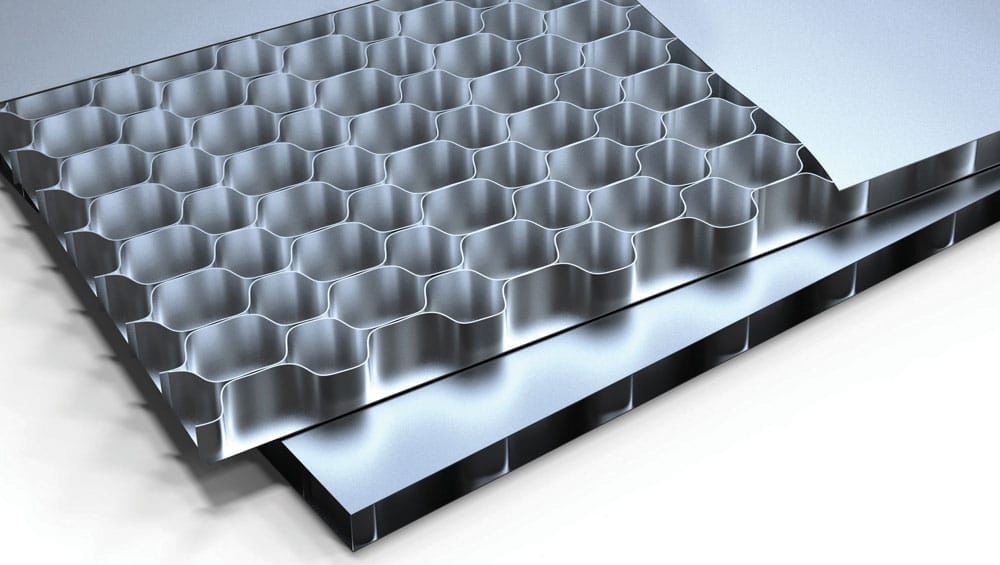
Ceilings and Wall Panels
Adhesives provide strong, durable bonding for honeycomb panels used in both interior and exterior wall systems, as well as ceilings.
These lightweight panels help reduce structural load, while long-lasting adhesion ensures structural stability.
With excellent resistance to moisture and heat, the adhesive delivers reliable performance under diverse environmental conditions—enabling efficient, durable, and future-ready construction.
Truck Bodies and Trailers
In commercial trucks and trailers, every kilogram counts.
High-performance adhesives enable reliable bonding of honeycomb panels to aluminum, stainless steel, or fiberglass, creating lightweight, impact-resistant, and corrosion-resistant structures.
High-Speed Rail Interiors
In high-speed rail, safety, durability, and weight optimization are key.
Adhesives provide strong, vibration-resistant bonding for honeycomb panels used in ceilings, partitions, and flooring, maintaining structural integrity under constant motion.
With fire-retardant performance and low VOC emissions, they help create a safer, healthier interior environment for passengers.
Aerospace and Aviation
Lightweight materials are essential in aircraft manufacturing to enhance fuel efficiency and structural integrity.
High-performance adhesives ensure durable bonding for honeycomb panels used in cabin walls, overhead compartments, floors, and partitions.
With exceptional resistance to temperature fluctuations and mechanical stress, these adhesives ensure long-term reliability in demanding aerospace applications.
Benefits in Honeycomb Panel Production
Adhesive systems are engineered to enhance honeycomb panel performance while improving overall production efficiency.
With Sika adhesive solutions, the following benefits can be achieved:
- COST SAVINGS – Optimized adhesive application weight (g/m²) allows for efficient and economical use of material.
- EXCELLENT BOND STRENGTH – Provides high peel and shear strength for durable, reliable bonding.
- LONG-TERM DURABILITY – Cross-linking of the cured adhesive ensures stable performance over time.
- SUPERIOR QUALITY – Advanced adhesive technologies enable precise process control, ensuring consistent, repeatable production quality.
Standards and Requirements
Adhesives used for honeycomb sandwich panels must comply with strict technical standards specific to each industry to ensure safety, durability, and long-term performance.
Aerospace Industry
Adhesives used in aircraft interiors must meet FST standards (Fire, Smoke, Toxicity) — ensuring flame resistance, low smoke emission, and minimal toxicity.
Epoxy-based adhesives that meet FST requirements are specially formulated to provide high heat resistance, non-toxic performance, and stable bonding strength under varying flight conditions.
Marine Industry
Adhesives used in ships and yachts must be IMO-certified (Marine Equipment Directive), guaranteeing resistance to water, salt spray, and vibration, while maintaining safety in humid and corrosive environments.
Polyurethane (PU) and Silyl Modified Polymer (SMP) adhesives are commonly used thanks to their excellent elasticity and weather resistance.
Railway and Automotive Industry
Adhesives must comply with standards such as DIN 6701 (structural bonding in rail vehicles) and EN 45545 (fire safety for railway materials).
Hybrid SMP or PU adhesives are widely adopted for their vibration damping, elasticity, and outstanding durability under harsh conditions.
Other Relevant Standards
The ASTM E865 standard defines the performance criteria for structural film adhesives used in aerospace honeycomb panels — including peel strength, shear strength, and heat resistance.
Manufacturers typically provide detailed technical data sheets for each adhesive type, covering peel/shear strength, moisture and chemical resistance, which help in selecting optimal formulations and minimizing material usagewithout compromising performance.
In summary, selecting adhesives for honeycomb sandwich panels requires not only meeting mechanical performance demands, but also complying with safety, environmental, and industry-specific standards to ensure reliable, long-term operation.
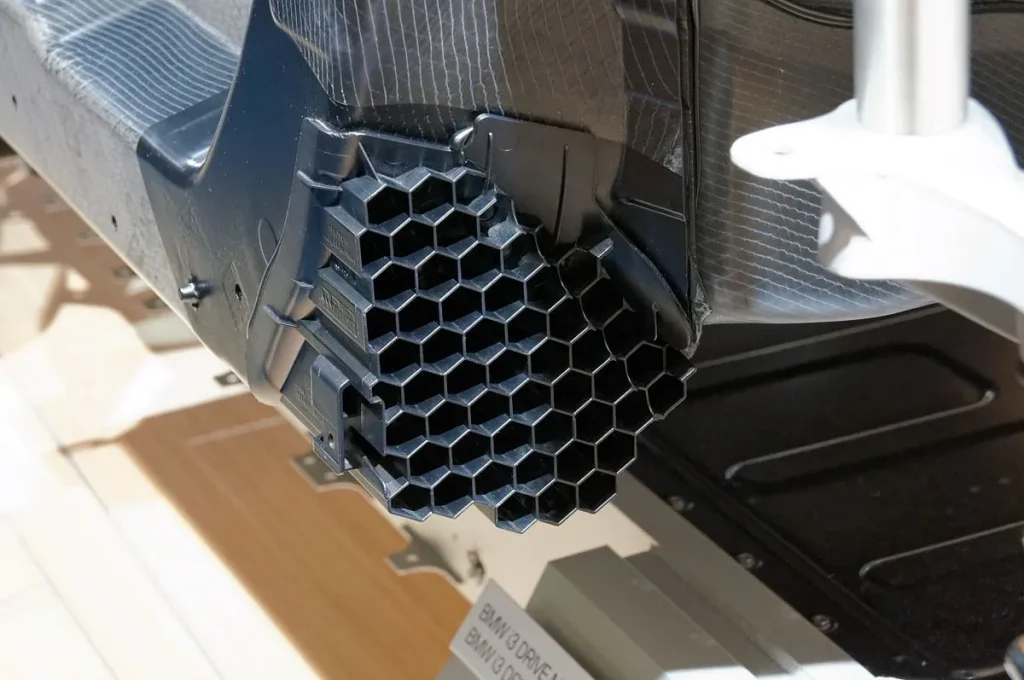
PP Honeycomb Panels in Automotive Applications
Structure and Composition
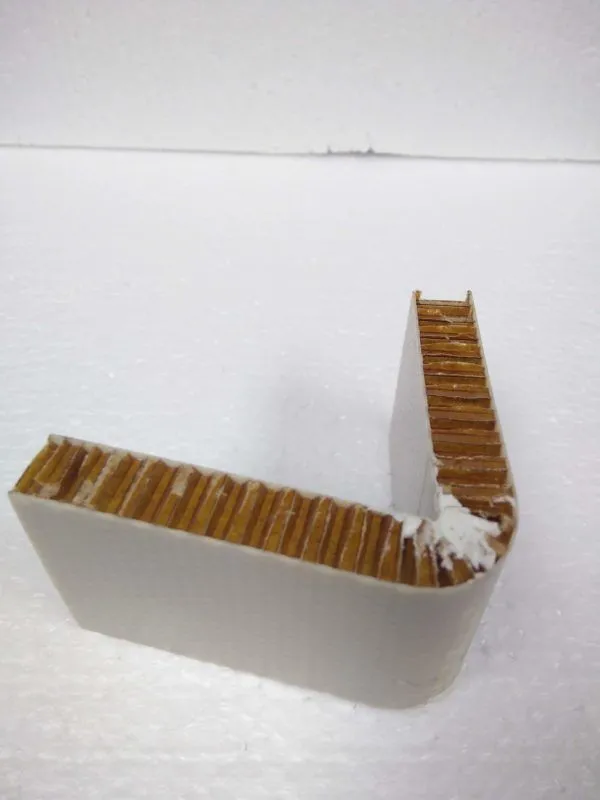
PP honeycomb panels are made from a polypropylene honeycomb core reinforced with fiberglass (FRP) surface layers.
This combination creates panels that are lightweight yet as rigid as steel, thanks to:
- The honeycomb core, which provides high strength and natural thermal insulation.
- The fiberglass skins, which enhance stiffness and load-bearing capacity while preventing deflection.
PP honeycomb panels are available in various thicknesses — thicker panels offer greater strength, but even thin panels provide excellent impact resistance.
Comparison: PP Honeycomb vs. Solid PP
Compared with solid polypropylene sheets, PP honeycomb panels are lighter and stiffer, making them a more efficient choice for weight-sensitive applications such as automotive construction.
In contrast to polycarbonate sheets, PP honeycomb panels offer better impact resistance and superior stability under strong wind or hail. Their honeycomb structure delivers outstanding mechanical strength and durability.
Processing and Fabrication
PP honeycomb panels can be easily shaped into complex geometries, and are flexible enough to bend when grooved.
Surface finishing options include painting, anti-slip coatings, or specialized surface treatments.
Bonding with Metals and Other Materials
PP honeycomb panels can be attached to metal components such as aluminum in vehicle frames.
While mechanical fastening (screws, bolts, drilling) is possible, adhesive bonding offers significant advantages:
- Maintains overall lightweight design.
- Enhances recyclability.
- Avoids drilling, preserving panel integrity and thermal insulation.
Automotive Applications
Combining PP honeycomb panels with advanced adhesives provides an ideal foundation for automotive components such as roofs, walls, and floors.
The material is versatile, easy to process, and delivers exceptional performance across a wide range of vehicles.
Benefits of PP Honeycomb Panels in Vehicles
Lightweight – Improved Fuel Efficiency
- The ultra-light structure reduces vehicle weight, lowering fuel consumption and CO₂ emissions.
- Lighter vehicles mean better maneuverability, payload capacity, and speed — ideal for light trucks, refrigerated vehicles, caravans, and commercial fleets.
Natural Thermal Insulation
The honeycomb structure maintains stable temperatures, making it especially useful for refrigerated trucks or temperature-controlled transport.
High Strength – Lower Maintenance Costs
- Despite being lightweight, the panels offer excellent impact resistance, corrosion resistance, and weather durability.
- They minimize damage and maintenance costs; if dented, they can be easily repaired without replacing the entire panel.
Common PP Honeycomb Panel Types in Automotive Use
- MonoPan® – PP honeycomb core with fiberglass skins; ideal for vehicle bodies, walls, and roofs.
- Twintex – A PP-fiberglass composite (without honeycomb structure), thermally formable; widely used in interiors such as dashboards and trims.
- Holypan – Similar to MonoPan but with a closed-cell honeycomb core for superior insulation; slightly heavier, suited for high thermal insulation needs.
Typical Applications
PP honeycomb panels and high-performance adhesives are used in:
- Passenger cars and commercial vehicles.
- Caravans, motorhomes, and campers (walls, floors, roofs).
- Cargo trucks, refrigerated trucks, and box vans.
- Various trailers — enclosed, flatbed, livestock, or heavy-duty transport.
- Specialty vehicles: ambulances, fire trucks, food trucks, and mobile laboratories.
- Compact constructions such as containers, storage boxes, and bicycle trailers.
Contact Information
HITTA is a trusted supplier of advanced adhesive and tape assembly solutions from the world’s leading brands.
With a team of highly experienced engineers across multiple industries, we not only provide products but also consult on process optimization and application-specific bonding solutions tailored to your exact needs and challenges.
If you’re looking for an effective, durable, and reliable bonding solution, let HITTA be your partner — from technical consultation to on-site implementation.
- ☎️ Hotline: 0565.336.879
- ✉️ Email: hittajsc@hitta.vn