Solution Overview
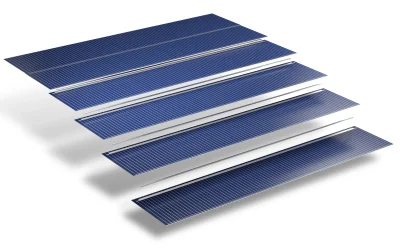
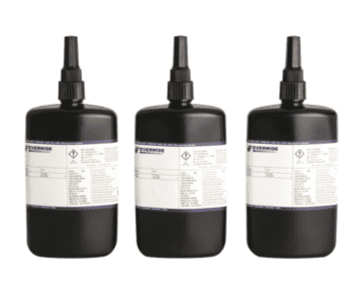
A temporary UV-curable glass bonding adhesive that can be cleanly dissolved and removed through water immersion after processing.
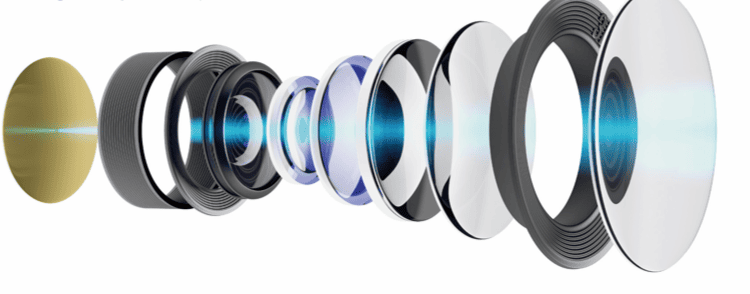
The optical glass processing industry encompasses a wide range of applications — from film lamination of ultra-thin substrates to dust-protected glass fabrication for mobile phone lenses, quartz components, crystal elements, and more. All of these processes require a reliable temporary bonding solution that securely fixes the material during machining, grinding, polishing, or thinning operations.
Upon completion of processing, the bonded materials can be fully separated without leaving residue, ensuring pristine surface integrity and eliminating contamination risks.
Dust-Protected Glass Applications:
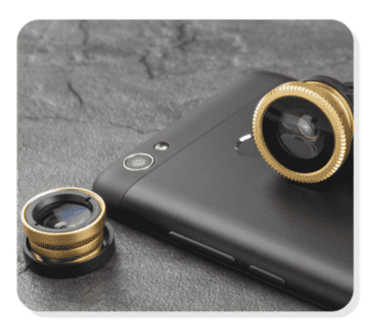
After cutting large glass panels into specified dimensions, the next step involves temporarily bonding the glass onto a carrier substrate using adhesive. The bonded assembly is then transferred to precision machining equipment for grinding, edge chamfering, and polishing operations.
Following mechanical processing, a predefined debonding protocol is applied to remove the adhesive. Once separation is completed, the components proceed to a four-week coloring or surface treatment process.
Glass Processing and Thinning Applications
The solution is compatible with LOCA (Liquid Optical Clear Adhesive) dispensing methods. Its controlled viscosity, excellent bubble release performance, and stable coating behavior make it suitable for high-volume production across various product sizes.
Optical glass with a thickness of 0.5 mm is typically thinned using aggressive chemical etchants such as hydrofluoric acid (HF) or nitric acid–based solutions containing potassium cyanide. Because the thinning process significantly reduces structural integrity, temporary bonding support is essential to prevent cracking, edge chipping, and warpage during chemical or mechanical treatment.
To address this challenge, a degradable UV-curable adhesive has been developed to temporarily bond two glass substrates together. The adhesive provides structural reinforcement and shock absorption, particularly against hydraulic forces generated during the cleaning of thinning grooves. This significantly improves product yield and reduces the risk of breakage during processing.
Upon completion of all machining and surface treatments, a predefined debonding condition can be applied to separate the substrates cleanly, leaving no residual adhesive on the glass surface.
Contact for Consultation
Hitta is a provider of a wide range of adhesive and assembly tape solutions from leading global manufacturers. With a technical team possessing extensive hands-on experience across multiple application fields, we do more than supply products—we provide expert consultation to optimize your existing processes and deliver solutions tailored to your specific requirements and technical challenges.
If you are looking for a bonding solution that is efficient, durable, and reliable, let HITTA support you from consultation through implementation.
Contact Hitta today to receive the most suitable solution for your application.
☎️ Hotline: +84 565 336 879
✉️ Email: hittajsc@hitta.vn
Photochemical Lifecycle
In precision manufacturing, the transition to UV “cure-on-demand” technology has become a strategic necessity for handling ultra-fragile substrates. From a consulting standpoint, the objective extends far beyond simple adhesion. The goal is to create a temporary yet structurally rigid support platform exhibiting zero mechanical creep throughout processing, while remaining fully reversible at the end of the cycle. Failure to properly manage the nuances of this lifecycle frequently results in severe yield losses during the final separation stage.
The transformation of liquid resin into a structural bond is driven by polymerization, where industry-standard wavelengths (365 nm to 405 nm) activate a cross-linked polymer matrix. The adhesive formulation is built upon three core pillars:
Oligomers:
Serve as the structural backbone, determining tensile strength and chemical resistance.
Monomers:
Reactive diluents that control rheological behavior (viscosity) and cross-link density.
Photoinitiators:
Catalytic agents that absorb UV energy to generate free radicals or cations.
However, selecting between free radical (acrylic-based) and cationic (epoxy-based) mechanisms requires careful trade-off analysis. Free radical systems offer near-instantaneous curing speeds but are susceptible to oxygen inhibition, often leaving a tacky surface residue. In contrast, cationic systems provide superior adhesion to glass and lower shrinkage, yet they are acid-based and highly sensitive to environmental conditions.
Risk Consideration:
A common industrial pitfall is the “skin-over” phenomenon. High-intensity UV exposure can prematurely harden the surface layer of a cationic adhesive, inadvertently blocking UV penetration and trapping uncured material beneath. This condition may lead to bond failure under mechanical stress. Furthermore, environmental humidity above 70% RH inhibits cationic curing, whereas moderate levels (30–60% RH) can actually facilitate the conversion process.
Lifecycle Workflow
Application:
Precision spin-coating and vacuum bonding are employed to eliminate air entrapment and ensure a uniform support interface.
Fixation:
Rapid cross-linking is achieved through UV exposure. For high-precision optical applications, a gradual curing approach is recommended. Although high intensity enhances depth of cure, it also significantly increases internal stress.
De-bonding:
While chemical immersion using highly polar solvents such as DMSO or MEK remains a conventional method, it is inefficient for high-throughput production environments. The advanced industrial standard is Laser-Assisted Debondingutilizing a Light-to-Heat Conversion (LTHC) layer. Laser irradiation generates microvoids within the LTHC layer, enabling separation of the support glass with minimal mechanical force and without hazardous chemical processes.
Resolving the Thinness Paradox in Glass Thinning
Semiconductor and optical manufacturing are governed by the “thinness paradox”: components must be reduced to thicknesses below 20 µm to meet miniaturization demands, yet every micron removed proportionally increases the risk of catastrophic fracture.
Reinforcement and Shock Absorption:
Adhesive rheology is the primary engineering tool for mitigating this risk. With viscosities ranging from 50 cps to 150,000 cps, formulations can be selected to provide high flowability, enabling the material to wick into micro-cracks or complex surface topographies, such as microlens arrays with radii below 10 µm.
This capillary penetration forms a rigid support interface, effectively transforming a fragile wafer into a mechanically stable processing block capable of withstanding aggressive thinning operations.
Chemical Resistance and Vacuum Stability:
Beyond mechanical stabilization, these adhesives must function as robust chemical barriers, capable of withstanding highly corrosive environments including hydrofluoric acid (HF) and nitric acid exposure.
For aerospace applications, the adhesive must comply with the NASA ASTM E595 low-outgassing standard, ensuring that no volatile organic compounds (VOCs) are released that could contaminate vacuum chambers or compromise optical surfaces during high-vacuum processing.
The Critical Importance of Residue-Free De-Bonding in Advanced Optics
In high-precision optical systems, surface purity is the ultimate validation metric. Even sub-micron residues can introduce scattering points or alter the refractive index of assembled optical stacks, compromising system performance.
| Category | Traditional Solvent Processing | Laser De-Bonding (LTHC) |
|---|---|---|
| Surface Finish | Risk of wax-like film formation or surface tack; typically requires multiple cleaning cycles | Minimal to zero residue; carrier substrates can be recycled immediately |
| Processing Speed | Slow; immersion cycles range from 30 minutes to 3 hours | High throughput; separation completed within seconds |
| Substrate Integrity | Risk of solvent-induced damage or thermal shock; often requires significant mechanical force | Chemical-free process; laser-induced microvoids enable separation with minimal force |
UV Adhesives vs. Conventional Industrial Fixation Methods
The migration toward UV-curable temporary bonding systems is driven by the structural limitations of mechanical clamping and thermally activated adhesive systems.
Precision and Alignment:
“Cure-on-demand” activation provides virtually unlimited positioning time, allowing micron-level alignment accuracy before photochemical locking occurs.
Throughput and Operational Efficiency:
UV systems eliminate work-in-progress bottlenecks inherent to rubber-based hot-melt systems, which require prolonged heating and cooling cycles between 150°C and 175°C.
Stress Management:
To prevent optical distortion, controlled Meniscus Formation is leveraged. By allowing the adhesive to form an unconstrained meniscus during characteristic shrinkage, internal stresses are redistributed and minimized, preventing warpage and long-term dimensional instability.
Sustainability and Safety:
Transitioning to 100% solid, solvent-free systems eliminates VOC emissions and significantly reduces fire hazards within the production environment.
Strategic Value Within the Modern Electronics and Optical Supply Chain
UV-curable temporary bonding adhesives are a foundational enabler of advanced electronic miniaturization. By providing a mechanically stable environment during the most vulnerable processing stages, this technology allows the industrial-scale fabrication of ultra-thin components previously considered impractical.
The strategic value proposition is clear: substantial reduction in facility capital expenditure, lower energy consumption, and a significant improvement in yield rates.
In the future of precision bonding, “permanent” will no longer mean “irreversible.”