Market Demand
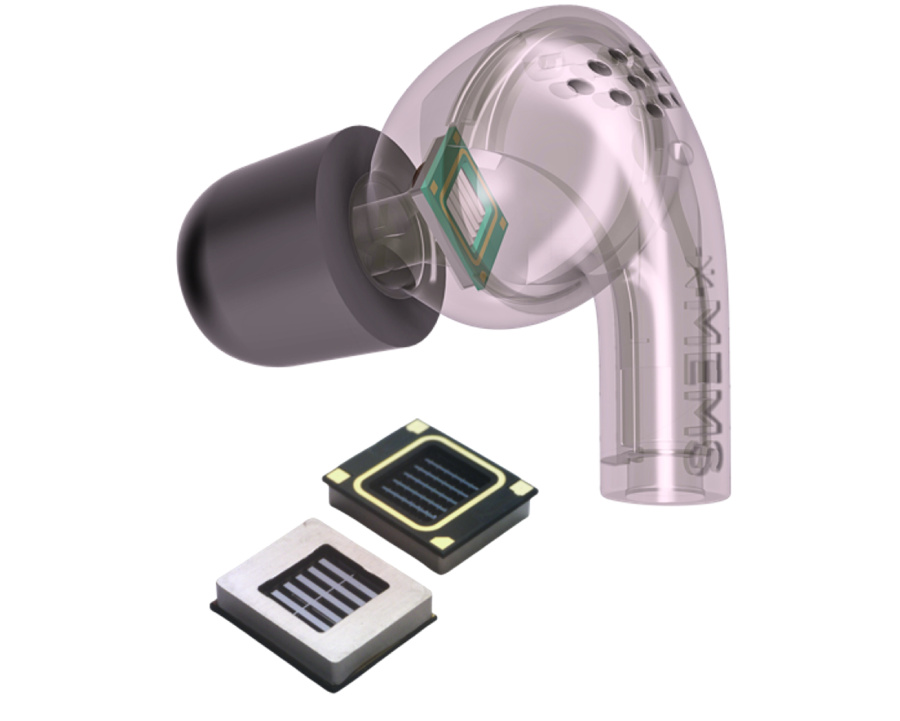
The small electronics segment—including mobile phones, tablets, personal computers, Bluetooth headsets, and similar devices—represents a global market valued at approximately $6 billion. Today’s consumers expect not only clear audio, but consistent sound quality across a wide range of environments, such as in vehicles, outdoors, in windy conditions, at airports, and through compact earpieces.
To meet these increasingly stringent expectations, speaker manufacturers are adopting more advanced production methodologies that enable both higher output and improved yield. One of the most significant shifts has been the implementation of UV curing technologies for adhesives and coatings within manufacturing lines.
Building on this advancement, UV LED systems are progressively replacing traditional mercury-based curing systems. This transition delivers measurable benefits, including higher productivity, improved process stability, and enhanced overall throughput.
The Modern Speaker Industry
The electronic speaker industry has undergone a significant transformation driven by consumer demand for both higher audio fidelity and continuous miniaturization. Mobile phones have evolved into smartphones, often incorporating multiple speakers—sometimes up to four per device—to support features such as noise cancellation. At the same time, tablets have largely replaced PCs for mobile computing, while the rise of online gaming has further intensified the demand for high-quality audio performance.
However, this trend toward smaller form factors introduces a fundamental engineering challenge. Producing deep bass—now expected by consumers—requires higher electrical current, which conflicts with the limited physical space available for speakers. Historically, high-end audio systems relied on large, meter-scale speakers to deliver rich and wide-ranging sound. Today, users expect comparable performance from speakers occupying less than 4 cm².
In response, manufacturers have continuously evolved their production strategies. The industry has transitioned from manual assembly lines to semi-automated systems, and the next logical step is full automation. At this stage, precise process control and long-term stability become critical factors in achieving both high-volume output and consistent product quality.
Speaker Structure
At the core of a speaker is the diaphragm, typically made from materials such as mylar, paper, or metal, which vibrates in response to an էլectrical current. This current is delivered through conductive elements—commonly referred to as the voice coil and associated with the spider structure—and originates from a source that converts digital signals into analog signals for acoustic transmission.
The entire assembly is supported and held together by a frame, which also serves as the mechanical interface for integrating the speaker into the electronic device.
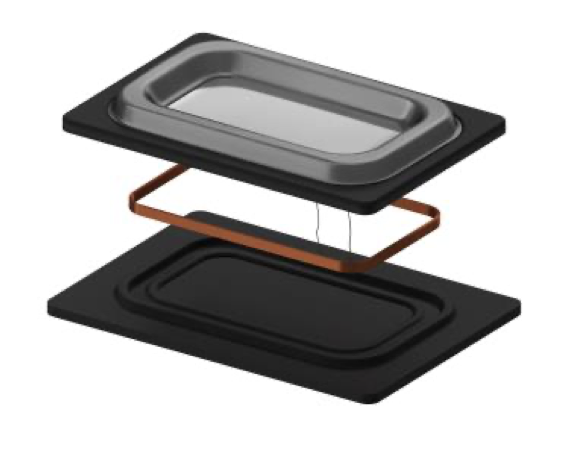
The manufacturing process of an electronic speaker is inherently complex, involving multiple stages and tightly controlled operations. Most manufacturers rely on proprietary processes that have been developed and refined over many years, enabling them to achieve distinct advantages in both technology and performance.
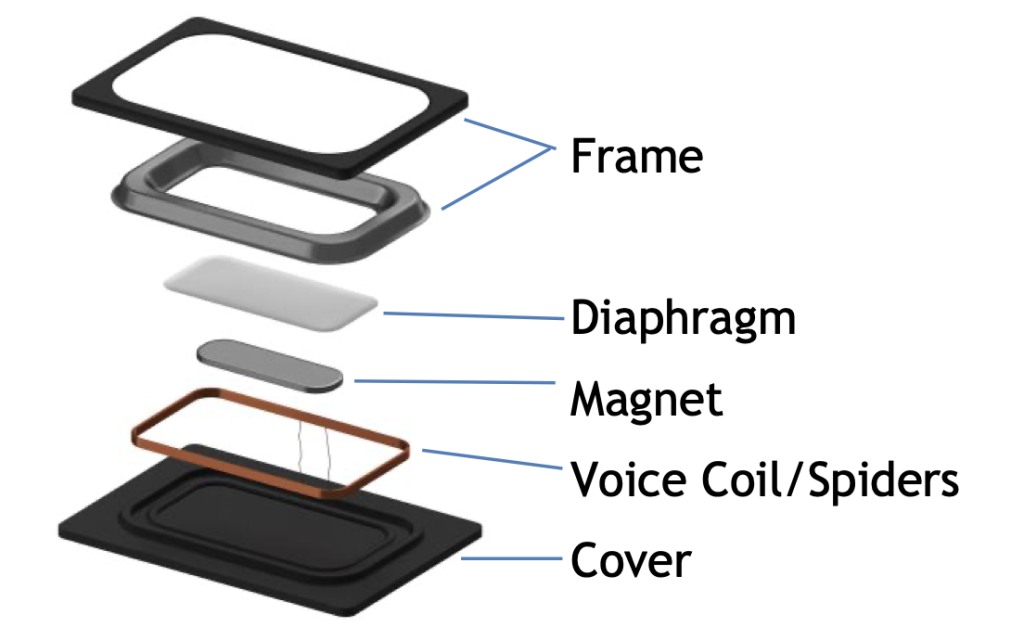
The diaphragm is bonded to the voice coil, forming a highly sensitive sub-assembly. Because the diaphragm is delicate, strict thermal control is required during processing to prevent overheating, which could compromise mechanical integrity and degrade acoustic performance. This assembly is then secured to the speaker frame.
An automated dispensing system precisely meters a defined كمية of uncured acrylate adhesive into designated مناطق or channels, where it is subsequently cured. After each curing stage, quality inspection is performed to minimize scrap and prevent defects from propagating further down the assembly line.
Even at this simplified level, it is evident that improper curing has a direct impact on speaker performance. Under-curingresults in insufficient bond strength, while over-curing causes the adhesive to become rigid and brittle, increasing the risk of cracking under mechanical stress. Both conditions negatively affect acoustic performance and can ultimately lead to product returns due to unmet customer expectations.
The Role of UV Adhesive Curing
The implementation of UV LED curing technology in micro-speaker manufacturing delivers two primary benefits: improved yield and increased throughput.
Yield—defined as the percentage of sellable, defect-free units relative to total production—is a critical metric in high-volume manufacturing. For example, a production line operating at 5,000 units per hour, running continuously (24/7) for 50 weeks, can produce approximately 42 million speakers annually. A modest yield improvement from 98% to 98.1%—just 0.1%—translates into an additional 42,000 sellable units per year. Given the competitive pricing of micro-speakers, this incremental gain can significantly enhance profit margins or provide a competitive advantage in market share.
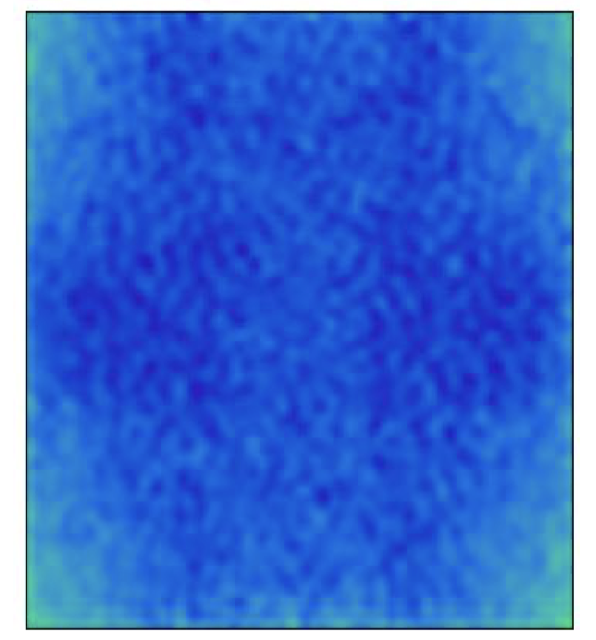
UV LED technology improves yield by delivering consistent UV intensity over extended operating periods, ensuring process repeatability and stability. The emitted UV energy is uniformly distributed across the target surface, eliminating “hot spots” and “dead zones” that could otherwise lead to defects. In addition, UV LED systems offer long operational lifetimes—typically exceeding 20,000 hours, and potentially surpassing 40,000 hours under low-power conditions—with minimal maintenance requirements such as periodic air filter checks and cleaning of the emission window.
This combination of output consistency and long-term reliability establishes a robust foundation for process control, which is essential for high-volume manufacturing environments.
UV Light Source
Another critical factor is that UV LED systems emit energy exclusively in the UV-A range (typically around 365 nm), which directly aligns with the absorption spectrum of acrylate-based adhesives. Because no UV-C or infrared radiation is generated, unwanted heat buildup in surrounding materials and components is effectively eliminated. This “cold cure” mechanism protects sensitive parts while maintaining the stability of transport and assembly systems throughout the process.
The second major benefit is increased throughput. Referring to the earlier example, reducing curing time from 6 seconds to 4 seconds can improve throughput by up to 30%, particularly when the curing stage is a bottleneck. This gain is driven by two key factors. First, the minimal heat generation allows post-cure inspection to be performed immediately, eliminating delays associated with cooling. Second, the consistent UV output ensures uniform curing quality, which enhances the accuracy and reliability of downstream inspection processes.
Additionally, because UV LED systems emit within a narrow wavelength band, adhesive manufacturers can formulate materials that are specifically optimized for that wavelength, increasing reactivity and reducing curing time. Future material innovations may further reduce the volume of adhesive required per unit, delivering additional cost efficiencies for manufacturers.
Key Advantages
In next-generation smart device design, extreme miniaturization is no longer an aspirational goal—it is a baseline requirement. This shift places significant pressure on micro-acoustic manufacturing, where micro-speaker assembly demands high-speed, tack-free processing to preserve the integrity of densely packed, delicate components.
Light-curable technologies—particularly UV and LED systems—play a pivotal role in addressing these challenges. They overcome the limitations of traditional thermal curing by providing near-instantaneous stability, enabling components to move through high-speed production lines without risk of mechanical damage or contamination.
The core competitive advantage of these systems lies in their ability to deliver cure-on-demand and instant processing. By transitioning from liquid to solid polymer within seconds, they eliminate the need for bulky curing ovens and intermediate handling racks. This significantly reduces work-in-progress (WIP) and cycle times, enabling a streamlined “apply–cure–ship” workflow—critical for high-volume consumer electronics and medical device manufacturing. These efficiencies are fundamentally driven by the underlying chemistry and crosslinking behavior of the selected polymer systems.
Adhesive Chemistry in Speaker Assembly
Selecting the appropriate adhesive system is not simply a matter of bonding—it is a multidisciplinary decision involving acoustic impedance, thermal management, and long-term durability. In micro-speaker assembly, the primary material classes include urethane acrylates, epoxies, and silicones, each engineered to meet the mechanical demands of specific components.
- UV-Curable Acrylics:
Urethane acrylate-based, solvent-free, highly flexible, and capable of curing within seconds. Suitable for substrates such as ABS, PC, acrylic, LCP, FR4, and treated HDPE/PP. - UV-Curable Silicones:
Solvent-free with excellent thermal resistance, low modulus, and strong resistance to aging and environmental degradation. Ideal for glass, metals, ceramics, LCP, and high-temperature plastics. - LED-Curing Adhesives:
Optimized for wavelengths such as 365/385/405 nm, offering ozone-free operation, rapid cycle times, and the ability to cure thicker sections. Particularly effective for substrates that block UV but transmit visible light, as well as complex micro-acoustic modules.
As devices continue to shrink and component density increases, “shadowed areas”—regions where light cannot directly reach the bond line—become a critical challenge. As a result, Dual-Cure (e.g., moisture-assisted) and Multi-Cure (e.g., heat-assisted) mechanisms are increasingly essential. These secondary curing pathways ensure complete polymerization even in shielded areas, thereby preserving structural integrity in densely packed assemblies.
Precision Dispensing
In micro-precision assembly, consistency is fundamental to acoustic performance. Even minor deviations in adhesive volume can lead to mass imbalance, frequency distortion, or mechanical failure.
Two primary dispensing methodologies are employed:
- Contact Dispensing:
Utilizes vision-guided needles for high-accuracy placement. Closed-loop control systems with mass feedback and flow monitoring automatically compensate for process variability, achieving sub-milligram repeatability. - Non-Contact Jetting:
Ideal for ultra-compact modules. This “droplet jetting” approach enables precise adhesive placement without physical contact, eliminating the risk of needle interference and accommodating complex geometries and varying surface heights.
Managing Linear and Volumetric Shrinkage
During curing, polymer chains rapidly crosslink, generating mechanical forces that can deform structures if not properly managed.
Shrinkage Dynamics:
Linear shrinkage: ~1–2%
Volumetric shrinkage: ~2–5%
Practical Impact:
These contraction forces can distort the speaker frame or misalign the voice coil, directly affecting acoustic resonance and performance.
Relaxation Effect:
Following rapid initial curing, internal stresses gradually dissipate over several hours as polymer chains reorient.
Low-modulus silicone (~300 psi): high stress absorption
High-modulus epoxy (~2,000,000 psi): rigid, minimal deformation
Selecting the appropriate modulus is therefore critical to balancing bond strength with component protection.
Contact for Consultation
Hitta is a provider of comprehensive adhesive and tape solutions for assembly applications, sourcing from leading global manufacturers. With a technically experienced team across multiple industries, we go beyond product supply by offering process optimization solutions tailored to each customer’s specific requirements and challenges.
If you are looking for a bonding solution that is efficient, durable, and reliable — let HITTA support you from consultation through to implementation.
Contact Hitta today for the most suitable solution:
☎️ Hotline: 0565.336.879
✉️ Email: hittajsc@hitta.vn