
Solution Overview
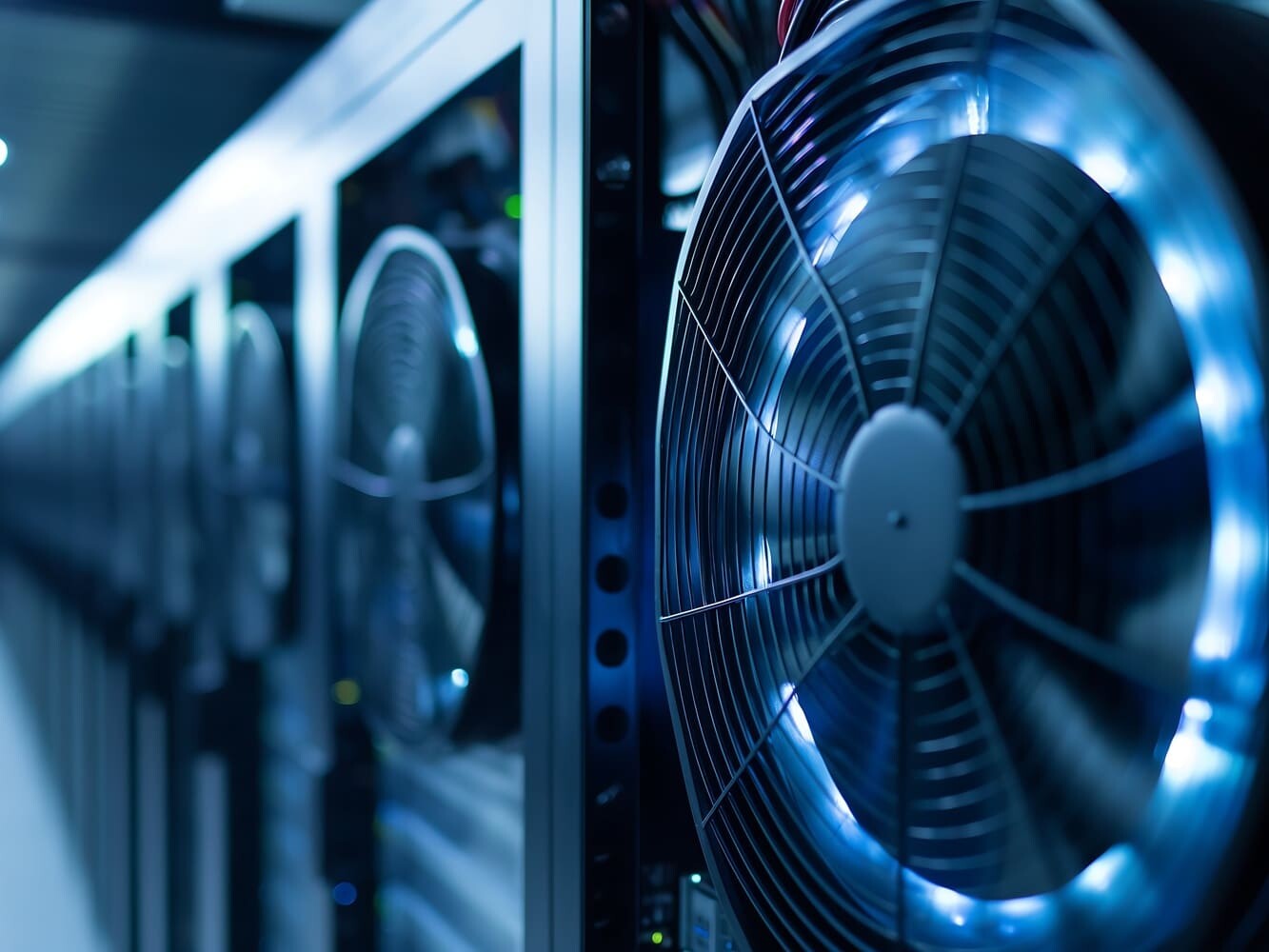
The core technology behind cooling fans lies in minimizing noise generation, while simultaneously ensuring overall performance in terms of environmental resistance and durability.
Advanced adhesive solutions have been successfully applied in this industry, including:
- Adhesives used on the central hub to secure the stator, effectively reducing vibration and noise during high-speed rotation.
- Positive and negative lead wires can be rapidly fixed within five minutes using UV-curable adhesives compliant with UL94V-0 or two-component epoxy systems.
Contact for Consultation
Hitta is a provider of comprehensive adhesive and tape solutions for assembly applications, sourcing from leading global manufacturers. With a technically experienced team across multiple industries, we go beyond product supply by offering process optimization solutions tailored to each customer’s specific requirements and challenges.
If you are looking for a bonding solution that is efficient, durable, and reliable — let HITTA support you from consultation through to implementation.
Contact Hitta today for the most suitable solution:
☎️ Hotline: 0565.336.879
✉️ Email: hittajsc@hitta.vn
Thermal Management & Noise Optimization
The cooling systems industry is undergoing a significant transformation, shifting from traditional mechanical assembly methods to advanced chemical bonding technologies. As power density continues to rise in server infrastructure and electric vehicle powertrains, the demand for compact, ultra-quiet cooling fans has become a critical standard.
Mechanical fastening methods such as riveting, welding, and clamping present inherent limitations. They introduce localized stress, damage the insulation layers of electrical steel, and increase magnetic losses. In contrast, modern industrial adhesives provide continuous, stress-free bonding, significantly enhancing operational performance. Beyond simple joining, adhesives enable higher rotational speeds, reduced magnetic interference, and the elimination of bulky mechanical components.
In high-speed rotating systems, the stability of the stator and rotor assembly directly determines motor efficiency. Adhesives play a crucial role in maintaining tight tolerances under thermal and centrifugal stresses.
Core Adhesive Applications in Cooling Fan Assembly
Stator Core and Lamination Bonding
High-efficiency motors increasingly utilize thinner electrical steel laminations to reduce eddy current losses. While conventional motors use thicknesses of 0.35–0.5 mm, modern designs approach 0.2 mm, with some specialized applications reaching 0.1 mm. Below 0.25 mm, mechanical interlocking becomes impractical.
High-performance adhesives enable the creation of a seamless, insulated core structure that suppresses induced currents and enhances mechanical durability. At the same time, they optimize the stacking factor, improving energy efficiency and enabling compliance with high-performance standards such as IE5.
Shaft and Rotor Retention
In ultra-high-speed systems (up to 100,000 rpm), shaft fixation demands absolute reliability. Anaerobic metal adhesives provide full surface contact, eliminating slip, looseness, and contact corrosion. Their curing mechanism in oxygen-deprived environments ensures uniform load distribution and structural stability.
Permanent Magnet Bonding
For securing magnets to the rotor, one-component epoxy adhesives are preferred due to their high temperature resistance (up to approximately 220°C) and excellent gap-filling capabilities. This is particularly important for nickel-plated surfaces, ensuring magnets remain securely bonded during high-speed operation.
Enhancing Structural Integrity and Noise Reduction
In premium cooling systems, acoustic performance is a key differentiator. Any structural looseness can lead to resonance and unwanted noise.
Vibration Damping and Energy Absorption
Adhesives act as an effective damping medium. In constrained layer damping structures, the adhesive layer between two rigid surfaces undergoes shear deformation across the entire interface during vibration, converting mechanical energy into heat. This mechanism is significantly more effective than traditional damping methods and can reduce noise levels by 5–25 dB.
Acoustic Stability and Resonance Suppression
Full-surface bonding eliminates “hum noise” and the “breathing effect” of laminations caused by thermal expansion. Additionally, adhesives improve thermal conductivity compared to air-gapped structures, resulting in smoother operation and higher power density.
Electrical Component Securing and Safety Standards
In high-temperature environments such as data centers or automotive systems, electrical insulation and fire safety are critical requirements.
Wire Tacking and Reinforcement
Fast-curing adhesives are used to secure wires and stator windings, preventing fatigue and breakage caused by centrifugal forces. With curing times under 10 seconds, they also enable efficient production workflows.
UL 94V-0 Flame Retardancy
This is a critical safety standard for electrical materials. Adhesives must self-extinguish within 10 seconds after flame removal and must not produce flaming drips, ensuring safe operation in critical systems.
UV and Dual-Curing Technologies
To meet high-volume production demands, UV curing enables rapid processing. For shadowed areas, dual-curing systems (UV combined with moisture or heat) ensure full adhesive performance even in oxygen-deprived environments, meeting stringent automotive standards (-40°C to +150°C).
Strategic Advantages for Manufacturers
The integration of adhesive technology fundamentally reshapes the cost-performance equation.
- Increased Throughput and Automation: Enables modular stator manufacturing, reducing material waste compared to single-piece stamping and improving production flexibility.
- Lightweight and High Efficiency: Eliminates mechanical fasteners, resulting in more compact and lightweight designs, increasing motor power density — especially critical in electric vehicles.
- Environmental Resistance: Potting and coating materials protect components from moisture, chemicals, and thermal shock, ensuring long-term mechanical stability in harsh environments.
Conclusion
The future of cooling fan manufacturing lies in the synergy between advanced polymer chemistry and intelligent automation. Emerging adhesive technologies, including bio-based materials and high-temperature-resistant resins exceeding 200°C, will support next-generation semiconductor and power systems.
At the same time, AI-driven inspection systems will play a key role in ensuring bonding quality and uniformity, preventing structural failure under extreme conditions.
As motor cores become thinner and performance demands increase, industrial adhesives are no longer optional—they are the essential technology for achieving high efficiency and ultra-low noise in next-generation thermal management systems.





