In Vietnam’s tropical monsoon climate — with year-round humidity and heavy rainy seasons — waterproofing is essential to protect buildings from moisture-related damage. Construction materials like concrete are naturally porous: without waterproofing, water can penetrate the structure, corrode reinforcing steel, and eventually cause cracks or structural failure. Proper waterproofing protects foundations and structural components by blocking water at the surface, preventing leaks, mold growth, and costly repairs.
Key benefits of waterproofing include:
- Structural protection: Prevents water infiltration into foundations and walls, reducing cracking and structural deterioration.
- Enhanced durability: Stops concrete and mortar from absorbing moisture (preventing rebar corrosion) and extends the building’s service life.
- Cost savings: Avoids expensive future repairs by addressing leakage at an early stage.
- Health & comfort: Prevents dampness and mold in living spaces, safeguarding occupant health.
- Higher property value: Ensures a dry, well-maintained building with stronger resale value.
Seasonal monsoon rains in Southeast Asia make watertight detailing in construction even more critical for long-term performance.
Comparison of Sealants for Waterproofing Applications
| Category | PU Sealant (Polyurethane) | SMP / Hybrid Sealant (Silane-Modified Polymer) | Cementitious Waterproofing | Bituminous Sealant / Coating |
|---|---|---|---|---|
| Primary Applications | Concrete joints & cracks, floors, driveways, decks, sidewalks | Exterior walls, panel joints, window/door perimeters, siding, façades | Concrete floors, walls, balconies, rooftops, bathrooms, swimming pools | Metal roofs, gutters, underground walls, rooftops, metal structures |
| Product Type | Elastic joint sealant; self-leveling on horizontal surfaces | Hybrid neutral-cure, one-component sealant | Polymer-modified cementitious slurry/mortar, applied by brush/trowel | Liquid asphalt coating or bituminous membrane |
| Key Features | – High elasticity (±50%) – Excellent abrasion resistance – Traffic resistant | – Very high elongation (±25–100%) – Strong UV resistance – Non-yellowing | – Strong adhesion to concrete – Seamless monolithic layer – Resists positive & negative water pressure | – Creates a fully waterproof membrane – Anti-corrosion protection – Flexible with roof movement |
| Adhesion Performance | Strong adhesion to concrete, masonry, metal, wood | Multi-substrate adhesion (concrete, brick, aluminum, PVC, coated metal, wood) | Excellent adhesion to concrete & masonry | Good adhesion to metal, concrete, underground walls |
| Weather Resistance | Resists rain, UV, movement, freeze–thaw | Excellent UV stability, ideal for tropical climates | Suitable for submerged or high-moisture areas | Resists rain & heat; may require UV protection when exposed long-term |
| Paintability | Yes | Yes (major advantage over silicone) | Not required; can be tiled over | No |
| Waterproofing Mechanism | Forms an elastic, watertight joint | Forms a flexible bead preventing wind-driven rain infiltration | Creates a rigid, seamless cementitious barrier | Forms a bitumen-based waterproof membrane |
| Best-Fit Locations | Areas with movement or load (traffic, expansion joints) | Vertical façades, exterior walls, aesthetic applications | Constantly wet areas: bathrooms, pools, balconies | Metal roofs, underground structures, areas requiring strong water cutoff |
| Main Advantage | Self-leveling + movement capability + traffic durability | Multi-surface + paintable + UV resistant | Seamless, durable, resists both positive & negative water pressure | Affordable, durable, fully waterproof |
| Limitations | Not ideal for vertical walls (self-leveling grades) | Higher cost than silicone & acrylic | Less elastic than sealants | Aesthetically poor, heats up easily, may age without UV stabilizer |
| Suitable for Vietnam Climate? | Excellent for floors, driveways, outdoor slabs | Ideal for vertical façades & exterior walls | Suitable for most wet-area applications | Well-suited for metal roofs, heavy rain, intense sunlight |
Polyurethane (PU) Sealants for Concrete Cracks and Joints
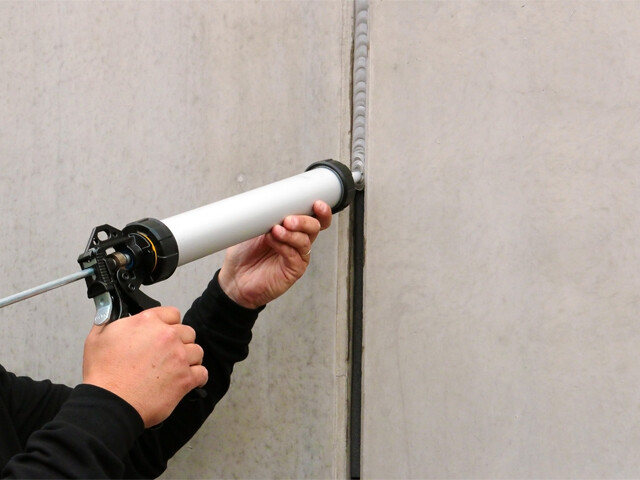
Polyurethane (PU) sealants are one-component, moisture-curing elastomers used to seal cracks and expansion joints in concrete floors, terraces, walkways, and other horizontal concrete slabs.
These sealants are self-leveling on horizontal joints and cure to form a tough, abrasion-resistant, elastic bead. Once cured, PU sealants remain highly resilient, resisting weathering, structural movement, and traffic loads. They adhere firmly to concrete while remaining flexible to accommodate thermal expansion and structural movement.
In practice, PU sealants are ideal for sealing contraction/expansion joints and cracks on sidewalks, terraces, garage floors, parking decks, and other concrete surfaces exposed to pedestrians or vehicles. They create a watertight, elastic barrier that prevents water penetration through cracks while resisting deterioration from UV radiation, chemicals, and freeze-thaw cycles.
Key Features:
- One-component, moisture-curing: Easy to apply with a caulking gun; cures upon contact with moisture in the air or concrete.
- Elastomeric and durable: Remains flexible (accommodating ±50% joint movement) and abrasion-resistant after curing.
- High adhesion: Bonds firmly to concrete and many other substrates (masonry, metal, wood) without primers, forming a strong joint.
- Typical applications: Commonly used in horizontal construction joints, driveways, bridges, and any concrete surface requiring a waterproof, elastic seal.
Properly installed PU sealants meet concrete waterproofing requirements because they completely fill gaps, cure into a continuous waterproof bead, and stretch or compress with the substrate without cracking, preventing water ingress at joints and cracks—even under traffic loads.
Silane-Modified Polymer (SMP) & Hybrid Sealants for Exterior Walls
SMP (silane-modified polymer), also known as hybrid sealants (MS polymers), are one-component, solvent-free sealants designed for outdoor joints and perimeters. SMP sealants typically cure neutral and adhere well to a wide range of construction materials, including concrete, brick, fiber cement, wood, aluminum, PVC, and coated metals.
These hybrid sealants combine the flexibility of silicone with the paintability of polyurethane. They are engineered for high-movement joints (±100% elongation, –50% compression) and provide long-term elasticity with excellent UV resistance.
SMP sealants are commonly used around window and door perimeters, wall panel joints, siding seams, and other exterior gaps. They adhere to multiple substrates without the need for primers, making them ideal for complex exterior walls.
Key Features
- Multi-substrate adhesion: Bonds firmly to masonry, metal, wood, and plastics without primer.
- Weather & UV resistance: Once cured, the sealant is non-yellowing and maintains elasticity under tropical sunlight.
- Movement accommodation: High elongation allows for thermal expansion and contraction of exterior walls.
- Paintable finish: Can be painted with standard latex or acrylic paints after curing, creating a seamless wall surface.
- Environmental durability: Moisture-curing chemistry accelerates curing in humid conditions and provides mold/mildew resistance in wet climates.
By sealing exterior wall joints and flashings, SMP/hybrid sealants prevent rain and moisture from penetrating behind cladding. Their elastomeric seal maintains a continuous barrier despite building movement and UV exposure. Properly detailed and installed, SMP sealants ensure that tropical buildings remain watertight at critical joints.
Cementitious Waterproofing for Wet Areas and Concrete Slabs
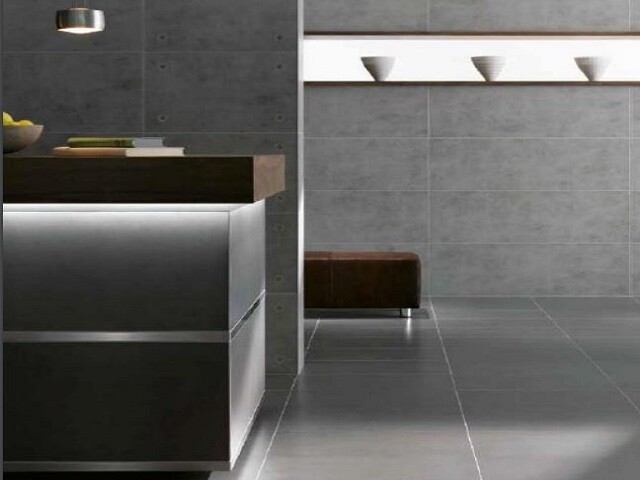
Cementitious waterproofing is a polymer-modified cement-based coating applied like mortar to concrete floors, walls, and terraces. It forms a rigid or semi-flexible waterproof membrane integral with the concrete. Being cement-based, it adheres exceptionally well to concrete and masonry. A typical product is a one-component, polymer-fortified mixture that can be easily applied with a trowel or brush and cures into a durable waterproof layer.
This coating is designed for wet areas, including tiled bathrooms, shower pans, planter beds, rooftop terraces, balconies, and swimming pools.
Cementitious waterproofing meets performance requirements by creating a continuous, crack-bridging membrane once cured.
Key Features
- High adhesion & coverage: The mortar bonds tightly to prepared concrete surfaces, filling pores and micro-cracks. Very low thickness (~1–3 mm per coat) is sufficient as the mortar penetrates and densifies the substrate.
- Positive & negative side waterproofing: Once cured, the membrane resists water pressure from either side, making it suitable for below-grade tanks or balconies retaining water.
- Chemical resistance: Polymer additives improve flexibility, allow slight movement, and enhance resistance to chlorides and alkalis, important under tiles or in swimming pools. Many products withstand thermal cycling from sun-heated slabs to cooler interiors without cracking.
- Installation: Typically applied in two coats by trowel or brush. After a few hours, the membrane can be tiled over or left exposed. Once cured, the membrane is monolithic—no seams or joints within the coating.
Cementitious waterproofing is ideal where a hard, durable coating is required on concrete or cement blocks. In humid climates like Vietnam, it prevents leaks under tiles or floor screeds, protecting the underlying structural concrete and ensuring a watertight waterproofing system.
Bituminous Sealants for Roofs and Gutters
Bituminous waterproofing uses asphalt-based compounds—in liquid, emulsion, or modified forms—to create a tough, impermeable barrier on surfaces. Typically, bituminous sealants or coatings are applied to metal roofs, gutters, flashings, and below-grade walls due to their strong adhesion and corrosion protection. Bituminous membranes can be installed as cold-applied liquids or torch-on sheets, but the principle is the same: forming a continuous asphalt layerthat prevents water infiltration.
Key Features
- Waterproof barrier: Asphalt naturally repels water, creating an impermeable layer that prevents moisture penetration.
- Corrosion protection: On metal roofs and gutters, bituminous coatings seal the surface, blocking moisture and chemicals to prevent rust.
- Durability and flexibility: After curing, the coating remains flexible, accommodating thermal expansion of metal roofs and settlement without cracking. High-quality bituminous products often include UV stabilizers or reflective additives to resist aging under sunlight.
- Wide application: Adheres well to concrete, masonry, metal, and other building materials. Can be applied with brushes or sprayers on flat or sloped roofs, gutters, bridge decks, and basements.
- Cost-effectiveness: Asphalt is relatively low-cost and provides long-lasting protection, making it suitable for large roof areas or heavy-duty waterproofing zones.
Bituminous waterproofing is particularly suitable for hot and rainy climates, like Vietnam. For exposed metal roofs and gutters, a black asphalt coating offers a simple, seamless protective layer. In practice, contractors may apply two coats of hot bitumen or cold elastomeric asphalt over the entire metal roof deck, protruding details, and gutter seams. Once cured, the membrane is continuous and impermeable, ensuring waterproofing even under heavy rainfall.
Installation Best Practices for Effective Waterproofing
Selecting the right material is only part of successful waterproofing. Proper installation is the key factor to achieve the required performance for each application:
1. Surface Preparation
- All surfaces must be clean, dry, and sound.
- Concrete should be free of loose laitance, and metal must be free of rust and grease.
- Example: Experts recommend sandblasting or grinding concrete and solvent-wiping metal before sealant application.
2. Joint Design
- Ensure correct joint dimensions.
- For deep gaps, use a closed-cell backer rod to control sealant depth and avoid three-sided adhesion.
- SMP sealants typically require a depth of ~12 mm (~½ inch) for optimal elasticity.
3. Primer Use
- Some substrates (e.g., porous concrete or painted surfaces) may require a primer to ensure adhesion.
- Many modern sealants (PU, SMP) are formulated to bond without primer on clean surfaces, but it is recommended to test adhesion first.
4. Application Conditions
- Install sealants when joint surfaces and ambient conditions are within recommended temperature ranges.
- In high-humidity (tropical) environments, moisture-cure products will set quickly, so work efficiently.
- Avoid applying bituminous coatings in temperatures below 0°C.
5. Proper Tools
- Use the correct trowels, brushes, or rollers for each material.
- SMP and silicone sealants should be tooled to a smooth bead.
- Torch or roller-apply bituminous sheets.
- Cementitious waterproofing requires a trowel, hawk, or brush, and sometimes reinforcing mesh at critical points.
6. Curing Time
- Allow materials to fully cure before exposure to stress or water.
- Cementitious waterproofing typically reaches flood-test readiness in ~24 hours.
- Sealants usually require several days to reach full strength; during this period, protect joints from rain or debris.
By following manufacturer guidelines and industry standards (e.g., ASTM C920 for sealants, ACI-224 for cracks), each waterproofing system will perform as intended. The combination of correct material selection (PU, SMP, cementitious, bitumen, etc.) and careful installation ensures structures remain watertight and durable.
Bostik Waterproofing Sealant Solutions
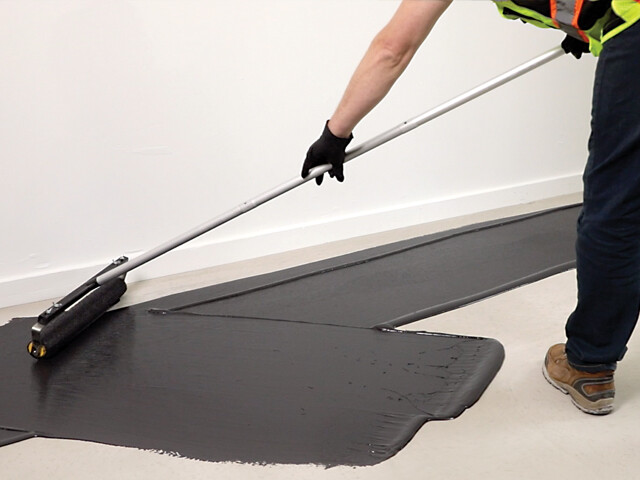
Interior Waterproofing Sealants
At Bostik, we understand that strong, reliable waterproofing is not only essential for large industrial installations such as swimming pools or chemical holding tanks, but also for domestic applications, like basement damp-proofing.
Our interior waterproofing sealants are designed and manufactured to the highest chemical standards to resist water pressure and prevent pooling or leaks. They also stop moisture migration through porous substrates such as concrete, brick, and stone.
Most swimming pool failures occur when large volumes of water create positive water pressure, pushing through structural walls. Our cement-based and acrylic sealant solutions are specially formulated to prevent damage caused by positive water pressure.
For subterranean applications such as basements, a solution designed to resist negative water pressure is required—preventing water or moisture from the surrounding soil from penetrating into the interior.
Choosing the right waterproofing sealant depends not only on whether you need protection from positive or negative water pressure, but also on the intensity of the pressure or rate of moisture migration.
Exterior Waterproofing Sealants
Bostik’s exterior sealant range is intelligently engineered to suit a variety of applications. Whether you are repairing a small leak or waterproofing the entire exterior of a new building, there is a product designed for your needs.
For foundations and below-ground structures, such as tunnels or bridge footings, protecting the installation from water ingress is crucial. Choosing the right waterproof sealant can prevent structural damage caused by freezing, expansion, and cracking of moisture pockets.
To ensure maximum compatibility with brickwork, concrete blocks, expansion joints, and construction joints, our waterproofing technologies are formulated to bond with a wide range of substrates. Concrete, sand, cement, timber, metal, and cement board are just a few of the materials that can be protected from water and weather using Bostik sealants.
Most of our exterior sealants are low-modulus, providing excellent elasticity and elongation. We also offer smart solutions that can bond to wet surfaces or cure with atmospheric moisture, ideal for use with surface membranes.
Some products designed for roof sheets, gutters, and similar applications feature outstanding slump resistance and a minimum lifespan of 10 years. Additionally, all our sealants are highly durable, minimize shrinkage, emit low odor, and allow easy overpainting without affecting the underlying sealant layer.
Contact Information
Hitta is a trusted provider of advanced adhesive and tape assembly solutions from leading global brands.
With a highly experienced technical team across multiple industries, we not only supply products but also deliver tailored bonding solutions that optimize your existing processes and address your specific application challenges.
If you are looking for a high-performance, durable, and reliable adhesive solution, let HITTA be your partner — from consultation to implementation.
- ☎️ Hotline: 0565.336.879
- ✉️ Email: hittajsc@hitta.vn