Summary of UV Adhesive and MS Silicone Solutions for Optical Module Assembly

One of the most critical applications in this industry is the waterproof structural design used in outdoor camera systems. Since most imaging and surveillance devices are deployed in open environments, stringent requirements are placed on waterproof performance and resistance to high temperatures caused by prolonged solar exposure. In addition, long-term thermal aging resistance and protection against moisture ingress under rain and wind conditions must be rigorously tested to ensure that adhesive bonds maintain optimal durability over time.
Applications in Surveillance Systems
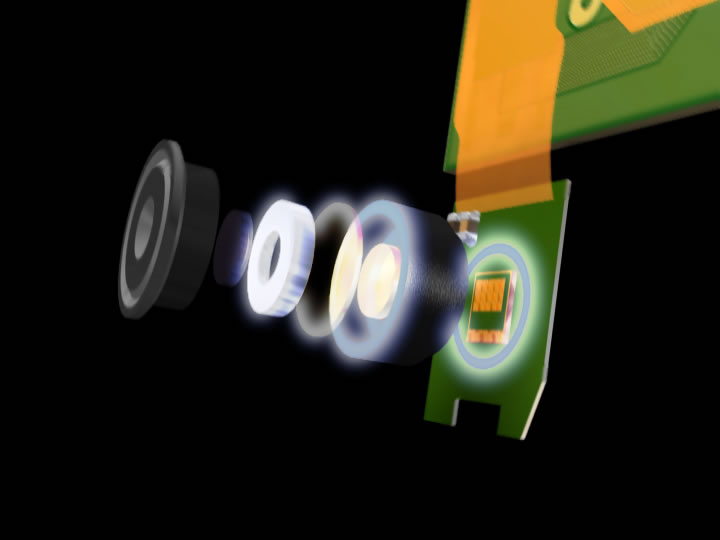
In surveillance camera systems, optical filter lenses are bonded to the main lens holder using UV-curable adhesives. These adhesives are required to exhibit low shrinkage and low thermal expansion, along with excellent high-temperature resistance, to maintain precise optical alignment. Meanwhile, sealing joints around the lens housing are typically bonded using modified silicone (MS silicone) adhesives, which provide effective waterproof sealing and fast curing at room temperature.
Comprehensive Adhesive Applications in Camera Modules
Mobile phone cameras, while offering imaging capabilities comparable to traditional cameras, have evolved to support waterproof and even underwater photography. As a result, the selection of appropriate sealing materials has become increasingly critical. Fast-curing MS silicone adhesives, which cure at room temperature, are widely used for sealing joints to ensure long-term waterproof reliability. Additionally, UV-curable adhesives used to fix optical filter lenses onto the main housing are required to feature low thermal expansion and high thermal stability to preserve optical performance under varying environmental conditions.
Dựa trên kinh nghiệm phát triển vật liệu kết dính cho các ứng dụng công nghệ cao, các dòng keo UV của Everwide mang đến giải pháp cân bằng giữa hiệu suất quang học, độ tin cậy và hiệu quả sản xuất, phù hợp cho các dây chuyền lắp ráp tự động trong lĩnh vực camera, giám sát hình ảnh và thiết bị quang học chính xác.
Chúng tôi có đầy đủ các dòng keo UV & Ms silicone cho lắp ráp module quang học đến từ thương hiệu keo công nghệ cao hàng đầu Everwide, hiện được HITTA là đơn vị được uỷ quyền phân phối chính hãng tại thị trường Việt Nam, vui lòng liên hệ để được tư vấn chi tiết.
Contact for Consultation
HITTA is a provider of a wide range of industrial adhesive and assembly tape solutions from leading global brands. With a technical team possessing extensive hands-on experience across various application fields, we not only supply products but also deliver tailored technical consulting to optimize existing processes and address each customer’s specific requirements and challenges.
If you are looking for a reliable, sustainable, and high-performance bonding solution, let HITTA support you from initial consultation through to implementation.
Contact HITTA today to receive the most suitable solution for your application.
☎️ Hotline: +84 565 336 879
✉️ Email: hittajsc@hitta.vn
Business Value and Strategic Benefits for Manufacturers
When technical advantages are translated into tangible business outcomes, it becomes clear why an integrated adhesive strategy is not merely an engineering choice, but a powerful source of competitive advantage. For executives and decision-makers, a strategic investment in this advanced materials system delivers measurable returns throughout the entire product lifecycle.
1. Reduced Failure Rates and Warranty Costs
By combining durable MS polymers to achieve high IP protection ratings with low-outgassing UV adhesives to prevent internal fogging, manufacturers can significantly reduce field failure rates. This is not a theoretical benefit. Industry data shows that transitioning to low-volatility internal adhesives has resulted in an average 12% reduction in warranty returns across major camera platforms. This directly lowers the financial burden associated with warranty claims, repairs, and product returns.
2. Improved Production Efficiency and Line Throughput
The rapid, on-demand curing capability of UV adhesive systems enables high-speed automated assembly lines. This results in shorter production cycles, higher first-pass yields, and lower energy consumption compared to the large, energy-intensive ovens required for traditional heat-curing adhesive systems.
3. Enhanced Product Reliability and Brand Trust
Products that can consistently withstand harsh real-world environmental conditions and pass stringent accelerated aging tests (such as 85°C / 85% relative humidity for 1,000 hours) deliver higher customer satisfaction. Over time, this builds a strong reputation for quality and reinforces brand trust in an increasingly competitive market.
4. Compliance with Stringent Industry Standards
Utilizing materials that are pre-qualified to meet critical standards—such as ASTM E595 for outgassing and automotive-grade thermal cycling requirements—is essential for entering high-value markets. This compliance reduces development risk and accelerates time-to-market.
5. Enabling Next-Generation Designs
This advanced materials strategy serves as a foundation for future innovation. It provides the precision and stability required for further miniaturization and for the development of complex, high-performance optical systems supporting emerging technologies such as augmented and virtual reality (AR/VR), autonomous vehicles, and next-generation biometric surveillance.
Ultimately, adhesive selection is no longer a simple cost line item—it becomes a strategic lever. It not only determines the performance and reliability of the final product, but also directly impacts operational efficiency and overall manufacturing profitability.
By adopting an integrated approach that combines the internal precision of UV-curable adhesives with the superior environmental durability of MS polymers, companies are not merely improving a product—they are building a more agile, efficient, and competitive manufacturing organization, securing long-term leadership in an increasingly demanding global market.
The Critical Role of Adhesive Solutions in Optical Modules
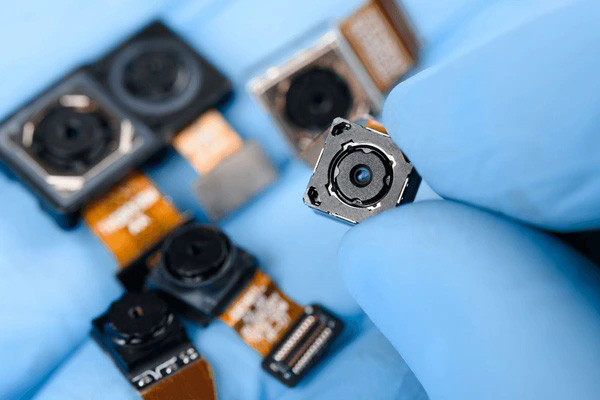
The optoelectronic assembly industry has undergone a fundamental transformation—from reliance on traditional mechanical fastening methods to the adoption of advanced adhesive bonding architectures. For camera manufacturers and surveillance system integrators, this shift means that adhesive selection is no longer a simple manufacturing step. Today, it is a decisive factor that directly impacts optical performance, environmental durability, and brand credibility. The integrity of a modern imaging system now depends on sophisticated chemical interfaces that quietly hold every component together.
Modern camera module design faces three simultaneous challenges: continuous miniaturization, ever-increasing demands for optical precision, and stringent requirements for environmental resistance in outdoor or mobile applications. Conventional adhesive technologies are no longer adequate to meet these expectations. For example, heat-cured epoxy adhesives introduce thermal stress that can damage sensitive components, while long curing cycles significantly hinder manufacturing efficiency. Solvent-based adhesive systems, on the other hand, suffer from high volumetric shrinkage, leading to internal stress and misalignment of precision optics—along with growing environmental concerns due to VOC emissions.
It is increasingly evident that traditional bonding methods can no longer satisfy the stability and speed demanded by today’s market, where high-volume production and high-performance standards are non-negotiable.
The proven solution in large-scale manufacturing is a dual-technology, complementary adhesive system. By combining fast UV-curable adhesives for internal optical components with silane-modified (MS) polymers offering superior weather resistance for external protection, manufacturers can achieve highly reliable camera modules while maintaining an optimal balance between performance and durability. To understand why this parallel approach has become essential, it is first necessary to examine the harsh environmental challenges that modern camera systems encounter under real-world operating conditions.
Common Challenges in Optical Module Assembly
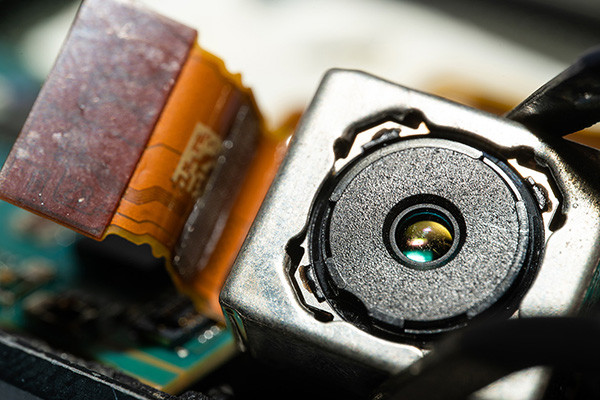
Environmental threats to camera modules are widespread yet highly destructive, requiring a comprehensive, multi-layer protection strategy.
- Moisture Ingress: Moisture intrusion represents the most critical risk and manifests in multiple forms, including heavy rain exposure, prolonged high humidity, and internal condensation. Tropical climates such as Singapore—characterized by frequent torrential rainfall and average humidity levels exceeding 80%—are prime examples of harsh operating environments where effective moisture protection becomes a matter of survival rather than preference.
- Thermal Cycling: Temperature fluctuations, particularly the extreme thermal ranges encountered in automotive applications (from –40°C to +125°C), cause materials to expand and contract at different rates. This repeated mechanical stress is directly transferred to adhesive joints and sealing interfaces, giving rise to the so-called “pumping effect.” As the housing cools, the internal air volume contracts, creating negative pressure that actively draws moisture through microscopic imperfections in the sealing system.
- Contamination and Pollutants: Airborne particulates pose a constant threat, capable of obscuring optical surfaces and infiltrating the device enclosure. In coastal environments, salt mist further accelerates corrosion of metal components and electrical contacts, leading to premature failure and significantly reduced product lifespan.
When adhesive bonds or sealing materials fail, the consequences for both camera performance and business value are immediate and severe. Lens fogging caused by condensation renders images blurred and unusable. Water ingress can result in instant short circuits on printed circuit boards, while also silently degrading internal components through long-term corrosion. These physical failures rapidly translate into negative business outcomes: escalating warranty costs, increased risk of product recalls, and irreversible damage to brand reputation and customer trust.
To mitigate these risks, the camera housing must be sealed with absolute integrity. This external protective barrier serves as the first and most critical line of defense, preserving the precision and reliability of the highly sensitive internal optical components.
High-Precision UV-Curable Adhesives
This content is provided for technical reference purposes only.
For detailed consultation and application-specific recommendations, please contact HITTA directly to speak with our technical specialists.
UV-curable adhesives are single-component systems that polymerize and cure within seconds upon exposure to ultraviolet light. Their critical role in modern optoelectronic manufacturing lies in meeting the micrometer-level precision required for compact camera modules (CCMs). The ability to cure on demand is the key technological enabler that allows high-throughput automated processes such as Active Alignment (AA)—where components must be fixed at their optimal position with instantaneous speed and absolute stability.
The fundamental curing mechanism of UV adhesives is based on a formulation comprising photoinitiators, monomers, and oligomers. When exposed to a defined UV wavelength—typically in the range of 320 nm to 405 nm—the photoinitiators trigger a rapid polymerization reaction, transforming the adhesive from a liquid state into a cross-linked polymer network within seconds.
This process occurs at room temperature, effectively eliminating the thermal stress commonly associated with traditional heat-cured epoxy systems, which can adversely affect sensitive optical and electronic components.
| Property | UV-Curing Acrylates | Cationic Epoxies |
|---|---|---|
| Cure Speed | Seconds | Minutes to hours (post-cure) |
| Volumetric Shrinkage | 2% – 5% (typical) | < 2% (low-shrinkage formulations)* |
| Glass Transition Temperature (Tg) | 60°C – 90°C | 100°C – 150°C |
| Typical Applications | General lens bonding, filter fixing | Active alignment, LiDAR, ADAS |
Note: While some data sources show variability, cationic epoxies are specifically engineered to exhibit lower volumetric shrinkage than free-radical acrylates—an essential property for maintaining optical alignment after curing.
Active Alignment (AA)
The defining process in high-performance camera manufacturing is Active Alignment (AA). Traditional passive alignment methods—based solely on the mechanical tolerances of individual components—are no longer sufficient for today’s high-resolution image sensors.
In the AA process, a robotic stage manipulates the lens across six degrees of freedom while the image sensor actively captures data. System software analyzes image quality in real time, aiming to maximize the Modulation Transfer Function (MTF) across the entire field of view. Once peak optical performance is achieved, a UV light pulse is triggered and the adhesive cures instantly, “freezing” the lens in its optimal position.
This sophisticated process places extremely stringent requirements on the adhesive. A UV adhesive suitable for AA must meet the following criteria:
- Rapid UV fixation: The initial cure must occur in less than one second to support high-speed production lines and maximize units per hour (UPH).
- Low and predictable shrinkage: Any volumetric change during curing can pull the lens out of its optimized position. Therefore, low-shrinkage formulations are essential, and the shrinkage behavior must be stable and repeatable so that engineers can program precise compensation movements.
- Dual-cure capability: The complex geometry of camera modules often creates shadowed areas where UV light cannot penetrate. To ensure 100% polymerization, a secondary curing mechanism—typically low-temperature heat curing at approximately 60°C–80°C—is required to cure adhesive in these light-shielded regions.
While UV-curable adhesives are responsible for internal optical precision, they must be complemented by other material technologies to ensure long-term environmental protection and structural reliability of the overall camera module.
Silyl-Modified Polymer (MS): Protective Adhesive for Optical Modules
This content is provided for technical reference purposes only.
For detailed consultation and application-specific recommendations, please contact HITTA directly to speak with our technical specialists.
For the mission-critical task of sealing the enclosure and providing weather resistance for cameras, Silyl-Modified Polymer (MS) is widely regarded as a best-in-class solution. This advanced material family combines the strengths of polyurethane and silicone chemistries, while deliberately eliminating their inherent limitations. For manufacturers of surveillance cameras and outdoor imaging systems, MS polymers deliver a durable, reliable, and safer sealing technology.
From a chemical standpoint, MS polymers feature a polyether backbone similar to polyurethane, but are terminated with moisture-curing silane groups. This unique structure allows the material to cure upon exposure to ambient humidity, forming an elastic, tough seal with high mechanical strength.
A critical advantage is that MS polymers are completely isocyanate-free. This not only improves safety in manufacturing environments, but also eliminates foaming, a common issue with polyurethane systems that release CO₂ during moisture curing. Foaming is a fatal flaw for applications that demand absolute waterproofing performance.
Material Property Comparison
| Property | MS Polymer | Conventional Silicone | Polyurethane (PU) |
|---|---|---|---|
| Isocyanate content | None | None | High |
| Paintability | Excellent | Very poor | Good |
| UV resistance | High | Very high | Low |
| Primerless adhesion (plastics) | Excellent | Poor | Moderate |
| Moisture resistance (no foaming) | High | High | Poor |
| Dirt resistance (low dust attraction) | High | Low | Moderate |
These superior properties enable MS polymers to directly address the core challenges in sealing surveillance cameras. Representative products such as Bostik ISR 70-03 are engineered to provide comprehensive environmental protectionthrough several key mechanisms:
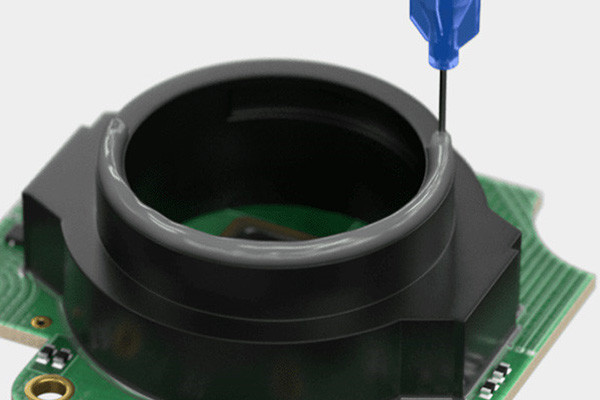
- Ingress Protection ratings (IP65, IP66, IP67): MS polymers are particularly well-suited for Form-In-Place Gasket (FIPG) applications, creating a continuous and flawless seal between the camera housing and the front glass or protective dome.
- Sealing of critical weak points: The most vulnerable areas—such as power and data cable entries (Power over Ethernet – PoE) and lens window interfaces—can be effectively sealed using MS polymers, thanks to their excellent adhesion to metals, plastics (e.g., polycarbonate), and glass without the need for primers.
- Long-term durability: MS polymers offer outstanding resistance to weathering and UV exposure. With an exceptionally low glass transition temperature (Tg), approximately –50°C, they remain elastic and flexible even in freezing environments. More importantly, the combination of high elasticity and low Tg suppresses the previously mentioned “pumping effect.”
When the camera housing cools and creates negative internal pressure, rigid or brittle sealants tend to crack, allowing moisture ingress. In contrast, MS polymer seals flexibly deform under stress, maintaining adhesion and preventing moisture from being drawn into the enclosure.
By combining the micron-level precision of UV-curable adhesives for internal optical structures with the superior environmental durability of MS polymers for external sealing, manufacturers can implement a holistic and robust production strategy for high-performance optical and surveillance camera systems.
Integrated Solution: Precision Inside, Durability Outside
The optimal strategy for manufacturing high-performance camera modules with superior reliability does not lie in the pursuit of a single “all-in-one” adhesive. Instead, it lies in deploying a complementary material system, in which UV-curable adhesives and Silyl-Modified Polymers (MS) perform distinct yet synergistic roles.
This dual-technology approach acknowledges a fundamental reality: micrometer-level internal alignment requirements are fundamentally different from the long-term environmental resistance demands of the external housing. One material ensures that the camera “sees” with precision, while the other ensures that the camera “survives” under harsh operating conditions.
Dual-Technology Approach in Camera Module Assembly
Internal Optical Core (UV-Curable Adhesives)
- Active Alignment: Fixing the lens at the position that delivers optimal optical performance (MTF).
- Lens bonding: Bonding individual lenses within the lens barrel assembly.
- Filter fixation: Mounting IR-cut filters or AR-coated filters onto lens holders.
- VCM assembly: Bonding components of the Voice Coil Motor (VCM) used in autofocus mechanisms.
External Protective Housing (MS Polymer)
- Housing sealing (FIPG): Form-In-Place Gasket solutions that create a continuous, weather-resistant seal.
- Environmental resistance (IP67): Ensuring long-term protection against rain, humidity, and dust ingress.
- Cable sealing: Protecting sensitive entry points for power and Power over Ethernet (PoE) cables.
- Vibration and shock damping: Absorbing impacts and mechanical stresses in harsh operating environments.
This combination is superior because it enables manufacturers to optimize objectives that are traditionally in conflict—simultaneously.
Inside the module, the on-demand rapid curing characteristics of UV adhesives deliver maximum optical precision while increasing production throughput.
Outside the module, the long-lasting elasticity and strong adhesion of MS polymers form a robust environmental barrier that remains effective over years of service.
This strategy opens the door to mass production of devices that are precise down to the micrometer, yet resilient enough to operate reliably in real-world conditions for many years.
Key Technical Requirements to Consider
This content is provided for technical reference purposes only.
For detailed consultation and application-specific recommendations, please contact HITTA directly to speak with our technical specialists.
Selecting an adhesive system cannot be based solely on datasheet values. It must be validated through rigorous reliability engineering processes and standardized testing protocols. The core performance indicators measured in these tests translate directly into higher manufacturing yield, superior product quality, and long-term stability—mandatory requirements for mission-critical imaging systems.
Low Outgassing and Its Critical Importance
Outgassing is the phenomenon in which an adhesive releases volatile organic compounds after curing. In a sealed optical system such as a camera module, these volatile molecules have no escape path and will condense on the coldest surfaces, leading to two destructive failure mechanisms:
- Lens fogging: A microscopic film forms on the surface of lenses or sensor cover glass, scattering light and producing hazy images with reduced contrast.
- Sensor contamination: Volatiles condensing directly on CMOS or CCD sensors can cause measurement drift, signal degradation, or even permanent chemical damage.
To mitigate these risks, high-reliability optical systems must use adhesives compliant with ASTM E595—a standard originally developed by NASA for spacecraft applications. Compliance with this standard is non-negotiable for any high-performance camera system.
ASTM E595 Criteria
| Parameter | Definition | Acceptable Limit |
|---|---|---|
| Total Mass Loss (TML) | Percentage of material mass lost when exposed to vacuum at 125 °C | ≤ 1.00 % |
| Collected Volatile Condensable Materials (CVCM) | Percentage of lost mass that condenses on a nearby cooled collector surface | ≤ 0.10 % |
Thermal Stability and Dimensional Stability
The Glass Transition Temperature (Tg) is the temperature threshold at which an adhesive transitions from a rigid, glassy state to a softer, more elastic state. Its relevance to optical stability is critical.
For automotive camera modules subjected to thermal cycles ranging from –40 °C on winter mornings to +125 °C under solar radiation, an adhesive with insufficient Tg will soften during operation. This allows microscopic lens movement, manifesting as intermittent defocus, rendering ADAS systems unreliable and introducing potential safety risks.
Cationic epoxy systems, with stable Tg values in the range of 100 °C–150 °C, eliminate this failure mode at the design stage, ensuring that the bond remains rigid throughout the entire operating temperature range.
In addition, volumetric shrinkage during curing is the natural enemy of precision. Low-shrinkage formulations are essential to prevent internal stress accumulation—one of the primary causes of optical misalignment, image distortion, or even cracking of delicate components.
Manufacturing and Productivity Advantages
The material choices within this integrated strategy directly impact manufacturing efficiency:
- Ultra-fast curing: The instantaneous fixation capability of UV-curable adhesives—typically under 1 second—enables high-speed automated assembly lines, significantly increasing units per hour (UPH) and substantially reducing work-in-progress (WIP) compared to slow thermal-curing systems.
- In-line quality control (In-line QC): Many UV-curable adhesives contain fluorescent tracers, allowing machine vision systems to perform 100% in-line inspection, verifying the presence, position, and volume of the adhesive bead immediately after dispensing. This capability directly improves yield and reduces defect rates.