

Quick Summary of the Solution
Autoclaved Lightweight Concrete (ALC) is a low-density, porous cementitious panel material valued for its insulation, fire resistance, and light weight. Its cellular structure—typically over 80% air by volume— provides excellent thermal and acoustic performance, but also makes bonding more challenging.
An ideal adhesive for ALC must adhere strongly to both porous and smooth surfaces, remain flexible across large joints, and withstand outdoor weathering and fire requirements.
Silyl Modified Polymer (SMP) adhesives meet these demands exceptionally well. As one-component, moisture-curing hybrid adhesives, SMPs form strong, elastic bonds on ALC, concrete, steel, and wood without complex surface preparation.
SMPs combine the strength of polyurethane with the durability of silicone, while being solvent- and isocyanate-free, and can be formulated for flame resistance.
In practice, SMP adhesives are widely used for ALC panel installation in façades, partitions, and ceilings thanks to their high weather resistance, flexible gap-filling ability, and low VOC emissions. Compared with PU foams, cement mortars, or epoxies, SMP adhesives deliver the most balanced performance for ALC applications—creating durable, crack-free bonds even in harsh environments.
Recommended Products

Characteristics of ALC Lightweight Concrete
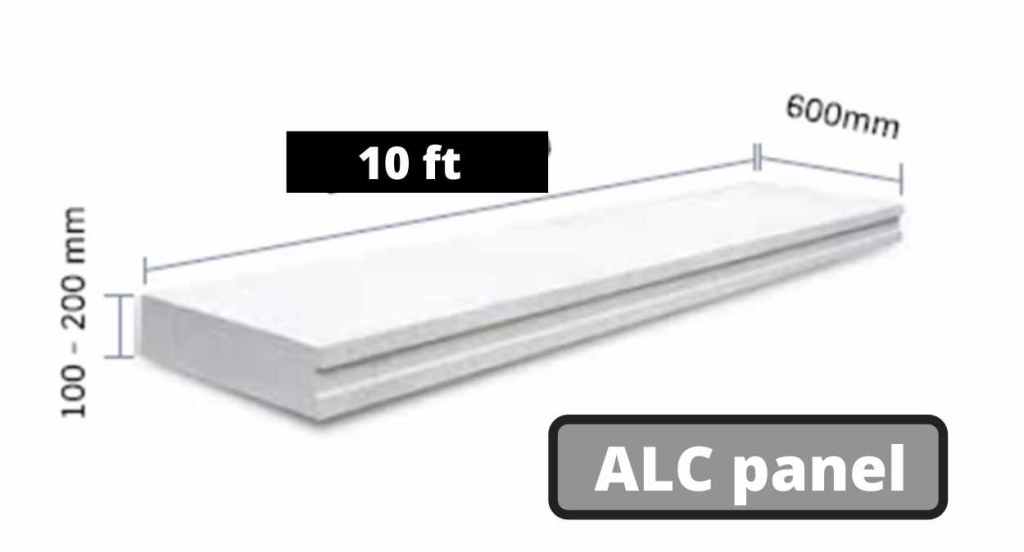
Autoclaved Lightweight Concrete (ALC) – also known as Autoclaved Aerated Concrete (AAC) – is a composite material made from cement, lime, and silica, expanded by an internal gas reaction (typically between aluminum powder and lime), and then autoclaved under high pressure.
Unlike conventional concrete, ALC uses only fine sand (no coarse aggregates) mixed with cement and lime. The aluminum agent generates hydrogen bubbles, forming a uniform cellular structure with up to 80% air content. The “green” mixture is then cured in an autoclave at around 190°C and 8–12 bar for several hours, producing hydrated calcium silicate phases (mainly tobermorite) that give the material its strength and stability.
The result is a rigid porous concrete with very low density (≈500–800 kg/m³) and uniform air cells (0.2–1 mm)enclosed by thin cement walls.
Due to its high porosity and the presence of free lime and silicate compounds, ALC exhibits strong moisture absorption and alkaline surface properties. This unique structure delivers exceptionally low thermal conductivity (≈0.11–0.16 W/m·K), providing outstanding thermal insulation and fire resistance.
ALC panels are often reinforced with steel mesh or rebar to improve structural integrity when used for floors, roofs, or large wall panels. Mechanically, ALC offers an excellent strength-to-weight ratio, with compressive strength typically ranging from 3–7 MPa for lightweight grades and up to 8–12 MPa for higher-density panels.
Because of its light weight, ALC enables large precast panels, allowing for faster installation. The material is completely non-combustible, offering over 3–4 hours of fire resistance at a 100 mm thickness.
Key advantages of ALC include high thermal insulation, good load-bearing capacity relative to weight, excellent sound insulation, nail-holding capability, and natural vapor permeability, allowing the wall to “breathe.”
Lightweight and Thermal Insulation
ALC panels weigh only about one-fourth of normal concrete (≈500–650 kg/m³) and provide excellent thermal insulation — a 125 mm ALC panel performs roughly equivalent to a 370 mm brick wall.
With a thickness of 100–125 mm, the thermal resistance (R-value) reaches R-6 to R-8 (corresponding to U ≈ 0.12–0.15 W/m²·K).
Its fine cellular structure also offers superior acoustic insulation, reducing noise transmission by 40–48 dB for panels 100–150 mm thick.
Fire Resistance and Durability
ALC is virtually non-combustible — for instance, a 100 mm panel can withstand fire for over 3 hours, and a 125 mm panel for up to 4 hours.
The autoclaving process ensures complete curing, giving dimensional stability and high durability.
However, due to its porous nature, ALC can absorb moisture; if left unprotected outdoors, it may deteriorate under freeze–thaw cycles.
In practice, ALC walls are typically coated with waterproofing layers or protective paints to prevent moisture ingress.
Applications
ALC panels are used for floors, walls, ceilings, and roofs in various building types — residential, commercial, industrial, and public projects.
They may serve as load-bearing or non-load-bearing panels, often reinforced with steel mesh or rebar.
Common applications include:
- Exterior façade cladding
- Interior partition walls
- Fireproof infill panels around steel or concrete frames
- Thermal insulation panels for roofs or floors
In both new construction and renovation projects, lightweight ALC panels help speed up installation and improve energy efficiency.
Especially, thin ALC walls (100–150 mm) are highly favored for interior partitions or external envelopes, typically mounted on steel or concrete frames, owing to their excellent fire and thermal performance.
Challenges in Bonding ALC Panels
The surface of ALC panels is porous and powdery, which makes bonding particularly challenging.
Due to its high porosity and capillary action, the material tends to absorb moisture and liquid adhesives, which can reduce bond strength if the adhesive is drawn too deep into the surface or cures too quickly.
Additionally, the surface dust layer of ALC can easily loosen, so surface preparation must remove fine powder without damaging the thin cement matrix beneath.
The adhesive must also withstand dimensional changes caused by thermal or moisture expansion of ALC (though these are small).
Because ALC is rigid and brittle, the bond line needs a degree of flexibility to prevent cracking under wind load, vibration, or seismic movement.
Moreover, the high alkalinity of ALC (from residual lime) can degrade certain conventional adhesives over time.
Therefore, to achieve a durable bond, the adhesive should have high solids content, excellent elasticity, and the ability to wet and penetrate the porous surface moderately without being absorbed completely. It must also remain flexible after curing to accommodate movement between panels.
In practice, ALC is often installed using special polymer-modified thin-bed mortars, similar to tile adhesives.
However, for bonding large ALC panels to other materials, one-component polymer adhesives — such as SMP (Silyl Modified Polymer) or improved polymer mortars — are preferred.
These provide strong adhesion to porous substrates and flexibility to absorb differential movement between bonded elements.
Adhesive Requirements for ALC Panel Installation
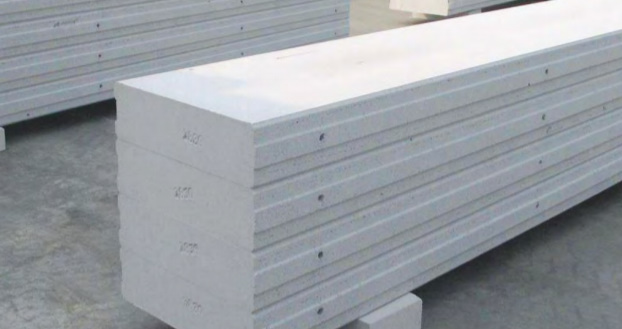
When bonding ALC (Autoclaved Lightweight Concrete) panels to various substrates and under different site conditions, the adhesive must satisfy a series of critical technical requirements as follows:
Compatibility with Different Substrates
The common base materials have very different surface characteristics:
- ALC: porous and highly alkaline
- Concrete: rigid, alkaline
- Steel: smooth, non-porous
- Wood: moisture-absorbing and elastic
Therefore, an ideal adhesive must bond effectively to both porous and non-porous surfaces, penetrate cement-lime substrates, adhere to metals (via polar interaction or primer), and fill wood grain surfaces.
Many SMP (Silyl Modified Polymer) adhesives demonstrate excellent multi-surface compatibility.
Curing Mechanism
For substrates like ALC or concrete, moisture-curing adhesives are advantageous because ambient humidity promotes crosslinking reactions.
This mechanism also works well with metal or wood without requiring solvent evaporation or UV curing.
Hence, one-component moisture-curing systems—such as polyurethane or hybrid SMP—are widely used.
Elasticity of the Adhesive
Large ALC panels, especially for exterior cladding, undergo thermal and wind-induced movement.
The adhesive must be highly elastic to absorb displacement without debonding.
Overly rigid adhesives (like epoxy or cementitious mortar) may crack or detach ALC panels under stress.
SMP adhesives maintain long-term flexibility after curing, making them ideal for such applications.
Weather and UV Resistance
In outdoor exposure, adhesives must withstand moisture, UV rays, and freeze–thaw cycles without degradation.
They should not crack, harden, or lose adhesion over time.
SMP adhesives provide excellent weathering stability and UV resistance, whereas polyurethanes may chalk and silicones can embrittle with age.
Water Resistance
In humid environments or waterproofing zones (bathrooms, façades), the adhesive must be impermeable to water and vapor.
SMP and polyurethane adhesives, once cured, form a fully waterproof and elastic rubber layer, unlike cement-based mortars which remain partially porous.
Fire Resistance
For fire-rated walls or ceilings, the adhesive should be non-combustible or flame-retardant.
While cement-based mortars are inherently non-flammable, specialized SMP grades can meet fire-resistance standardssuch as NFPA Class A or ASTM E84, essential for high-safety construction.
Bond Strength
The adhesive must provide adequate tensile and shear strength on all substrates—typically ≥ 0.5 MPa, while high-performance SMP or polyurethane formulations can achieve > 1 MPa on concrete or metal.
Safety and Environmental Performance
For indoor applications, adhesives must have low odor and minimal VOC emissions to ensure indoor air quality.
One-component SMP adhesives are isocyanate-free, solvent-free, and ultra-low VOC, ensuring user safety and long shelf life (12–18 months).
Ease of Application
An ideal adhesive should be one-component, easy to gun or trowel, and adjustable during positioning.
It should grab quickly without sagging, even on vertical surfaces.
SMP adhesives excel in these aspects, offering stable viscosity and effortless handling.
Ideal Adhesive Characteristics for ALC Panels
An optimal adhesive should be:
- One-component, moisture-curing, high-solid, and non-slump paste.
- Permanently elastic, with high tensile and tear resistance to absorb movement.
- Adhesive to multiple substrates (ALC/concrete, metal, wood) without primer.
- Weatherproof, UV-stable, moisture-resistant, and low-VOC for user safety.
- Fire-rated versions available for flame-retardant wall or ceiling systems.
In practice, Silyl Modified Polymer (SMP) adhesives fulfill nearly all of these performance criteria, making them the most versatile and reliable adhesive solution for ALC panel installation.
Comparison of SMP Adhesive with Other Adhesive Types
Polyurethane (PU) Adhesives
Traditional one-component polyurethane (PU) adhesives (moisture-curing urethanes) provide strong multi-surface bonding and form flexible adhesive layers.
However, they contain isocyanates and often have high VOC emissions.
SMP adhesives offer similar flexibility and bond strength to PU but are safer and more environmentally friendly, as they are isocyanate-free.
While some PU types cure more slowly or have poor UV resistance, SMP adhesives maintain long-term elasticity and can even be applied at lower temperatures.
Cementitious (Thin-Bed Mortar) Adhesives
Polymer-modified cement mortars are commonly used for AAC (Autoclaved Aerated Concrete) wall construction.
These cement-based materials cure by hydration and are low-cost, non-combustible, and bond well to AAC when kept moist during curing.
However, once dry, they become very rigid and brittle, making them prone to cracking under movement or thermal expansion.
They also require manual mixing on site and a thicker adhesive layer (2–5 mm).
In contrast, SMP adhesives are lighter, more flexible, and easier to apply.
They require no water, do not wet or weaken the ALC structure, and reduce stress on the thin concrete surface.
While heavy cement mortars may crush or crack ALC edges, SMP adhesives act as an elastic cushion, protecting the bond interface.
Epoxy Adhesives
Two-component epoxy adhesives achieve very high bond strength and hardness, forming a rigid, waterproof resin layer upon curing.
However, they are too stiff for ALC applications, as they cannot absorb vibration or movement, leading to cracking or debonding under thermal or wind-induced stress.
Although ideal for metal-to-metal joints, their brittleness makes them unsuitable for bonding large ALC panels or porous materials.
Thus, flexible SMP adhesives are preferred for panel bonding, while epoxy is used only for localized, high-load joints.
Acrylic / Methyl Methacrylate (MMA) Adhesives
MMA adhesives are two-component systems that cure very rapidly to form hard, durable bonds with excellent adhesion to many materials (commonly used for façades, glass, or stone veneer).
However, they produce strong odors and often lack flexibility unless specifically modified.
By contrast, SMP adhesives are one-component, low-odor, and easy to apply, with sufficient flexibility and strengthfor typical ALC wall, ceiling, or partition applications.
MMA adhesives are reserved for specialized, high-strength structural bonding.
Silicone Adhesives
Neutral-cure or acetic silicones provide excellent elasticity and weather resistance, but poor adhesion to porous, alkaline surfaces like ALC or concrete—often requiring a primer.
During curing, silicones may release acetic acid or alcohol and are generally not structural adhesives (primarily used as sealants).
SMP adhesives outperform silicones by providing stronger adhesion, paintability after curing, and broader material compatibility across porous and non-porous substrates.
Silyl Modified Polymer (SMP) adhesives combine the key benefits of polyurethane, silicone, and acrylic systems—strong adhesion, permanent elasticity, weather durability, and safety—without their typical drawbacks such as isocyanate toxicity, brittleness, or poor substrate compatibility.
This balance makes SMP the most versatile and high-performance adhesive choice for ALC panel bonding.
| Criteria | SMP (Silyl Modified Polymer) | PU (Polyurethane) | Cement / Thin-Bed Mortar | Epoxy | Acrylic / MMA | Silicone |
|---|---|---|---|---|---|---|
| Composition / Curing | One-component, moisture-curing (no isocyanate, no solvent) | One-component, moisture-curing (contains isocyanate) | Cement + polymer, cures by hydration | Two-component, fast chemical cure | Two-component, fast-curing (rigid polymer) | One-component, moisture-curing |
| Adhesion to ALC / Concrete / Metal / Wood | Excellent multi-surface adhesion, no primer required | Good | Good on cement surfaces, poor on metal | Very high but only on hard, non-porous surfaces | Good on many substrates, mixing required | Poor on porous / alkaline surfaces |
| Elasticity after curing | High, permanently flexible | High but decreases over time | Low, brittle | Very low, rigid | Medium (varies by type) | Very high |
| Movement / Vibration / Thermal tolerance | Excellent | Good | Poor | Very poor | Moderate | Excellent |
| Water / Weather / UV Resistance | Excellent, non-chalking | Good but may chalk under UV | Poor, absorbs moisture | Excellent but brittle | Moderate, poor UV | Excellent |
| Fire Resistance | Fire-retardant grades available (Class A) | Fire-rated types available | Non-combustible | Non-combustible | Can be modified with additives | Non-combustible |
| Hardness (Modulus) | Low–Medium (1–3 MPa), flexible | Medium | High (rigid) | Very high | Medium–High | Low |
| Interaction with ALC surface | Does not wet or soak into ALC | May introduce slight moisture | Absorbs water from ALC, weakens bond | Non-absorptive but may cause delamination | May weaken porous surfaces | Poor bonding |
| Application method | One-component, direct gunning, no mixing | One-component, pumpable | Must be mixed, precise water ratio | Two-component mixing | Two-component mixing | One-component |
| Skin / Curing time | Moderate (allows repositioning) | Moderate to slow | Slow (hydration) | Fast | Very fast (limited working time) | Moderate |
| Paintability after cure | Paintable | Paintable | Paintable | Paintable | Difficult | Not paintable |
| Odor / Safety / VOC | Very low VOC, user-safe | Higher VOC, contains isocyanate | Safe, no VOC | Medium, may irritate skin | Strong odor | Low |
| Material cost | Medium | Medium | Low | High | High | Medium |
| Typical applications | ALC panels, façades, partitions, ceilings, roofs | Flooring, frames, general construction | AAC block walls, masonry joints | Metal bonding, high-load joints | Industrial panels, façade systems | Joint sealing, waterproofing |
| Overall performance on ALC | ⭐ Best – Most balanced solution | Good but less safe | Acceptable but rigid/brittle | Too rigid, prone to cracking | Specialized only | Not suitable |
Quick Summary:
- SMP Adhesive – The optimal solution for ALC panels: multi-surface adhesion, permanent elasticity, excellent weather resistance, easy application, and environmentally safe.
- PU (Polyurethane) – Closest alternative, but limited by isocyanate toxicity and UV aging.
- Cement / Mortar – Low cost, but rigid and brittle; suitable mainly for AAC block laying.
- Epoxy / MMA – Very high strength, yet too rigid and impractical for ALC panel bonding.
- Silicone – Ideal for joint sealing, not for structural bonding.
Contact Information
Hitta is a trusted provider of advanced adhesive and tape assembly solutions from leading global brands.
With a highly experienced technical team across multiple industries, we not only supply products but also deliver tailored bonding solutions that optimize your existing processes and address your specific application challenges.
If you are looking for a high-performance, durable, and reliable adhesive solution, let HITTA be your partner — from consultation to implementation.
- ☎️ Hotline: 0565.336.879
- ✉️ Email: hittajsc@hitta.vn





