
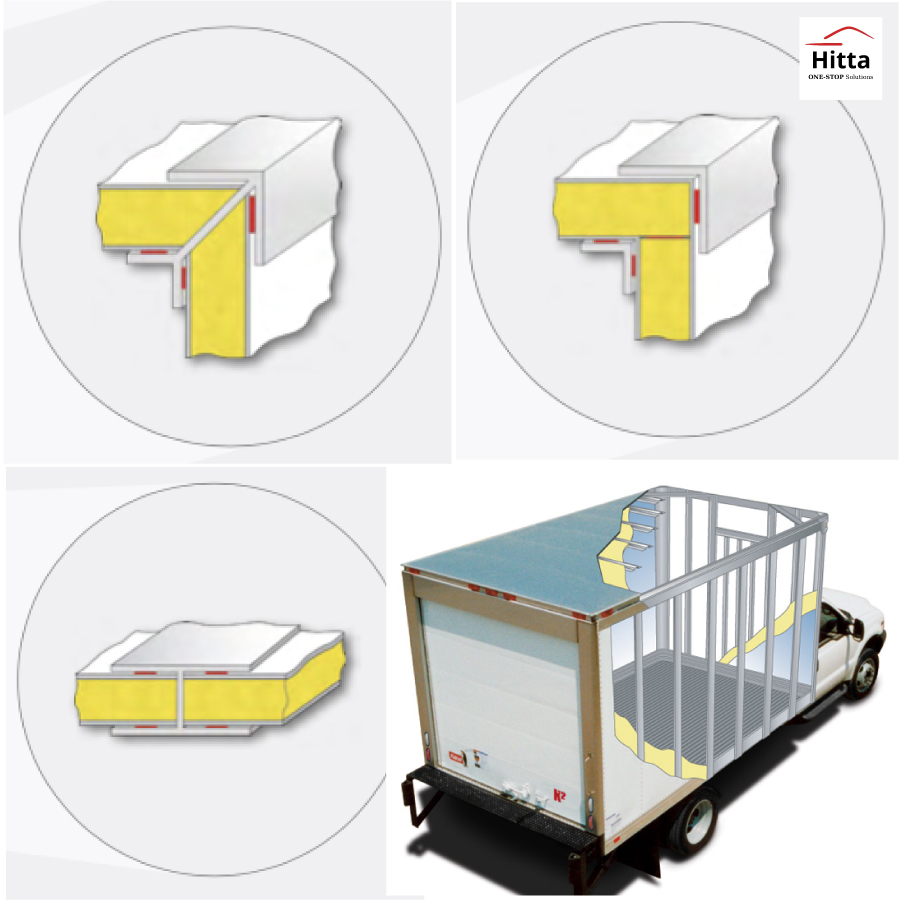
Refrigerated truck bodies are typically constructed from insulated sandwich panels — for example, outer layers made of fiberglass-reinforced plastic (FRP) and an insulating foam core. These panels must be firmly bonded together to form a sealed, durable, and airtight structure. Adhesives play a crucial role in this process, especially at the corner joints and panel edges — where they provide both structural bonding and protection against air and moisture leakage.
Today, advanced polyurethane (PU) and MS polymer adhesives have largely replaced traditional mechanical fastening methods in refrigerated truck manufacturing, helping to reduce weight, enhance durability, and improve thermal insulation performance.
The Importance of Adhesives in Corner and Edge Bonding
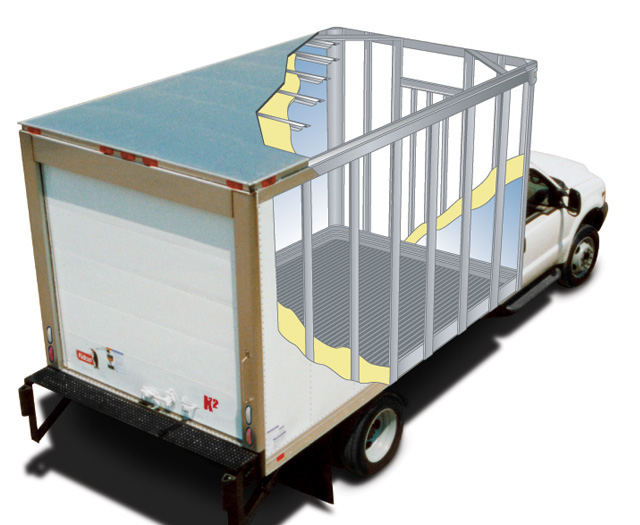
The use of adhesives at corner joints and panel edges in refrigerated truck bodies plays a crucial role in structural integrity and thermal performance.
These junctions connect the walls, floor, and roof, bearing significant mechanical loads while also needing to remain airtight and watertight.
Unlike bolts or rivets that create point-to-point connections, adhesives form a continuous bond across the entire surface, making the box structure stiffer and more evenly stress-distributed. At the same time, the adhesive layer completely seals the interface, preventing the penetration of air and moisture — both of which are critical factors affecting insulation efficiency.
Since there are no drilled holes or gaps, a fully bonded adhesive body maintains internal temperature more effectively, eliminates thermal bridges, and minimizes cold air loss.
Manufacturers refer to this as an “all-closed adhesive body”, meaning the enclosure remains fully sealed, with the insulation layer protected from moisture, mold, and corrosion.
In summary, adhesives act as both a structural bonding agent and a sealing barrier, making them an indispensable technology in modern refrigerated truck manufacturing.
Another key reason adhesives have become essential lies in the industry trend toward lightweight composite materials.
Manufacturers increasingly use FRP (fiberglass) panels combined with aluminum extrusions to reduce weight and improve insulation efficiency.
However, these materials cannot be welded together, and drilling or riveting can cause cracks, corrosion, or weakened composite panels.
The solution is to use structural adhesives, which enable bonding of different materials — fiberglass, aluminum, steel, or wood — without mechanical penetration.
For example, specialized polyurethane adhesives are used to bond corner reinforcements and aluminum frame profiles in refrigerated trucks or mobile homes, creating durable joints between FRP panels and metal frames.
Without adhesives, achieving strong, airtight, and visually clean connections at the corners and edges would be nearly impossible.
Therefore, adhesives represent the foundation technology of modern insulated body manufacturing.
Main Application Areas
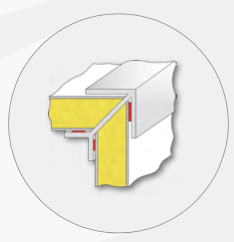
Corner bonding of truck body panels
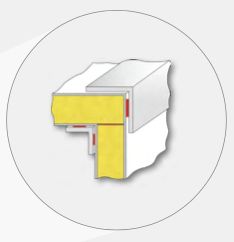
Roof corner joint bonding
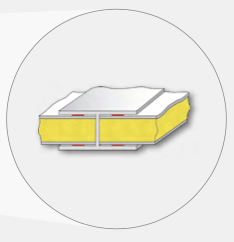
Cross or butt joint bonding
Main Application Areas
Almost every junction in an insulated truck body — from roof-to-wall, wall-to-floor, front/rear wall joints, to door frame-to-panel interfaces — can be effectively bonded using adhesives. In other words, adhesives are applied at nearly all primary joints during refrigerated truck assembly.
In refrigerated truck manufacturing, adhesives not only join panels structurally but also seal all interfaces, ensuring airtightness, water resistance, and durability throughout the vehicle body — a key factor in modern insulated body design.
By selecting the right adhesive for each area, manufacturers can create a monolithic and completely sealed structure, eliminating the typical weaknesses of screws, rivets, or other mechanical fasteners.
Corner Joint Bonding Between Panels
At intersections between the walls, floor, and roof — particularly at vertical corners and roof edges — manufacturers use structural or high-strength sealant adhesives to bond sandwich panels, often in combination with aluminum corner profiles.
In these locations, the adhesive performs two simultaneous functions:
- Provides structural load-bearing support for the entire corner of the truck body.
- Prevents the ingress of water, moisture, and air from outside.
Bonding Aluminum Profiles and Edge Trims
Modern refrigerated bodies typically incorporate extruded aluminum profiles at critical edge positions — such as the roof rails, base rails, door frames, and corner caps — to protect and finish the panel connections.
Today, instead of using rivets or screws, these profiles are directly bonded with adhesive.
For instance, a two-component polyurethane (2K PUR) adhesive can securely bond sandwich panels into aluminum L- or U-profiles along the edges, forming a continuous, drill-free joint that evenly distributes stress and prevents water leakage at the connection line.
Seam Sealing
Beyond structural bonding, adhesives also serve as elastic sealants to fill and seal joints or small gaps around fittings and accessories.
For example, after bonding the roof panel, technicians typically apply a polyurethane sealant bead along the joint between the roof and side wall to ensure complete waterproofing.
This type of adhesive sealant maintains long-term elasticity, withstanding vibration and slight material movement or expansion — ensuring that joints remain leak-free under rain, washing, or temperature variations.
Performance Requirements for Corner and Edge Adhesives in Refrigerated Truck Assembly


Adhesives used at the corner joints and edge seams of refrigerated truck bodies must meet strict technical requirements due to the harsh operating environment.
Below are the key performance criteria that a specialized adhesive system must achieve:
High Structural Strength
The adhesive must create load-bearing structural bonds capable of withstanding panel weight, cargo forces, and road vibration.
- Typical tensile shear strength: 10–20 MPa (≈ 1500–3000 psi) after full cure.
- This allows the bonded joint to replace bolts, rivets, or welds in terms of load capacity.
- For example, a two-component polyurethane adhesive can achieve ~13 MPa when bonding aluminum to FRP — an excellent demonstration of high mechanical strength.
- More importantly, this strength must remain stable for years, resisting vibration, temperature cycling, and environmental aging without degradation.
Toughness and Elasticity
Unlike brittle adhesives, corner and edge bonding systems must be tough and elastic.
- A degree of elasticity enables the joint to absorb vibration, impact, and thermal expansion without cracking.
- When panels flex slightly under load, a tough-elastic PU adhesive stretches and recovers microscopically instead of fracturing.
- This property, measured by elongation at break and impact resistance, acts as a shock absorber between dissimilar materials.
- Especially important when bonding materials with different thermal expansion rates (e.g., aluminum frames and FRP panels), the adhesive must compensate for expansion and contraction from –20 °C to high ambient temperatures.
Wide Temperature Resistance Range
Refrigerated trucks face extreme temperature differences — interiors may reach –20 °C or lower, while exterior surfaces are exposed to sun and heat.
The adhesive must maintain its mechanical and physical properties across this range:
- No brittleness or cracking at low temperatures.
- No softening or flow under high heat.
- Many specialized adhesives are tested between –40 °C and +80 °C, ensuring performance through freeze–thaw cycles without loss of adhesion.
Weather and UV Resistance
Corner and edge joints are exposed to rain, UV radiation, salt spray, and ozone.
Thus, the adhesive must provide long-term weather and aging resistance, including:
- Waterproofing and corrosion protection.
- Resistance to UV, ozone, and mild chemicals (detergents, oils, fuels).
- No cracking, peeling, or loss of adhesion after years of outdoor exposure.
Thanks to these properties, polyurethane (PU) and MS polymer adhesives are the preferred choices — maintaining flexibility, strength, and appearance throughout the vehicle’s service life.
Gap-Filling and Non-Sag Properties
Panel assemblies are rarely perfectly aligned.
- Adhesives must fill gaps of several millimeters while retaining strength.
- Thixotropic PU adhesives are formulated to hold position on vertical surfaces — no sagging before cure and complete wet-out of gaps.
This ensures: - A fully sealed joint even with minor panel misalignment.
- Enhanced airtightness and watertightness.
- No dripping or running during vertical application.
Multi-Material Adhesion Capability
Corner joints often combine FRP, aluminum, coated steel, wood, and foam cores.
An ideal adhesive must bond multiple substrates without primers.
- Modern 2K polyurethane or acrylic systems adhere strongly to metals, composites, and plastics — even on lightly oiled or painted surfaces.
- High-quality adhesives must bond reliably to aluminum, stainless steel, FRP, PVC, and insulation foam with minimal surface preparation.
Balanced Open and Cure Time
Adhesives must align with production workflow:
- Open time long enough for accurate positioning.
- Cure speed fast enough to move to the next assembly stage.
Examples: - 2K systems can be formulated for slow or fast curing to suit manual or automated production lines.
- 1K moisture-cure PUs typically skin over in 30–60 min and reach full cure in 24–48 h.
- The adhesive should achieve early green strength to hold parts without delay.
A well-balanced cure profile prevents both misalignment (too fast) and production bottlenecks (too slow).
Safety and Environmental Compliance
Modern trends favor low-VOC, solvent-free, and non-toxic adhesives (free of free isocyanates).
- Ensures operator safety and compliance with environmental standards.
- Some systems are certified for indirect food contact, suitable for refrigerated or food transport trucks.
- Flame-retardant formulations may be required for certain international container standards.
Bonding of Different Materials
The construction of a refrigerated truck body involves a wide range of materials — and adhesives are uniquely suitedfor bonding these dissimilar substrates.
Below are the main material groups and the reasons why adhesives outperform traditional mechanical fastening methods:
Composite or Fiberglass-Reinforced Panels (FRP)
Most refrigerated truck bodies have inner and outer skins made of FRP (fiberglass-reinforced polyester resin).
FRP offers advantages such as lightweight, smooth surfaces, and easy cleaning, but is difficult to fasten with screws or rivets — drilling can cause cracks or allow moisture to penetrate into the panel core.
Adhesive bonding solves these issues effectively:
- Creates a chemical bond over a wide surface area, avoiding point stress from bolts.
- Enables bonding of FRP to metals (e.g., FRP panel to aluminum extrusion), something mechanical fastening often fails to achieve due to the brittleness of composites.
- Two-component polyurethane (2K PU) adhesives provide strong and durable bonds between aluminum and FRP or other composite materials.
As experts note:
“Whenever a product incorporates multiple material types, adhesive bonding becomes essential — because mechanical joining is often either impractical or inefficient.”
Metallic Components – Aluminum and Steel
Structural frames, corner trims, and reinforcement plates in refrigerated bodies are often made of aluminum, with steelused in high-stress areas.
Adhesives allow metal-to-metal or metal-to-composite bonding without welding or riveting.
Industrial structural acrylic and polyurethane adhesives can bond:
- Aluminum to steel, e.g., reinforcing steel plates bonded to aluminum frames.
- Aluminum to FRP, providing strong, vibration-resistant joints.
Key advantages:
- Prevent galvanic corrosion between dissimilar metals by creating an insulating adhesive layer.
- Eliminate drilled holes — weak points prone to rust and periodic tightening.
- Absorb thermal expansion differences between metal and composite parts, preventing cracking or loosening under temperature changes.
Insulating Foam and Wood
The panel core typically consists of polyurethane foam, while the floor may include plywood or foam-based structural supports.
These materials do not hold screws well — foam has no grip, and wood joints can loosen from vibration.
Adhesives are ideal because they:
- Create a uniform bond across the entire surface, avoiding point loading.
- Do not deform or crush the foam (as bolts with washers might).
- 2K polyurethane adhesives are commonly used to laminate foam cores with metal or FRP skins during panel manufacturing.
- Polyurethane reacts with hydroxyl groups in wood, forming durable chemical bonds.
- Some 1K PU adhesives remain slightly elastic, bonding well to wood, aluminum, and foam — useful for floor installation and interior liner repair.
Plastics and Rubber Components
Refrigerated trucks also include many plastic trims (PVC), rubber gaskets (EPDM), and interior liners.
MS polymer and polyurethane adhesives are preferred for bonding these to the truck body because they:
- Adhere well to both metals and plastics.
- Maintain elasticity under cold conditions.
- Avoid cracking or leakage that can occur when screws are driven into thin plastic parts.
Additionally, specialty adhesives prevent plasticizer migration (which weakens many plastic joints) and endure continuous thermal cycling, making the bond far more durable than any mechanical fastening method.
Advantages of Adhesive Bonding over Mechanical Fastening
Using adhesives instead of rivets, screws, or welds for corner joints and edge bonding in refrigerated truck bodies provides multiple advantages — not only in structural performance, but also in aesthetics and manufacturing efficiency.
Thanks to these benefits, adhesive and sealant technologies are steadily replacing mechanical joining methods in the production of refrigerated trucks and trailers, delivering stronger, lighter, corrosion-resistant, quieter, and more visually seamless structures — while enabling flexible multi-material design in modern vehicle manufacturing.
Reduced Overall Weight
Eliminating metal fasteners (screws, bolts, steel reinforcements) significantly reduces the vehicle’s total weight.
Adhesive bonding allows the use of thinner metal sheets or lighter composite materials while maintaining structural strength.
A lighter truck means better fuel efficiency, higher payload capacity, and lower operating costs.
Because stress is evenly distributed across the bonded area, lightweight materials can be used more efficiently and durably than in traditional bolted assemblies.
No Drilling – No Leakage, No Thermal Bridge
Adhesives bond surface-to-surface without drilling through insulated panels as rivets or screws require. This ensures:
- Preservation of the thermal insulation layer (no thermal bridges or air paths).
- Complete prevention of moisture or air ingress.
- Elimination of extra sealant work for every screw hole, saving labor time.
With adhesive bonding, the entire joint is sealed by design, ensuring perfect insulation even under extreme temperature conditions.
Watertight, Hygienic, and Durable Joints
Adhesive joints are continuous and gap-free, forming a completely watertight seal.
This prevents moisture penetration into the insulation layer — a common cause of delamination and decay in older riveted trucks.
The adhesive also blocks rainwater, wash water, and cleaning chemicals, protecting the cargo from contamination or damage.
Smooth interior surfaces with no seams or crevices are easier to clean and inhibit bacterial growth, which is critical for food and cold-chain transport.
Even Stress Distribution and Crack Prevention
Unlike screws or bolts that concentrate stress at specific points, adhesives distribute loads evenly across the bonded area. This results in:
- Lower risk of local cracking or tearing.
- Higher fatigue resistance, particularly at corners where dynamic vibration occurs during travel.
- Adhesively bonded structures remain dimensionally stable and have longer service life, since there are no stress concentrations typical of welded or drilled joints.
Improved Durability and Service Life
Adhesively assembled trucks are more durable and require less maintenance.
Bonded joints do not loosen over time and can withstand vibration and impact without failure.
PU and MS polymer adhesives have inherent elasticity, absorbing shock and body flex without cracking — unlike welds or rivet heads that can fracture.
As a result, vehicle lifespan is extended, while risks of corrosion, leakage, and material fatigue are minimized.
Corrosion Prevention
Eliminating mechanical fasteners also removes potential sites for rust or galvanic corrosion between dissimilar metals.
The adhesive acts as a protective insulating layer, preventing direct contact between metal and environmental agents like water, salt, or chemicals.
This improves the truck body’s corrosion resistance and long-term durability, even in harsh operating conditions.
Enhanced Aesthetics and Aerodynamics
Adhesive bonding results in flat, seamless surfaces — free from rows of rivets or weld marks.
This delivers:
- A clean, modern appearance suitable for branding.
- Improved aerodynamics (less drag, better fuel economy).
- Easier application of decals, logos, or advertising wraps due to smooth panels.
By contrast, welded or riveted joints often leave scratches, bulges, or distortions, complicating surface finishing and reducing visual appeal.
Reduced Noise and Vibration (NVH)
The adhesive layer between panels acts as a vibration-damping barrier, which:
- Reduces noise and vibration during operation.
- Prevents metal-to-metal contact, eliminating rattling or wind noise.
- Creates a quieter, more stable cargo environment, protecting goods from excessive shaking during long-distance transport.
Overall, adhesive bonding significantly improves noise–vibration–harshness (NVH) characteristics, resulting in a smoother and quieter ride.
Faster Production and Lower Labor Costs
Adhesive bonding simplifies the assembly process:
- No drilling of hundreds of holes.
- No welding or post-grinding required.
- Adhesives can bond and seal in one step, saving time.
This results in faster assembly lines, higher productivity, and reduced need for specialized labor (e.g., welders).
Ultimately, manufacturers achieve lower production costs and shorter build times — increasing output without compromising quality.
Contact Information
Hitta supplies a wide range of adhesive and tape solutions from leading global brands. Backed by an experienced technical team, we provide not only high-quality products but also tailored process optimization solutions to meet specific customer needs and challenges.
If you are looking for an efficient, durable, and reliable bonding solution, Hitta is your trusted partner — from consultation to implementation.
☎️ Hotline: 0565.336.879
✉️ Email: hittajsc@hitta.vn





