
Solution Overview
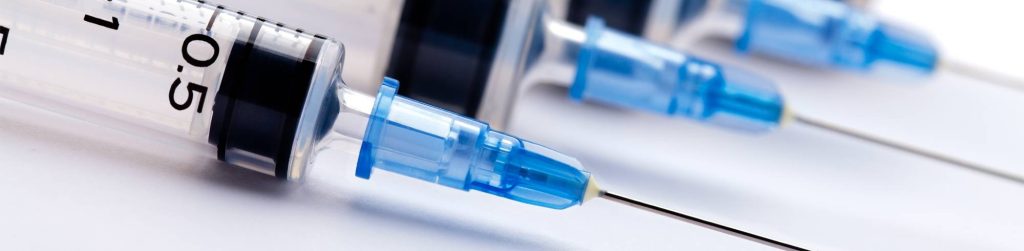
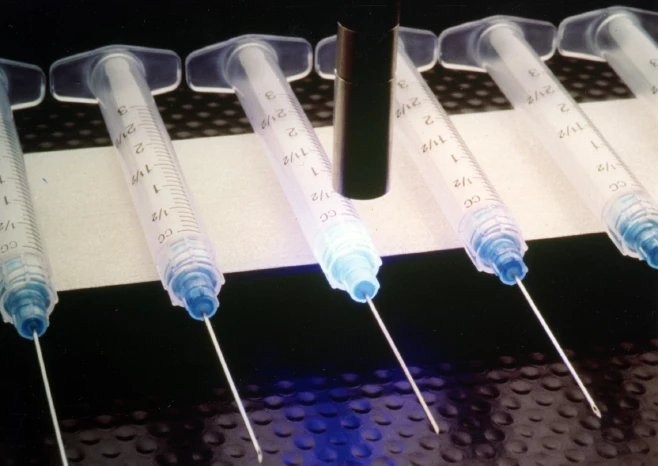
Due to varying functional requirements, the design structures of medical needles have become increasingly diverse. This evolution is accompanied by a wider range of material combinations and more demanding requirements for bonding solutions, along with stricter quality inspection standards.
Mass production in this industry requires extremely high stability, while acceptable tolerances for quality control remain very narrow. This is because daily production volumes can reach tens of millions, hundreds of millions, or even billions of units.
Physical Properties of the Product
Epoxy adhesives are available in a wide range of colors to meet different medical-grade requirements, including both one-part and two-part systems compatible with various substrates and curing conditions.
UV adhesives are primarily used for bonding difficult-to-adhere materials such as PP, PC, PVC plastics, and metals like stainless steel.
They offer fast curing speeds and stable viscosity, making them highly suitable for continuous production processes.
Key Benefits
- Instant curing: from hours → seconds
- Reduced CAPEX: eliminates large thermal ovens
- Space and energy savings
- Protection for thin plastics: no thermal deformation
Contact for Consultation
HITTA provides a comprehensive range of adhesive and assembly tape solutions from leading global brands. With a technically experienced engineering team across multiple industries, we not only supply products but also deliver optimized process solutions tailored to each customer’s specific requirements and challenges.
If you are looking for an efficient, reliable, and sustainable bonding solution, HITTA is ready to support you from consultation through implementation.
Contact HITTA today for the most suitable solution:
☎️ Hotline: 0565.336.879
✉️ Email: hittajsc@hitta.vn
The Importance of Adhesive Solutions
In high-precision medical device manufacturing, the bond between the stainless steel cannula and the plastic hub is not merely a fastening mechanism—it is a critical safety component.
This interface must withstand extreme mechanical loads, including high pull-out forces during clinical use and thermal stresses during sterilization.
From a strategic standpoint, the core value of adhesive selection lies in minimizing the risk of latent bond failure—a critical issue commonly associated with traditional two-part systems due to manual mixing inconsistencies.
Adopting modern UV adhesive solutions directly enhances patient safety, manufacturing efficiency, and regulatory compliance by ensuring consistent, repeatable, and high-integrity bonding throughout the product lifecycle. Transitioning to advanced UV-curable epoxy systems is therefore a fundamental requirement in modern medical device assembly.
Advanced UV Adhesive Technology
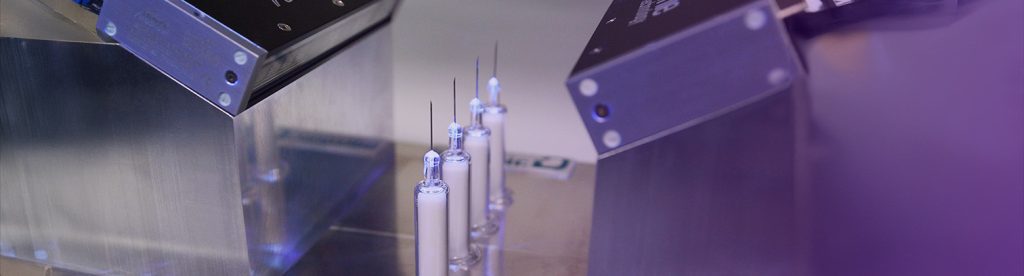
In modern industrial manufacturing, the demand for precision, speed, and structural integrity has driven the widespread adoption of light-curing technologies.
UV adhesives utilize electromagnetic radiation in the ultraviolet spectrum to initiate rapid polymerization. Unlike traditional solvent-based or two-part epoxy systems, which rely on evaporation or chemical mixing, UV adhesives enable near-instantaneous curing from liquid to solid, providing superior control over assembly processes.
Chemistry of Light-Curable Adhesives
UV adhesives are formulated from a precise combination of photoinitiators, monomers, and oligomers. When exposed to specific wavelengths (typically 365–405 nm), photoinitiators absorb light energy and generate reactive species such as free radicals or cations.
These species initiate cross-linking of polymer chains, transforming the adhesive into a thermoset plastic. This photopolymerization process occurs within seconds, resulting in strong mechanical bonds with excellent chemical resistance.
Wavelength Sensitivity and Curing Characteristics
Selecting the appropriate light source is critical for achieving full cure:
- 365 nm (UVA): Ideal for deep curing and surface drying; commonly used in glass-to-metal bonding requiring high optical clarity.
- 405 nm (Visible Light): Suitable for UV-stabilized plastics or thicker sections where light penetration is more challenging.
Technical Specifications and Engineering Benefits
UV adhesives are widely preferred by engineering teams due to their measurable and reliable performance:
- Viscosity Control: From 50 cPs (capillary flow for tight tolerances) to thixotropic gels (for vertical gap filling)
- Thermal Stability: Continuous operation from -55°C to +150°C
- Tensile Strength: Up to 25–30 MPa on stainless steel and glass
- Low Shrinkage: Ensures optical alignment and reduces internal stress on sensitive components
Advantages Over Traditional Methods
Compared to mechanical fastening or thermal-cure epoxies, UV adhesives offer:
- Increased throughput (seconds vs. hours)
- Precise positioning before curing
- Environmentally friendly (100% solids, no VOCs)
- Single-component system (no mixing, reduced error and waste)
Optimizing the Curing Process
To achieve optimal bond strength, key parameters include irradiance (mW/cm²) and energy density (mJ/cm²).
Curing efficiency depends on the distance from the light source and substrate transparency. For opaque materials, dual-cure systems (UV + moisture or thermal curing) ensure complete curing in shadowed areas.
Proper rheology matching and equipment calibration are essential for high-volume manufacturing to ensure repeatability and long-term reliability.
Industrial Applications
- Medical Devices: Needle bonding, catheter assembly, respiratory masks; compliant with ISO 10993 and sterilization methods (autoclave, EtO)
- Electronics & Optoelectronics: Conformal coatings, encapsulation, underfill; protection against moisture and shock
- Aerospace & Defense: Low outgassing applications such as cockpit displays and sensor encapsulation
Comparison: UV vs. Epoxy Systems
| Criteria | UV-Curable Epoxy (1K) | Heat-Cure Epoxy (1K) | 2-Part Epoxy (RT Cure) |
|---|---|---|---|
| Curing Mechanism | UV/Visible | Heat (80–150°C) | Chemical reaction |
| Ease of Use | Very high | Very high | Low |
| Pot Life | Unlimited (before UV) | Long | Short |
| Technical Risk | Low | Low | High (±2% ratio error) |
| Polymer Stability | High | Good | Variable |
| Leaching Risk | Very low | Low | High |
| Equipment | UV LED | Oven | Mixing system |
| Process Control | Very high | Medium | Lower |
From a materials science perspective, the primary risk in two-part systems is ratio error (±2%), leading to unreacted functional groups. These not only weaken mechanical performance but also introduce leaching risks, potentially compromising biocompatibility. One-part UV systems eliminate this variable entirely.
Substrate Compatibility and Viscosity Control
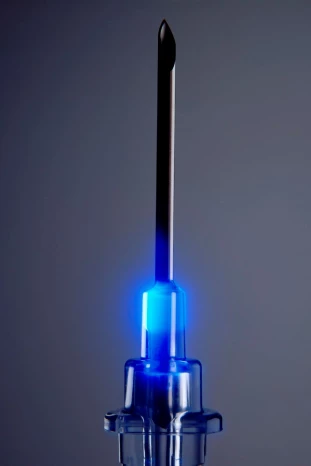
Bonding dissimilar materials—such as stainless steel to plastics (ABS, PC, PVC, Acrylic)—requires careful viscosity selection:
- ~100 cPs: capillary penetration into tight gaps
- ~52,500 cPs: gel for gap filling and anti-flow control
Mechanical performance:
- Tensile shear strength: 12–25 MPa
- Failure mode: substrate fails before bond
Typical hardness: 60D–90D Shore D, ensuring resistance to fracture during use.
Biocompatibility and Sterilization Resistance
Medical-grade adhesives must comply with:
- ISO 10993: Cytotoxicity, sensitization, systemic toxicity
- USP Class VI: In-vivo biological response testing
Sterilization Compatibility:
- Autoclave (121–134°C): requires high Tg
- Gamma (25–50 kGy): must resist embrittlement
- EtO: must not absorb gas





