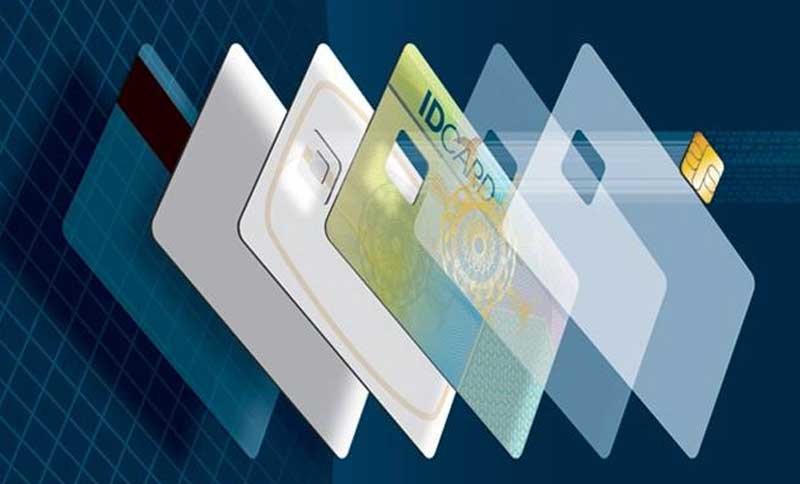
In today’s digital economy, smart cards serve as a critical security backbone for financial transactions, digital identity, and telecommunications. With global production exceeding four billion units annually, this industry demands a rigorous integration of microelectronics and polymer science. At the heart of this manufacturing process are advanced liquid adhesive solutions, functioning as a “functional interface” to secure and protect integrated circuit (IC) modules within plastic or metal substrates.
Adhesive systems in smart cards are far more than simple mechanical bonding agents. They must fulfill three core functions:
- Provide durable adhesion capable of withstanding thousands of bending and torsion cycles over a 5–10 year lifespan.
- Act as an environmental barrier to protect chips from moisture and ionic contamination.
- In contactless applications, enable anisotropic conductive connections between the chip and antenna.
Contact information
The adoption of smart card technology has expanded rapidly over the years, evolving from retail cards and mobile SIM cards to chip-based credit cards, transportation cards, access control systems, and widely used payment and entertainment cards. This rapid growth has significantly increased the demand for high-precision, high-reliability adhesive solutions in microelectronic manufacturing.
In this field, Everwide provides specialized epoxy adhesive systems for Dam & Fill chip applications and also collaborates with design partners to develop advanced adhesives for 3D dome coating and other next-generation packaging structures. These materials are engineered with a wide mechanical range—from soft to rigid—and support multiple curing mechanisms, including room-temperature curing, UV curing, and hybrid UV–thermal curing systems. As a result, adhesive technology has evolved from traditional metal bonding applications to advanced use cases involving thin substrates such as PC and PET, aligning with the industry trend toward thinner, lighter, and more complex card designs.
Within this ecosystem, HITTA serves as a comprehensive supplier of adhesive and assembly tape solutions from leading global brands. Backed by a highly experienced technical team with practical expertise across multiple industrial applications, HITTA not only supplies materials but also provides process optimization consulting tailored to specific customer requirements and manufacturing challenges.
HITTA currently offers advanced adhesive solutions from Everwide, combining high material performance with strong process stability for industrial-scale production.
If you are looking for an efficient, durable, and reliable bonding solution, HITTA is ready to support you from consultation through full implementation.
☎️ Hotline: 0565.336.879
✉️ Email: hittajsc@hitta.vn
Adhesive Technologies for Smart Card Applications
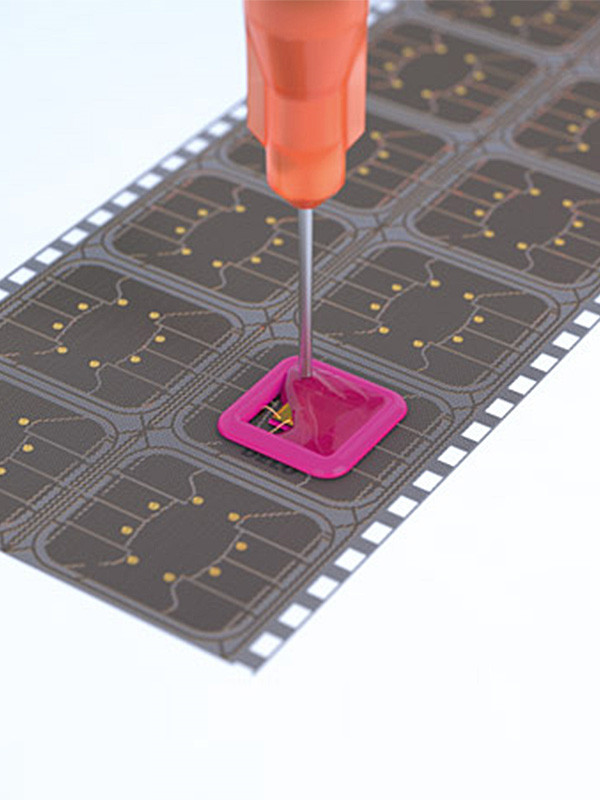
Modern smart card manufacturing has rapidly transitioned from mechanical bonding methods to advanced liquid adhesive systems in order to achieve ultra-high throughput (UPH) and long-term reliability.
Epoxy Adhesive Systems
In smart card manufacturing, epoxy adhesives are widely regarded as the “gold standard” due to their excellent adhesion across diverse substrates, superior chemical resistance, and high glass transition temperature (Tg). They are structural materials present in nearly every critical stage of chip card production.
Epoxy systems are classified based on their curing mechanisms:
- Thermal-cure Epoxy:
Typically one-component systems, widely used in die attach applications. They offer low stress and high post-cure stability. However, curing times range from minutes to hours and require energy-intensive ovens. - UV-cure Epoxy (Cationic UV-curable):
An optimal solution for high-speed manufacturing. These systems are not inhibited by oxygen and exhibit “dark cure”, meaning the reaction continues even after UV exposure stops. This ensures complete curing in shadowed areas, such as beneath the silicon chip.
Key Applications
Epoxy adhesives play a direct role in three major processes:
- Die Attach:
Secures the silicon chip onto the substrate. Requires ultra-low ionic contamination (Na+, K+, Cl- < 10 ppm) to prevent corrosion of fine circuitry. - Encapsulation:
- Glob-top: A controlled epoxy droplet covers the chip, requiring high thixotropy to prevent spreading
- Dam-and-Fill: A high-viscosity “dam” is formed, followed by low-viscosity filling to achieve a perfectly flat surface for ultra-thin modules
- Conductive Bonding:
- ACA (Anisotropic Conductive Adhesive) for chip-to-antenna interconnection
- Silver-filled epoxy for battery or display-integrated cards
Stress Management & Material Engineering
A major engineering challenge lies in the mismatch of coefficient of thermal expansion (CTE) between:
- Rigid silicon chips
- Flexible polymer substrates
Material design addresses this through:
- Elongation (5–10%), allowing epoxy to act as a stress-absorbing buffer during bending and torsion (typically 1,000–4,000 cycles)
- Thixotropic behavior, enabling high-speed dispensing of ultra-small droplets (~0.010 mg) without tailing, ensuring precision in mass production
Polycarbonate (PC) Compatibility
Polycarbonate substrates have low surface energy (34–45 dynes/cm), making adhesion challenging.
Technical solutions include:
- Specialized epoxy formulations with functional groups that interact with polymer chains without causing surface cracking (crazing)
- Surface treatment (Plasma/Corona) to increase surface energy above 70 dynes/cm, significantly improving wettability and adhesion
In summary, epoxy is not merely an adhesive—it is a high-performance engineered material designed to balance mechanical strength, flexibility, and material compatibility within the demanding environment of microelectronic applications.
UV Adhesive Systems
In smart card manufacturing, UV-curable adhesives are increasingly becoming a primary solution due to their near-instant curing capability and their ability to maximize production throughput (UPH). Within fractions of a second under light exposure in the 320–400 nm range, these adhesives can transition from liquid to solid—offering a significant advantage over conventional thermal curing systems.
Unlike traditional hot-melt adhesives that soften at temperatures above 70°C, HMPUR adhesives provide a dual-curing mechanism. They are applied in a molten state to deliver immediate green strength upon cooling, followed by a secondary chemical reaction with ambient moisture to form a permanently crosslinked polymer network. This makes them particularly suitable for high-speed SIM card production lines exceeding 20,000 units per hour.
Regarding curing mechanisms, UV adhesives used in chip card applications are typically divided into two main categories. Cationic UV systems are preferred because they are not inhibited by oxygen and exhibit dark cure, meaning the curing reaction continues even after the UV light source is removed. This ensures that shadowed areas—such as beneath the silicon chip—achieve full mechanical strength. In contrast, free-radical UV systems cure rapidly but are more sensitive to oxygen inhibition, making them less suitable for complex geometries. For challenging designs where UV light cannot fully penetrate, dual-cure systems combining UV and thermal mechanisms are employed.
From a manufacturing perspective, UV adhesives offer several key advantages. Their ultra-fast curing eliminates waiting time, enabling production speeds of tens of thousands of cards per hour. The cold cure nature of UV systems allows curing at room temperature, protecting heat-sensitive materials such as PVC. Additionally, UV-LED technology minimizes infrared heat emission, reducing the risk of card warpage. These systems also remove the need for bulky thermal ovens, resulting in lower energy consumption and a smaller factory footprint.
In practical applications, UV adhesives are widely used in encapsulation processes such as Glob-top and Dam-and-Fill, where viscosity and thixotropic properties are carefully controlled to prevent material flow prior to curing. In die attach applications, UV adhesives enable near-instant fixation after alignment, significantly improving placement accuracy. They are also used for gap filling to reinforce card structures and enhance surface print quality.
From a process and quality control standpoint, UV adhesives are typically one-component systems, eliminating mixing steps and reducing variability and material waste. Advanced dispensing technologies such as non-contact jetting allow precise placement of micro-droplets in confined areas, supporting high-speed manufacturing. In addition, some UV formulations incorporate fluorescent tracers, enabling automated optical inspection (AOI) systems to detect defects such as insufficient coverage or delamination.
Overall, UV adhesives not only accelerate production but also significantly enhance process stability and product quality—particularly as smart card designs become increasingly thin and complex.
Hot Melt Polyurethane (HMPUR) Adhesives
Reactive Hot Melt Polyurethane (HMPUR) is an advanced bonding solution that combines the processing convenience of traditional hot melt adhesives with the mechanical strength of thermoset polymers. In smart card manufacturing, HMPUR plays a critical role in high-volume production segments where both speed and cost efficiency are essential.
The key differentiator of HMPUR lies in its dual-curing mechanism.
In the first stage (physical curing), the adhesive is heated into a հեղ trạng thái molten and applied onto the substrate. As it cools, it rapidly solidifies, delivering immediate green strength. This allows the chip or module to be fixed in place instantly and moved to the next process step without delay, supporting production speeds exceeding 20,000 cards per hour.
In the second stage (chemical curing), reactive isocyanate groups within the adhesive react with ambient moisture to form crosslinked polymer networks. This transforms the material from a thermoplastic state (re-meltable) into a permanently crosslinked thermoset structure.
Compared to conventional hot melt adhesives, HMPUR offers several significant advantages. Traditional hot melts tend to soften at temperatures above 70°C, whereas fully cured HMPUR does not re-melt. Its crosslinked structure provides superior heat resistance and enhanced chemical resistance against solvents. At the same time, HMPUR maintains high elasticity, allowing it to absorb stress caused by the mismatch in coefficient of thermal expansion (CTE) between rigid silicon chips and flexible plastic card bodies. This flexibility is essential to prevent failure when cards are bent or twisted during use.
In practical applications, HMPUR is widely regarded as the most cost-effective and efficient solution for specific smart card segments. It is the preferred choice for SIM cards and standard cards, particularly for bonding chip modules onto PVC or ABS substrates, which are sensitive to heat. The rapid initial curing helps minimize thermal impact on these materials. In addition, the growing adoption of sustainable materials such as PLA (polylactic acid) requires adhesives with low application temperatures (typically below 60°C to avoid deformation). Modern HMPUR formulations can be engineered to activate at lower temperatures while still delivering long-term adhesion performance.
From an environmental and safety perspective, HMPUR aligns well with modern manufacturing standards. These adhesives are solvent-free, consisting of 100% solid content with no volatile organic compounds (VOCs), resulting in cleaner and safer production environments. Some advanced formulations now incorporate up to 50% bio-based carbon content derived from renewable sources such as castor oil, helping manufacturers meet circular economy targets without compromising mechanical performance under ISO standards.
However, implementing HMPUR requires careful process control. Because the adhesive reacts with moisture, storage systems and dispensing equipment must be sealed to prevent premature curing inside the system. Additionally, while parts can be handled immediately after application, full chemical curing may take several hours to days as the moisture-driven crosslinking reaction completes.
In summary, HMPUR represents a well-balanced solution that bridges ultra-high production efficiency with the long-term durability of structural adhesive systems.
Comparison of Smart Card Chip Bonding Adhesive Solutions
| Feature | Epoxy Adhesive (Thermal-Cure) | UV Adhesive (Cationic) | HMPUR Adhesive (Reactive Hot Melt) |
|---|---|---|---|
| Curing Mechanism | Chemical reaction between resin and hardener, typically activated by heat | Photopolymerization under UV light (320–400 nm) | Dual cure: physical solidification upon cooling + chemical reaction with moisture |
| Production Speed (UPH) | Slower; requires minutes to hours in curing ovens | Extremely fast; cures within seconds inline | Very fast; instant “green strength” upon cooling enables immediate processing |
| Thermal Management | Requires elevated temperatures; may cause warpage in PVC substrates | “Cold cure” at room temperature; protects heat-sensitive materials | Applied in molten state (120–140°C) but cools rapidly, minimizing substrate impact |
| Structural Strength | Highest; उत्कृष्ट chemical and thermal resistance with long-term stability | High; good thermal and environmental stability after curing | Moderate to high; superior to conventional hot melts due to crosslinked structure |
| Flexibility | Typically rigid and brittle; requires formulation tuning for stress absorption | Tunable from rigid to highly მოქ flexible for bending stress | Highly elastic; excellent for shock absorption and flexural durability |
| Key Applications | Die attach, encapsulation (Glob-top, Dam-and-Fill) | Module encapsulation, flip-chip bonding, gap filling | SIM cards (GSM), mass-market banking cards, module bonding onto PVC/ABS |
| Key Advantages | Ultra-low ionic content, excellent adhesion across multiple substrates | “Cure-on-demand,” reduced factory footprint | Solvent-free, environmentally friendly, optimized operating cost |
In-depth Material Selection Insights
Epoxy adhesives remain the top choice for high-security applications such as national ID cards and e-passports, where durability exceeding 10 years is required. Their tightly crosslinked 3D network structure ensures superior long-term mechanical and chemical stability. In die attach processes, thermal-cure epoxy is preferred due to its low-stress characteristics and high reliability for sensitive microelectronic components.
UV adhesives, particularly cationic epoxy systems, are increasingly dominant in high-speed automated production lines. Their ability to perform dark cure allows the adhesive to continue curing even in shadowed areas beneath the silicon chip after a brief UV activation, ensuring complete curing and consistent bond strength across complex geometries.
HMPUR adhesives offer an optimal balance between performance and cost efficiency. With the ability to support production speeds exceeding 20,000 units per hour, they form the backbone of mass-market segments such as SIM cards and standard financial cards made from PVC or ABS—materials that are prone to deformation under prolonged thermal exposure.
Key Application Positions
Primary applications within chip module structures
Die Attach: This is the initial step, where adhesives are used to secure silicon dies (chips) onto the leadframe or substrate. Thermal-cure epoxy systems are typically preferred here due to their high stability and low stress characteristics.
Underfill: In flip-chip assembly, underfill adhesives are used to fill the micro-gap between the active surface of the chip and the substrate. This layer redistributes mechanical stress caused by the mismatch in coefficient of thermal expansion (CTE) between silicon and polymer materials, thereby protecting delicate interconnects.
Encapsulation: Adhesives are applied to cover the chip and fragile wire bonds, protecting them from moisture, ionic contamination, and mechanical damage. Two main methods are used:
- Glob-top: A single droplet of adhesive encapsulates the entire chip area.
- Dam-and-Fill: A high-viscosity adhesive forms a “dam” around the chip, followed by a low-viscosity material that fills the interior to create a flat, uniform surface.
Bonding between Module and Card Body
Module-to-Card Bonding: Adhesives serve as the primary mechanical bond to secure the IC module into the cavity milled into plastic card bodies (PVC, PC, ABS) or metal substrates.
Gap Filling: Adhesives fill the void between the module and the card body, reinforcing the thin plastic layer at the back of the cavity, minimizing surface sink marks, and improving print quality on the chip surface.
Anisotropic Conductive Interconnects: For contactless and dual-interface cards, anisotropic conductive adhesives (ACA) are applied at the interface between the chip module and the embedded antenna. These materials conduct along the Z-axis (vertical direction) while maintaining insulation in the X-Y plane, preventing short circuits.
Advanced and Specialized Applications
Display Smart Cards: Adhesives are used in more complex integration points, including:
- Battery-to-circuit connections (using conductive adhesives)
- Flexible display bonding to the PCB
- Attachment of keypads and functional surface components
Metal Cards: Specialized adhesives (such as high-performance hot melt systems) are used to bond decorative polymer layers onto heavy metal cores (e.g., stainless steel or titanium), ensuring structural integrity even under bending stress.
Wearables: Adhesives enable chip embedding into non-traditional materials such as silicone or flexible PET for applications like smart rings, watches, and health-monitoring sensors. In these cases, adhesives must provide पूर्ण waterproof sealing to protect electronic components.
Applications Across Related Industries
GSM SIM Card Manufacturing: Hot Melt Polyurethane (HMPUR) adhesives are widely used to bond chip modules onto PVC or ABS substrates at extremely high production speeds, exceeding 20,000 units per hour.
Identity Cards & e-Passports: Adhesives are used to bond modules onto polycarbonate (PC) structures, requiring durability beyond 10 years and the ability to withstand high-temperature lamination processes.
Conductive Adhesive Solutions and Dual-Interface Integration
The growing adoption of dual-interface smart cards—combining both contact and contactless functionalities—has significantly increased the demand for conductive adhesive technologies.
Anisotropic Conductive Adhesives (ACA):
These materials are essential for directly connecting the chip to antenna contact pads embedded within the card body without using soldering processes, which could damage heat-sensitive plastic substrates.
Structure:
ACA contains ultra-fine conductive particles (typically silver-, gold-, or nickel-coated polymers) dispersed at a low concentration so that they remain electrically isolated in the uncured state.
Working principle:
Electrical conductivity is established only along the Z-axis (vertical direction) when the chip is pressed against the antenna pad. This pressure traps and compresses conductive particles between the two conductive surfaces, forming electrical pathways. The surrounding polymer matrix then cures, locking the structure in place while maintaining insulation in the X–Y plane, thereby preventing short circuits.
Non-Conductive Adhesives (NCA) and Underfill
In flip-chip assembly, NCA materials are used to provide the necessary mechanical support and contact pressure between chip solder bumps and the substrate. Underfill materials are then dispensed to fill the gap beneath the chip, redistributing mechanical stress caused by the coefficient of thermal expansion (CTE) mismatch between silicon and polymer substrates.
Adhesive Dispensing Technologies: Jetting and Needle Dispensing
The choice of dispensing technology has a direct impact on both quality and production cost in smart card manufacturing.
Jetting Technology (Non-contact dispensing):
Jetting is now the industry standard for high-volume chip card production. Using piezoelectric actuation, jet valves can eject ultra-small adhesive droplets (as low as 0.010 mg) from a stand-off distance of 0.5 to 2.0 mm.
Performance advantages:
- Eliminates Z-axis motion (no need to move the nozzle up and down), increasing speed by 1.5–6× compared to traditional needle dispensing
- Enables high-precision deposition in tight spaces, including chip cavities as small as 350 µm, without disturbing nearby components
Fluid dynamics comparison:
According to the Hagen–Poiseuille equation, flow rate is proportional to the fourth power of the inner diameter and inversely proportional to channel length. Since jetting nozzles are significantly shorter than traditional needles, they can achieve 5–10× higher flow rates at the same pressure, enabling rapid encapsulation and coating processes.
Chip Encapsulation Techniques
After die attachment and wire bonding, encapsulation is essential to protect fragile electronic components from mechanical stress and environmental exposure.
Glob-top method:
A medium-viscosity epoxy (typically 9,000–40,000 mPas) is dispensed as a single droplet over the chip. The adhesive must exhibit high thixotropy—its viscosity decreases under shear during dispensing but rapidly recovers at rest—preventing overflow before curing.
Dam-and-Fill method:
This two-step process uses:
- A high-viscosity “dam” material to form a boundary around the chip
- A low-viscosity “fill” material that self-levels to create a flat encapsulation surface
This ensures a final module thickness within ISO limits (typically 0.76 mm) and provides a perfectly planar surface for printing and personalization.
Substrate Material Compatibility
Adhesive performance is highly dependent on surface energy and chemical compatibility of the card body material.
- PVC and ABS:
Most common in mass-market financial cards due to low cost, but thermally sensitive. Adhesives must cure at low temperatures or use UV-LED cold curing to prevent deformation. - Polycarbonate (PC):
Preferred for ID cards and passports due to long-term durability (>10 years). However, its low surface energy (34–45 dynes/cm) makes adhesion difficult, often requiring plasma or corona surface treatment to improve wettability. - Metal cards:
Premium cards using stainless steel or titanium cores require extremely high peel strength adhesives (>20 N/cm) to prevent delamination of decorative layers during bending. - Bio-based plastics (PLA):
Sustainable materials that deform above ~60°C require specially formulated low-temperature curing adhesives (70–120°C activation range).
Future Trends in Chip Bonding Technologies
The smart card industry is evolving along three major directions: sustainability, 5G connectivity, and IoT integration.
Sustainability and bio-based materials:
Regulatory frameworks such as RoHS and REACH are driving the elimination of halogenated compounds and hazardous solvents. This is accelerating the development of bio-based adhesives derived from renewable sources such as castor oil, supporting circular economy goals without compromising mechanical performance.
5G and IoT antenna integration:
As smart cards integrate high-frequency antennas, the dielectric properties of adhesives (dielectric constant and loss tangent) become critical. Adhesives must minimize signal attenuation to preserve RF performance. This requires close collaboration between materials scientists and card designers to ensure signal integrity within increasingly complex secure hardware systems.