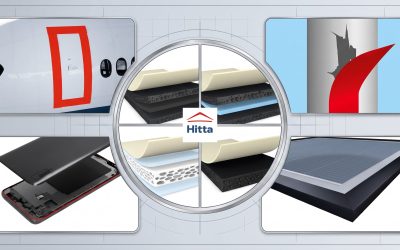
HITTA offers a comprehensive range of tesa automotive masking tape solutions, meeting the diverse requirements of both OEM manufacturing lines and automotive refinish shops. Based on each painting process, curing temperature, surface profile, and finish quality requirements, our team recommends the most suitable masking solution to ensure precise masking, sharp paint lines, reliable surface protection, and clean removal after painting.
- Tesa® 50620 Standard Powder Coating Masking Tape
- Tesa® 50600 – Masking Tape for Powder Coating and Industrial Applications

tesa® 50600 and tesa® 50620 are two dedicated masking tape solutions designed for powder coating applications, featuring a PET backing combined with a high-temperature silicone adhesive system. tesa® 50600 offers heat resistance up to 220°C with an 80 µm backing, while tesa® 50620 withstands temperatures up to 200°C with a 70 µm backing. Both products deliver clean, sharp paint lines, excellent paint anchorage, and residue-free removal after curing, helping manufacturers achieve consistent process performance and high-quality surface finishes.
The Role of Tape Converters in Automotive Masking Solutions
In addition to supplying standard tape rolls, many manufacturers also require custom-converted adhesive tapes tailored to their specific production lines.
Tape converters such as HITTA can slit rolls to custom widths, produce die-cut tape parts, create finger-lift tabs, or supply tapes in spool-wound formats for automated production systems.
These converting solutions help manufacturers reduce manual operations, minimize material waste, and improve consistency throughout the production process.
In both Vietnam and international markets, partners such as HITTA JSC play a vital role. We not only supply standard adhesive tape rolls but also provide solutions that help optimize manufacturing processes.
Die-Cut Tape Solutions
For applications such as covering drainage holes or masking complex geometric features on vehicle bodies, using die-cut tape parts manufactured to the exact required dimensions significantly increases application speed while ensuring consistent and repeatable quality.
Optimized Supply Formats
Tape converting partners can slit jumbo rolls into virtually any custom width, from ultra-narrow strips to wide rolls, or rewind tapes into spool-wound formats for automated dispensing systems. This helps manufacturers minimize material waste and optimize warehouse storage space.
Guidelines for Selecting the Right Paint Masking Solution Based on Technical Requirements
When designing a paint masking process, paint shop managers should evaluate the following three key parameters:
Maximum temperature and process cycle: The curing oven temperature profile determines the appropriate adhesive system. For temperatures below 120°C, standard crepe paper masking tape is generally suitable. Up to 160°C, high-temperature crepe paper or PVC masking tape is recommended. Above 180°C, PET tape with silicone adhesive or polyimide tape should be used.
Surface energy and contamination risk: If the process includes structural bonding immediately after masking, silicone-based tapes should be completely avoided to eliminate the risk of contamination that could compromise bond performance.
Application method: For high-volume production lines, manufacturers should consider replacing manual tape application with finger-lift die-cuts or spool-wound tapes for robotic and automated dispensing systems, reducing human error and improving production consistency.
HITTA JSC is one of Vietnam’s leading providers of custom industrial tape converting solutions. Please contact us for professional consultation.
Contact information
HITTA is a trusted supplier of industrial adhesive and assembly tape solutions from the world’s leading manufacturers. We are an authorized distributor of the complete range of genuine tesa® adhesive tapes in Vietnam.
Backed by an experienced technical team with hands-on expertise across a wide range of industrial applications, we do more than supply products—we provide tailored adhesive solutions that help optimize manufacturing processes and address each customer’s specific requirements and challenges.
If you are looking for a reliable, high-performance bonding solution, HITTA is ready to support you from technical consultation through implementation.
Contact HITTA today to find the right solution for your application.
☎️ Hotline: +84 565 336 879
✉️ Email: hittajsc@hitta.vn
Overview of Automotive Paint Masking Tapes
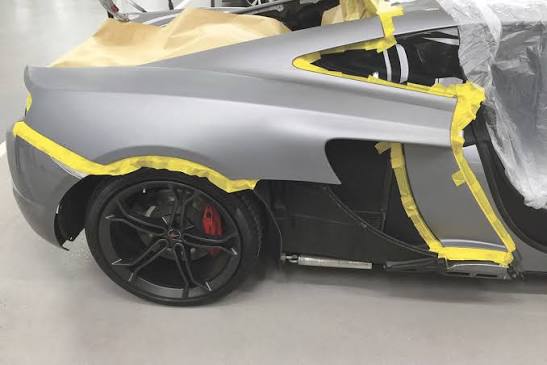
Today, many vehicles feature two-tone paint schemes, contrasting roof colors, painted bumpers, or decorative trim finished in different colors. While these designs enhance the vehicle’s appearance, they also make the paint masking process more demanding.
To achieve clean, sharp paint lines on the complex curves of a vehicle body, masking tape must maintain secure adhesion throughout the painting process, withstand curing temperatures, and remove cleanly without damaging or contaminating the finished surface.
For automotive manufacturers and high-volume paint shops, application time has a direct impact on production efficiency. Applying masking tape manually or reworking paint defects after coating can significantly increase manufacturing costs.
As a result, many manufacturers have adopted precision die-cut masking tapes, large-area masking solutions, and automated robotic masking systems to reduce application time, improve consistency, and minimize production errors.
Understanding Automotive Masking Tape Solutions
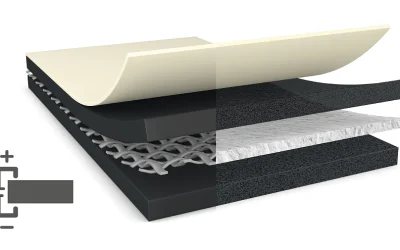
Adhesive layer
The adhesive layer must achieve the right viscoelastic balance, allowing the adhesive to flow slightly under pressure to fill microscopic surface irregularities while maintaining sufficient cohesive strength to ensure clean removal without leaving any residue.
Silicone Adhesive: Silicone is considered the “king” of high-temperature adhesives and is widely used in powder coating processes with curing temperatures of up to 220°C. However, silicone is extremely sensitive in automotive paint shops because its molecules are highly mobile. If silicone vapors become airborne or contaminate the surface before painting, they can cause fish-eye defects—small circular craters where the paint fails to wet and adhere properly.
Natural Rubber Adhesive: Natural rubber provides excellent initial tack, making it the most common adhesive system for conventional crepe paper and PVC masking tapes. However, under high curing temperatures, components within the rubber adhesive can interact with the clear coat, resulting in ghosting or paint discoloration.
Acrylic Adhesive: Acrylic adhesives offer greater chemical stability, excellent UV resistance, and are specifically designed to eliminate the risk of ghosting. Products such as tesa® 50777 utilize an acrylic adhesive on a PVC backing to provide heat resistance up to 160°C while remaining safe for clear coat applications.
The adhesive layer plays a decisive role in determining the overall performance of a paint masking tape, providing both secure adhesion during the painting process and clean removal after exposure to demanding curing cycles. Natural rubber adhesive remains the most widely used system due to its exceptionally high initial tack, enabling instant adhesion to a broad range of substrates, including metal, glass, plastics, and rubber. However, one major limitation of rubber-based adhesives is that prolonged exposure to elevated curing temperatures can cause chemical components within the adhesive to migrate into the clear coat, leading to ghosting, surface haze, or paint discoloration. In addition, when exposed beyond their recommended temperature limits, rubber adhesives may undergo pyrolysis, leaving carbonized residue firmly bonded to metal surfaces that is extremely difficult to remove.
To overcome these surface-related issues, advanced acrylic adhesive systems are increasingly used because of their superior chemical stability, excellent UV resistance, and their ability to prevent ghosting and clear coat discoloration. For applications requiring long-term masking or prolonged outdoor exposure, acrylic adhesives combined with Washi paper backings, such as tesa® 4334, can be removed cleanly even after several months without leaving adhesive residue. However, standard acrylic adhesives tend to become permanently bonded to the substrate through a bake-on effect when exposed to curing temperatures above 149°C, making specially formulated cross-linked acrylic systems necessary for high-temperature applications.
In extreme-temperature environments such as powder coating (180°C–260°C), silicone adhesive is the industry standard due to its siloxane (Si–O–Si) backbone, whose bond energy is significantly higher than the carbon-based molecular structures found in rubber or acrylic adhesives. Although silicone adhesives generally exhibit lower initial tack, this characteristic is intentionally engineered to allow the tape to be removed cleanly in one piece from high-value substrates such as aluminum and stainless steel after curing. Nevertheless, silicone is an extremely sensitive contaminant in automotive paint shops. Even trace amounts of airborne silicone molecules can cause fish-eye defects, preventing proper paint wetting and creating circular craters on the painted surface. Therefore, in production environments with strict silicone-control requirements, the preferred alternative is 100% silicone-free masking tapes such as tesa® 4831, which utilize a specially formulated high-temperature acrylic adhesive capable of withstanding temperatures up to 180°C.
From a physical perspective, adhesive performance also depends on its wet-out capability—the ability of the adhesive to flow and completely fill the microscopic irregularities of the substrate. The viscoelastic balance of the adhesive enables it to be soft enough to fill the smallest surface valleys, preventing paint bleed-through caused by capillary action, while remaining cohesive enough to resist tearing or leaving adhesive fragments behind during removal. Consequently, selecting the appropriate adhesive system involves more than simply considering temperature resistance; it also requires evaluating the surface energy of the substrate, particularly low-surface-energy (LSE) plastics, to ensure sharp paint lines and consistently high-quality finishing results.
Backing layer
The backing serves as the structural backbone of a paint masking tape, directly determining its tensile strength, conformability, and the sharpness of paint lines in demanding manufacturing environments. In conventional automotive painting processes, crepe paper is the most widely used backing material due to its hand-tearability and cost-effectiveness. Highly creped paper is specifically designed to conform around tight curves and complex contours, while slightly creped paper offers a better balance between flexibility and precision for straight masking lines. For applications requiring ultra-thin construction and exceptionally sharp paint edges, Washi paper, with its long, flat fiber structure, is the preferred choice. It also provides outstanding UV resistance for long-term outdoor masking applications.
When masking complex three-dimensional surfaces such as bumpers or intricate body contours, PVC film becomes the preferred backing because of its excellent stretchability and conformability without tearing. However, pure PVC tends to shrink when exposed to elevated temperatures. For this reason, PVC-PET laminate constructions are commonly used in applications such as window flange masking. In this construction, the inner PET layer provides dimensional stability and high tensile strength for clean one-piece removal, while the outer PVC layer ensures excellent paint anchorage. Paint anchorage is a critical backing property: without a specially formulated paint-release coating on the backing surface, dried overspray can flake off under the high-velocity airflow inside the spray booth, fall back onto the still-wet clear coat, and create particulate defects on the vehicle surface.
For extreme-temperature applications such as powder coating, polyester (PET) film is the industry standard because of its excellent chemical inertness, dimensional stability, and resistance to shrinkage or edge curling at curing temperatures of up to 220°C. For even more demanding processes, including electroplating and wave soldering, polyimide film represents the highest level of polymer engineering, offering continuous heat resistance up to 260°C and short-term resistance up to 315°C while maintaining excellent mechanical integrity. In addition, for abrasive surface preparation processes such as sandblasting, glass cloth backings or heavy flat paper backings—up to 670 μm thick—are used as protective barriers capable of absorbing the impact energy of abrasive media without tearing or being punctured. Finally, modern solutions such as tesa® 4831 utilize a hybrid backing that combines PET film with a non-woven fabric layer, delivering both outstanding thermal stability and the flexibility required for comfortable manual application on production lines.
Typical Application Areas
Design Masking and Fine-Line Masking
In the modern automotive industry, creating distinctive vehicle appearances through two-tone paint schemes and intricate decorative graphics has become a key strategy for enhancing product value. Design masking and fine-line masking play a critical role in achieving precise color separation on complex three-dimensional surfaces such as bumpers, roofs, pillars, and instrument panels. To produce flawless paint lines, fine-line masking tapes must provide excellent wet-out characteristics, allowing the adhesive to conform to microscopic surface irregularities and effectively prevent paint bleed-through, which can result in jagged or uneven paint edges.
From a technical perspective, fine-line masking solutions typically utilize either soft PVC film or thin Washi paper backings to maximize flexibility and conformability. PVC-backed tapes such as tesa® 4174 and tesa® 4244 are widely used because of their exceptional elongation, enabling technicians to follow tight radii and complex three-dimensional contours without edge lifting throughout the curing process. For applications requiring ultra-fine paint lines and an extremely flat masking edge to minimize paint build-up along the boundary, tesa® 4185, with a thickness of just 94 μm, is an ideal choice, ensuring the smoothest possible transition between adjacent paint colors. In addition, to meet the demands of high-volume manufacturing, masking tapes must withstand high-pressure washing, flame treatment, and oven curing temperatures of up to 160°C.
One of the major challenges in design masking is preventing ghosting or clear coat discoloration caused by the chemical migration of natural rubber adhesives when exposed to elevated temperatures. To address this issue, advanced masking solutions employ cross-linked acrylic adhesive systems on PVC backings, such as tesa® 50777 and tesa® 50888. These adhesive systems not only provide reliable adhesion to difficult-to-bond plastic substrates but also ensure clean removal without adhesive residue or any alteration to the optical appearance of the clear coat after the curing cycle.
To maximize productivity in large OEM manufacturing facilities, design masking solutions extend beyond standard tape rolls and are increasingly integrated into automated production systems. Precision die-cut masking parts, customized for specific features such as drainage holes or lamp recesses, help reduce operator error while significantly improving application speed. Furthermore, combining fine-line tapes with large-area protective masking films in integrated systems such as tesa® Roll Maskers enables a single operator to mask extensive vehicle body areas quickly and accurately, ensuring consistent quality and repeatability across every production batch.
high temperture Powder Coating masking
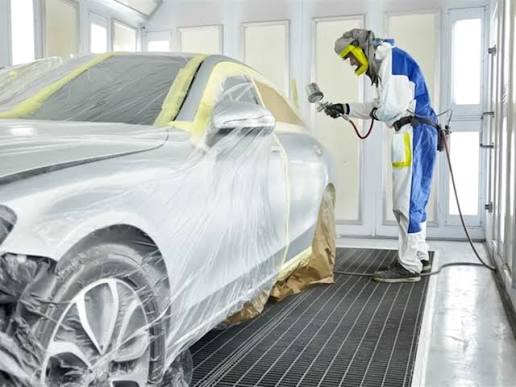
Powder coating processes require significantly more demanding masking solutions than conventional liquid painting because of their extreme operating temperatures, which typically range from 180°C to 220°C. During the curing cycle, the powder coating melts, flows, and chemically cross-links to form a durable finish. Throughout this process, the masking tape must maintain a hermetic seal to prevent molten coating material from penetrating beneath the tape edge, which would result in irreversible jagged paint lines. The industry-standard solution combines a polyester (PET) backing with a silicone adhesive. Thanks to its siloxane backbone and exceptionally high bond energy, silicone adhesive can withstand temperatures of up to 220°C for 30 minutes without thermal degradation (pyrolysis) or leaving adhesive residue on metal surfaces. Products such as tesa® 50600 (green) and tesa® 50620 are widely used because of their stable high-temperature performance and excellent paint anchorage, allowing powder coating to adhere securely to the tape backing while preventing dried paint particles from flaking off and contaminating the coated surface.
For low-surface-energy substrates or complex three-dimensional geometries, tesa® 50650, featuring a thin blue PET backing with excellent conformability, is an ideal solution for following tight curves without edge lifting caused by thermal expansion. When masking rough metal surfaces or substrates that have undergone sandblasting, engineers often select tesa® 61126, which features a thicker silicone adhesive layer to improve wet-out performance and fill microscopic surface irregularities more effectively. However, in automotive and aerospace manufacturing facilities with strict fish-eye contamination control, silicone-based products are often prohibited because airborne silicone molecules can contaminate the paint process. In these environments, 100% silicone-free masking tapes such as tesa® 4831, which combines a cross-linked acrylic adhesive with a PET/non-woven backing, provide a suitable alternative by offering heat resistance of up to 180°C while remaining compatible with subsequent structural bonding processes.
To achieve optimum process reliability, industry experts generally recommend selecting a masking tape with a temperature rating at least 20% higher than the actual curing temperature to provide an adequate safety margin for localized temperature variations within the oven. Tape removal is equally important: the ideal time to remove the tape is while the coated part is still warm, typically between 40°C and 60°C. At this temperature, the cured polymer coating has not yet become excessively brittle, minimizing the risk of coating fracture along the masking edge and producing the cleanest possible paint line. Finally, proper surface preparation is essential. Cleaning the substrate with solvents such as IPA (isopropyl alcohol) or acetone, together with the use of clean nitrile gloves, removes oil, grease, and fingerprints, ensuring maximum tape adhesion throughout the entire high-temperature curing cycle.
Window Flange Masking and Primerless Glass Bonding
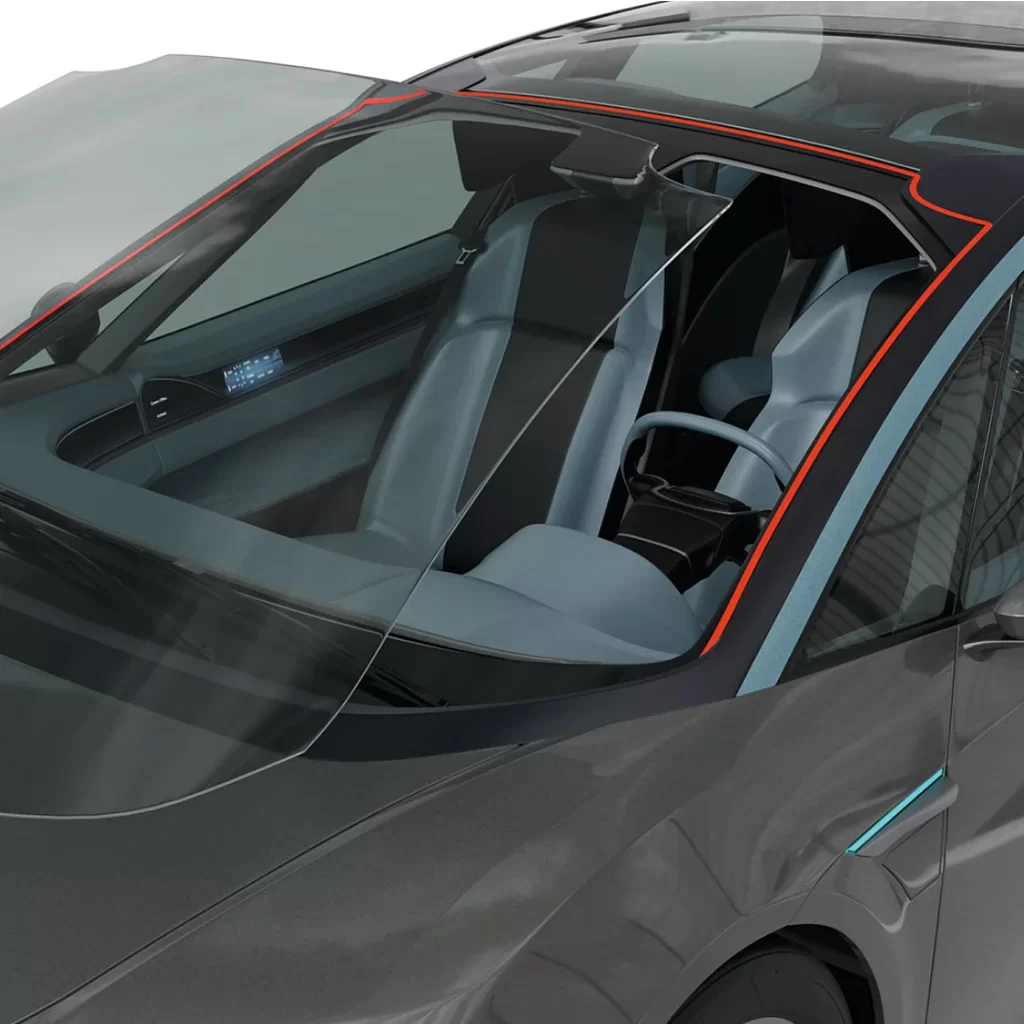
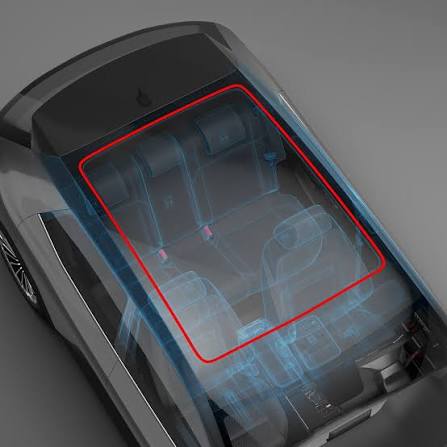
In modern automotive design, the drive to reduce vehicle weight has accelerated the adoption of structural adhesives as an alternative to traditional mechanical fastening methods. Window flange masking plays a critical role in enabling primerless glass bonding, particularly for critical glazing applications such as windshields and panoramic sunroofs. Traditionally, the window flange is painted together with the vehicle body, after which a chemical primer must be manually applied to promote adhesion of the windshield adhesive. This conventional process not only increases VOC emissions but also introduces the risk of human error during primer application. Today, OEM manufacturers apply specialized window flange masking tapes immediately after the electrocoat (e-coat) has cured and before the primer, basecoat, and clear coat painting stages. After the body passes through the entire high-temperature curing cycle, the masking tape is removed to expose a perfectly clean e-coat surface free from paint and chemical contamination, allowing polyurethane adhesive to bond directly with exceptional strength and ensuring the structural integrity and crash performance of the passenger cabin.
From a technical standpoint, window flange masking tapes such as tesa® 7140 utilize a PVC-PET laminate construction designed to withstand curing cycles of up to 170°C. The outer PVC layer provides excellent paint anchorage, preventing dried overspray from flaking off under the high-velocity airflow inside the paint booth while also delivering the flexibility required to conform to the complex three-dimensional contours of the window frame. Meanwhile, the inner PET layer maintains dimensional stability, preventing thermal shrinkage that could expose the protected flange during the oven curing process. The high tensile strength of the PET layer—up to 140 N/cm for the PV3 version—also enables operators or automated demasking robots to remove the tape quickly in a single piece without tearing, breaking, or leaving adhesive fragments behind. To support high-volume OEM production lines, these masking tapes are commonly supplied in spool-wound formats for direct integration with automated dispensing systems, optimizing cycle time while ensuring consistent quality across every vehicle produced.
3-in-1 Masking Solutions for Large-Area Coverage and Repair Applications
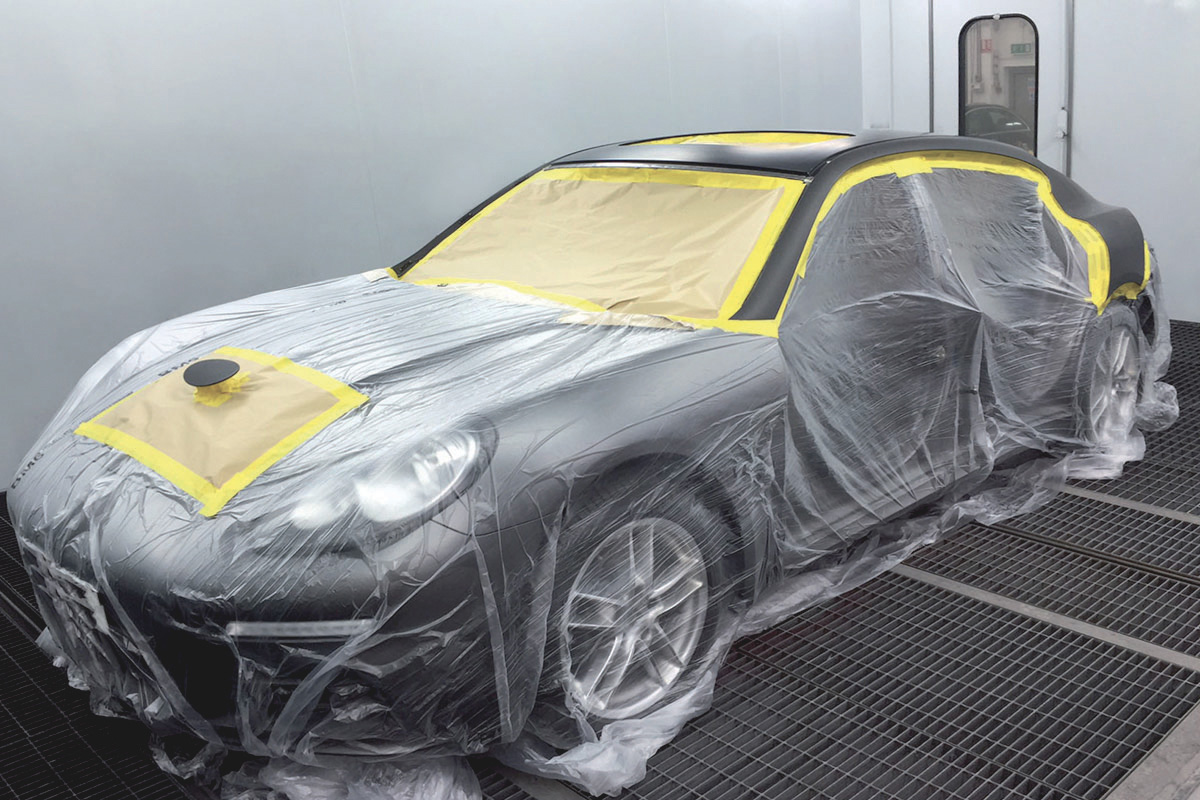
A 3-in-1 masking solution for large-area coverage and repair is an integrated roll masker system designed to maximize productivity and eliminate time-consuming steps in collision body repair (CBR) and large-area refinishing applications. A typical example is tesa® 4378 Easy Cover Auto, which combines three essential components into a single roll: premium tesa® 4309 crepe paper masking tape, an absorbent paper edge, and a high-density polyethylene (HDPE) masking film. The crepe paper tape offers excellent conformability and utilizes a natural rubber adhesive to provide reliable adhesion on curved surfaces while withstanding oven or infrared curing temperatures of up to 120°C. A distinctive feature of this system is the absorbent paper edge positioned directly adjacent to the tape, which absorbs wet paint overspray along the masking boundary, helping to prevent paint pooling or runs that could lead to surface defects.
The integrated HDPE masking film serves as more than just a protective cover. It is electrostatically treated so that it naturally clings to the vehicle body, while its chemically treated surface provides excellent paint anchorage, preventing dried paint from flaking off under the high-velocity airflow inside the spray booth. By integrating all three components into a single product, this solution enables a single technician to mask large vehicle areas quickly and accurately, eliminating the need to apply individual strips of masking tape and separate plastic sheeting as required by conventional masking methods. By significantly reducing both masking and demasking time, integrated roll masker systems help body shops meet demanding production schedules, increase workshop throughput, and maintain consistent, high-quality finishing across every repair.
Defect Control in Automotive Paint Masking
Selecting the wrong masking tape or using improper masking procedures can lead to a variety of production defects, resulting in increased rework, higher material consumption, and reduced finished product quality.
Preventing Silicone Contamination and Fish-Eye Defects
One of the most critical paint defects is silicone contamination, which causes fish-eye defects on painted surfaces. In paint shops with strict contamination-control requirements, using silicone-free masking tapes is essential to prevent cross-contamination of tools, gloves, or the working environment. For these applications, tesa® 4831 is an ideal solution, utilizing a high-temperature acrylic adhesive capable of withstanding 180°C while being completely free of silicone.
Paint Bleed-Through and Edge Lifting
Another common issue is paint bleed-through, where paint seeps beneath the tape edge and compromises the sharpness of the paint line. This typically occurs when the masking tape fails to form a complete seal on textured surfaces, rigid plastics, or low-surface-energy (LSE) materials, allowing paint to penetrate underneath the tape. In such cases, high-adhesion masking tapes such as tesa® 4244 PV2 provide a more reliable seal, ensuring secure adhesion to difficult substrates while minimizing edge lifting and paint bleed.
Paint Anchorage
Another source of paint defects is poor paint anchorage on the tape backing. When dried paint does not adhere firmly to the backing surface, it can flake off under the high-velocity airflow inside the spray booth and settle back onto the still-wet coating, creating dust particles or other surface imperfections. To minimize this risk, high-quality masking tapes are engineered with specially treated backings that provide excellent paint anchorage, keeping overspray securely attached throughout the painting process and helping to produce a clean, defect-free finish.